
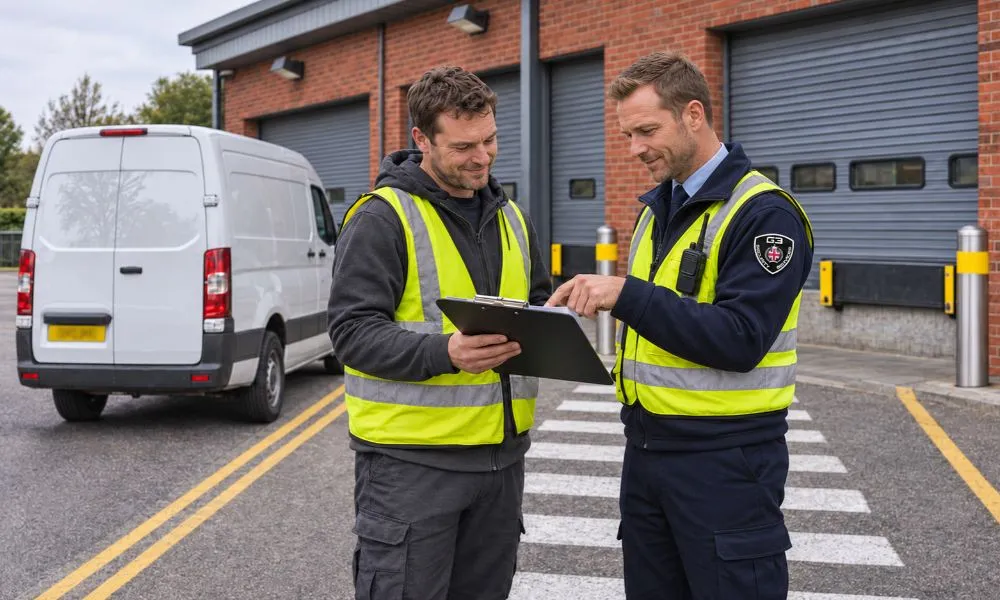
A courier leaves a parcel near reception, but nobody records where it goes. Later, the intended recipient cannot find it. At another site, a driver arrives to collect goods, and staff assume the collection has already been approved. These everyday situations can lead to missing items, disputes, and delays.
Delivery security starts with knowing who is arriving, what they are bringing or collecting, and who is responsible for the handover. Security guards can support this process by checking access, monitoring receiving areas, and maintaining clear records.
This guide explains how security guards help protect business deliveries and collections, from arrival at the premises to storage and authorised release.
Why Business Deliveries Need Security Checks
Deliveries bring people and vehicles onto a property throughout the working day. Without clear procedures, a routine visit can create an opportunity for unauthorised access or goods to go missing. The aim is to make legitimate deliveries straightforward while checking anything unexpected.
Unattended Parcels and Exposed Drop-Off Areas
Parcels left near an entrance or in an open reception area can be taken or moved without anyone noticing. Even inside the building, a delivery can become difficult to trace if nobody records who received it or where it was placed. Use a designated receiving area and record each handover. If the recipient is unavailable, place the parcel in an agreed secure location until it can be collected.
Unverified Drivers and Unexpected Collections
A company logo on a vehicle does not prove that the driver is authorised to enter or collect goods. Even a genuine courier may arrive at the wrong premises or have incorrect collection details. Check the booking reference, destination, and approval before helping access or releasing items. If anything does not match, confirm it with the responsible staff member.
Unclear Responsibility for Received Goods
A parcel can become difficult to trace when it moves from reception to another employee without a record. If it goes missing, staff may be unsure who last handled it or where it was left. Record who accepts the delivery and each handover that follows. In buildings with several tenants or departments, include the intended recipient and storage location to avoid confusion.
Busy Periods and Shift Changes
When several delivery vehicles arrive at once, staff may rush checks or place goods wherever space is available. Without clear records, items and unresolved issues can be overlooked during a shift change. Plan for busy periods and keep delivery information up to date so incoming officers know which arrivals are expected, which collections are pending, and where uncollected goods are stored.
How Security Guards Protect Deliveries and Collections
Security guards help protect deliveries by checking drivers, controlling access, monitoring drop-off areas, and overseeing agreed handovers. Their duties should reflect the site’s layout and delivery procedures so they know what to check and when to contact the responsible staff member.
Verify Delivery Drivers Before Granting Access
Security officers can check the driver’s identification, courier company, booking reference, and intended recipient before allowing entry. If the delivery is unexpected, they should confirm it with the designated staff member using contact details already held by the business. Once approved, the driver should only access the areas needed to complete the delivery.
Direct Vehicles to Approved Delivery Areas
Drivers unfamiliar with the site may arrive at the wrong entrance or delivery point. Security officers can direct them to the approved parking area and contact receiving staff to arrange the handover. Any duties involving vehicle manoeuvres, such as guiding a reversing vehicle, should be clearly agreed and carried out by appropriately trained personnel.
Monitor Loading Bays and Parcel Drop-Off Points
Goods waiting at loading bays may be exposed before they reach secure storage. Open doors and frequent vehicle movements can make it harder to spot unauthorised access. Security officers can monitor these areas, identify unattended items, and report unexpected activity using clear site instructions.
Coverage should account for the building’s layout. If an officer at the main gate cannot see a distant loading bay, that area may need additional patrols or camera monitoring.
Record Deliveries and Handover Details
Keep a delivery log with the details needed to trace each item, such as the arrival time, courier, reference number, receiving person, and storage location. Record later handovers where required, including transfers to another department. Entries should clearly state what the officer checked. Receiving a sealed parcel does not confirm that its contents, quantity, or condition have been inspected.
Control Access to Stored Parcels and Goods
Keep delivered goods in a secure area until an authorised person collects them. Security officers can check identification, recipient details, or collection approval before releasing an item. In shared buildings, these checks help ensure parcels reach the correct tenant. If lockers or restricted-access rooms are used, provide clear instructions for failed access codes, oversized parcels, and full storage areas.
Check Authorisation Before Goods Leave
Check collections as carefully as incoming deliveries. Even an expected driver may have incorrect details or lack approval to collect the goods. Security officers can verify the collection reference, item description, collector’s identity, and authorisation against business records. If anything does not match, the responsible manager should resolve the issue and approve release before the goods leave.
Manage Out-of-Hours Deliveries
Late deliveries can cause confusion when receiving staff have left and security officers are unsure whether to accept the goods. Set clear rules for after-hours deliveries, including who can approve exceptions and where items should be stored. If a delivery cannot be accepted, officers should know whom to contact and how to resolve the issue.
Report Missing Goods and Suspicious Activity
If goods go missing, record when the loss was noticed, their last known location, and any action taken. Access logs, collection records, and relevant CCTV footage can help management establish what happened. Keep confirmed facts separate from assumptions, and follow site procedures for notifying management or emergency services while prioritising personal safety.
How Technology Supports Delivery Security
Technology can improve visibility and record keeping, but it still needs clear operating procedures and people responsible for responding.
CCTV at Entrances and Handover Areas
CCTV can help track vehicle arrivals, parcel drop-offs, and activity around receiving areas. Cameras need clear views and suitable image quality, with relevant footage available for review. Assign responsibility for checking alerts and reviewing recordings so concerns receive timely attention.
Secure Parcel Rooms and Lockers
CCTV helps monitor vehicle arrivals, parcel drop-offs, and activity in delivery areas. Position cameras for clear views and check that recordings are detailed enough to review incidents. Assign someone to respond to alerts and retrieve relevant footage when a concern is reported.
Digital Delivery Logs
Digital delivery logs make it easier to find records and share updates between shifts. Choose a system officers can use easily during busy periods, and ensure entries are complete and clearly written. Limit access to staff who need the records for their duties.
Common Delivery Security Mistakes to Avoid
Small procedural gaps can weaken delivery security. Common mistakes include:
- Giving drivers unrestricted access: Limit entry to the approved delivery route and receiving area.
- Leaving goods in public areas: Use designated receiving or secure storage areas and record any exceptions.
- Releasing goods without approval: Verify collection authorisation, even when the driver is familiar.
- Missing handover records: Record who received the goods and where they were placed, alongside the arrival time.
- Assuming CCTV is actively monitored: Confirm who checks alerts and reviews footage when concerns arise.
- Expecting officers to perform unassigned tasks: Agree on duties and suitable training before assigning unloading, equipment operation, quality checks, or traffic supervision.
Where Delivery Security is Most Useful
The same principles apply across different workplaces, but the details should match each site.
Offices and Commercial Buildings
Offices receive documents, supplies, electronic equipment, and personal parcels throughout the day. Security officers can help confirm recipients, restrict courier access to approved areas, and keep uncollected items in designated storage. In shared buildings, clearly record the tenant or company each delivery belongs to so parcels reach the right recipient.
Warehouses and Distribution Centres
Warehouses manage regular deliveries, collections, and stock movements, so gate officers and receiving staff need to share clear, up-to-date information. Warehouse security officers can check vehicle access and monitor delivery areas. They should know which vehicles are expected and whom to contact if a booking changes or an unexpected driver arrives.
Construction Sites
As construction progresses, entrances, delivery routes, and storage areas may change. Construction security officers can check access and monitor receiving areas while work continues. Keep their instructions up to date so they know where deliveries should go and which equipment collections are authorised.
Managed Residential Buildings
Shared entrances and unattended parcels can make deliveries harder to secure in residential buildings. Security officers can control access to parcel rooms and check recipient details before releasing items. Clear procedures should explain when officers may accept deliveries on residents’ behalf and where parcels should be stored until collection.
How Security Services Can Support Your Delivery Procedures
Missing parcels and disputed collections are difficult to resolve when records are incomplete or nobody knows who approved the handover. An unattended receiving area can also leave goods exposed between arrival and collection.
At G3 Security, we work with you to understand your premises and agree on the security support required. Officer duties can be defined around access checks, monitoring, reporting, and communication with your receiving team.
Clear site instructions help officers understand which deliveries are expected, who can approve exceptions, and how concerns should be escalated. Discuss these requirements before deployment so the assignment reflects your daily operations.
Conclusion
Business delivery security depends on clear checks at each stage: arrival, receipt, storage, and collection. Security guards can help by verifying access, monitoring receiving areas, maintaining useful records, and referring unexpected requests to the right person.
A well-defined process makes deliveries easier to trace and reduces confusion when goods change hands. Contact G3 Security to discuss security coverage that supports your business’s delivery and collection procedures.
 Get a Quote
