
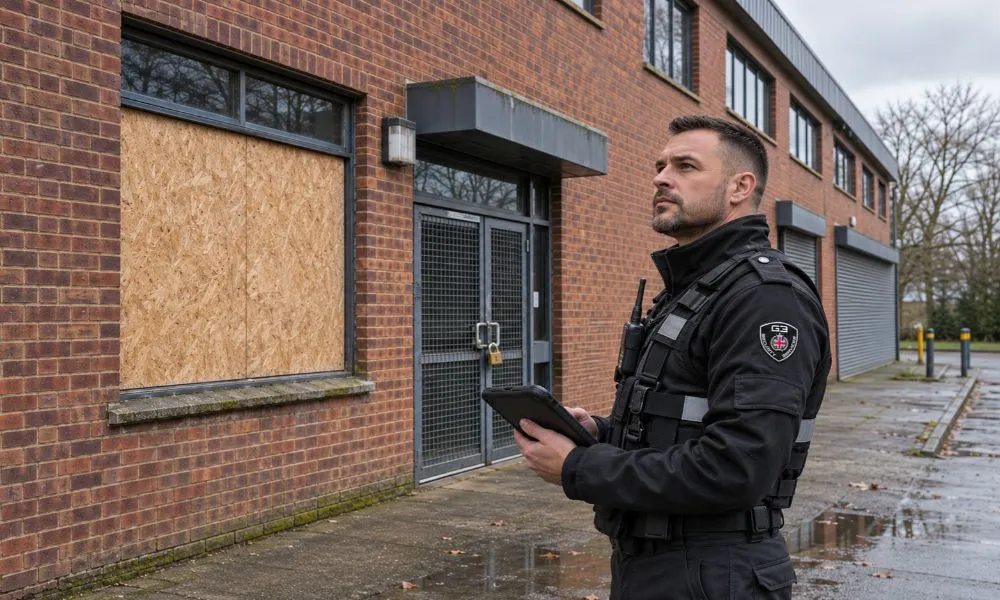
Vacant property inspections are one of the simplest ways to protect an empty building. When a property is left unoccupied, it quickly becomes a target for theft, vandalism and squatters, while hidden problems such as leaks and damp can go unnoticed for weeks.
Regular visits from trained, SIA-licensed security officers keep your property secure, help you meet your insurance conditions and give you a clear record of its condition. In this guide, we explain how vacant property inspections work, how often you need them and what to look for in a security provider.
What is a Vacant Property Inspection?
A vacant property inspection is a scheduled security visit to an empty building. A trained security officer checks that the property is locked and secure, looks for signs of intrusion, damage or squatting, and records the findings in a dated report with photos. Security inspections are useful whenever a property is left empty, including:
- Rental properties between tenants
- Homes and commercial units waiting to be sold or let
- Buildings awaiting renovation or redevelopment
- Properties held during probate
- Closed offices, shops, pubs, schools and industrial sites
Inspections sit between doing nothing and having security guards on site around the clock. Instead of full-time manned guarding, security officers make regular, documented visits that deter intruders, catch problems early, satisfy insurers and show that the property is being actively protected.
The Security Risks of Leaving a Property Empty
Empty buildings attract crime because there are no occupants or security guards around to notice or stop it. The most common risks are:
- Theft: Copper pipes, boilers, cables, lead and fixtures are valuable and easy to remove from an unguarded building.
- Vandalism and Arson: Broken windows, graffiti and deliberate fires are more likely when a building looks unprotected.
- Squatters and Trespassers: Unauthorised occupation can be costly and slow to resolve, especially in commercial buildings.
- Unauthorised Use of Utilities: Intruders may tap into electricity or water, leaving the owner with the bill and a safety risk.
- Water Damage: A small leak or a frozen pipe can run for weeks without a security check, causing flooding, damp and mold.
- Fly-tipping and Pests: Open or unwatched sites are easy targets for dumped rubbish, which attracts rats and other pests.
- Legal Claims: If someone is injured on the site, the owner may be held responsible.
The longer a property stays empty without security, the more these risks build up, and the more likely a small issue is to become a major repair.
Vacant Property Insurance Requirements
Insurance is one of the main reasons owners hire a security company for inspections. Most standard home, landlord and commercial policies only cover a property for a limited time once it becomes empty, usually between 30 and 60 consecutive days. After that point, cover is often reduced to basic risks such as fire, while theft, malicious damage and escape of water may be excluded.
To stay protected, owners usually need to tell their insurer the property is empty and move to specialist unoccupied property insurance. These policies normally come with security conditions, such as:
- Security inspections at set intervals, commonly every 7, 14 or 30 days
- A written record of each inspection visit
- Clearing post and keeping all doors, windows and gates locked
- Removing rubbish and flammable materials from the site
- In some cases, working alarms, CCTV or physical security such as steel screens
If these conditions are not met, a claim can be reduced or refused. Inspections carried out by a professional security team give you dated, photographed evidence that every condition has been followed. Always check your own policy, as requirements vary between insurers.
Legal Responsibilities for Owners of Empty Properties
An empty building does not remove the owner’s legal duties. Good security plays a big part in meeting them.
Duty of Care to People on Site
An empty building can still receive lawful visitors, such as contractors and property agents. In England and Wales, the person or organisation in control of the premises must take reasonable care to keep visitors safe. A more limited duty can also apply to trespassers in certain circumstances. During a scheduled inspection, a security officer can record visible hazards such as broken glass, damaged flooring or uncovered openings and alert the property manager so they can arrange repairs or restrict access.
Squatting and Unauthorised Occupation
In England and Wales, squatting in an empty commercial building is generally a civil matter. If a security officer finds a damaged lock, an unsecured door or signs that someone is occupying the building, they can document what they observed and promptly notify the property manager. This gives the manager a chance to secure damaged entry points or seek advice on recovering possession if the building is occupied.
How Vacant Property Inspections Work
Most professional security companies follow a clear process:
- Security Risk Assessment: A security supervisor visits the property, identifies weak points and agrees on the inspection schedule with you.
- Key Holding and Access Control: Keys or access codes are held securely by the security team, with a clear record of who uses them and when. Officers can also unlock and lock up the building for contractors, agents or surveyors.
- External Security Patrol: The security officer walks the perimeter, checking fences, gates, doors, windows, roofs and security signage, and looking for signs of attempted entry.
- Internal Security Checks: Inside, they look for intruders, signs of occupation, leaks, damp, damage and pests, and check that alarms, smoke detectors and utilities are in the expected state.
- Reporting: Each visit is recorded with the date, time, findings and photos, and the report is sent to you, usually on the same day.
- Security Response: If an issue is found, the security team reports it immediately and can arrange an alarm response, emergency boarding, repairs or police involvement, depending on what you have agreed.
What Should a Security Inspection Report Include?
A good security report is clear, consistent and useful as evidence. It should include:
| Section | What it should show |
| Visit details | Date, time, security officer’s name and length of visit |
| Perimeter security | Fences, gates, doors, windows, roof and signs of attempted entry |
| Internal condition | Signs of intruders or occupation, leaks, damp, damage and pests |
| Utilities | Water, gas and electricity status, with meter readings to spot misuse |
| Security systems | Alarms, CCTV, smoke detectors and fire safety equipment |
| Photos | Time-stamped images of key areas and any issues found |
| Actions | What the officer did on the day and what needs follow-up |
How Often Should a Vacant Property Be Inspected?
There is no single right answer, but your insurance policy sets the minimum. Beyond that, the right level of security depends on:
- Location: Properties in areas with higher crime or known squatting problems need more frequent security visits.
- Type and Value: Large commercial sites and high-value buildings carry more risk and may need patrols or security guards.
- Season: In winter, frozen and burst pipes are a major risk, so more frequent checks are sensible.
- Condition: Older buildings or sites with weak entry points need closer attention.
As a general guide:
| Situation | Suggested security cover |
| Short-term empty home in a low-risk area | Inspection every 14 to 30 days, or as your policy requires |
| Typical empty residential or small commercial property | Weekly security inspection |
| High-risk area, high-value site or winter months | Weekly or more frequent inspections, plus alarm monitoring |
| Sites with a history of intrusion | Mobile security patrols several times a week, or on-site security guards |
Random visit times are especially effective, because anyone watching the site cannot predict when security officers will next arrive.
Benefits of Vacant Property Inspections
- Deterring Crime: Regular visits from uniformed security officers show that the site is being watched, which discourages thieves, vandals and squatters.
- Catching Problems Early. Break-in attempts, leaks and damage are found within days, not months, keeping repair costs down.
- Meeting Insurance Conditions: Scheduled security visits and written reports help you comply with your policy and protect your cover.
- Evidence for Claims: Time-stamped reports and photos make it easier to prove when damage happened and that you met your obligations.
- Reducing Legal Risk: Security officers find hazards so you can fix them, helping you meet your duty of care.
- Lower Cost Than Full-time Guarding: Inspections give you professional security cover without paying for security guards on site 24/7.
- Protecting Value: A secure, well-maintained building is quicker to sell or let and holds its value better.
- Peace of Mind: Owners who live far away, executors and portfolio managers know exactly what is happening at each property.
Inspections vs Other Vacant Property Security Options
Inspections work well on their own for many properties, but higher-risk sites often combine them with other security services.
| Security option | What it does | Best for |
| Vacant property inspections | Scheduled security checks with written reports | Most empty homes and commercial units |
| Mobile security patrols | Frequent visits by patrol officers, often at night | Sites in higher-crime areas |
| Key holding and alarm response | Security officers attend when an alarm is triggered | Sites with an intruder alarm |
| Remote CCTV and alarm monitoring | Detects intruders and alerts a monitoring centre | Sites needing 24/7 detection |
| Steel screens and doors | Physically blocks windows and entrances | Long-term vacancies and high-risk sites |
| Property guardians | People live in the building under a licence | Larger buildings empty for longer periods |
| Manned guarding | Security guards on site full time | High-value or high-risk sites |
Regular checks can help you spot damage or leaks before repairs get more expensive. If the property only needs occasional checks, scheduled visits may cost less than having a guard on site full time.
Ask for a written quote that explains how often the guard will visit, what they’ll check and what’s included in the report. If your insurer requires inspections, check that the service meets your policy requirements.
How Much Do Vacant Property Inspections Cost?
The cost depends on several factors:
- How often security officers visit
- The size and layout of the property
- Its location and travel time
- How detailed the report needs to be
- Extra security services, such as key holding, alarm response, patrols or emergency boarding
The best way to judge cost is to compare it with the alternative. A single break-in, burst pipe or rejected insurance claim can cost far more than months of regular security inspections, and inspections cost much less than security guards on site full time. Ask providers for a clear quote that lists exactly what each visit includes.
How to Choose a Vacant Property Security Provider
A professional security company should understand your property before recommending a service. It should ask how long the building will be empty, who still needs access and whether there have been any problems on site. This helps it explain what kind of security your property needs and how often someone should visit.
At G3 Security, our trained guards carry out regular checks on vacant buildings. If an officer finds an unsecured door or another issue that needs attention, they record what they found and notify your designated contact. After each visit, we provide a report so you know what was checked and what needs follow-up.
Conclusion
Before leaving a property empty, check what your insurer requires and agree on a visit schedule that suits the building. Regular inspections can help spot a damaged lock, signs of unauthorised entry or a leak before the problem gets worse. A dated report gives you a record of what was checked and what needs attention.
At G3 Security, our officers carry out regular vacant property checks, report their findings after each visit and alert your nominated contact when an issue needs attention. Get in touch to discuss how often your property should be checked and what each visit should cover.
 Get a Quote
