
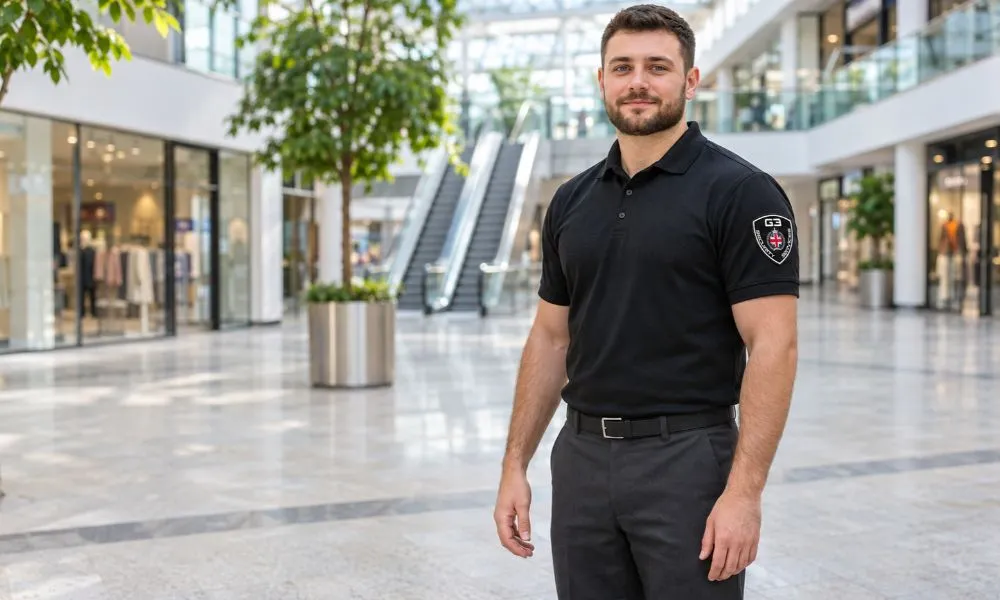
A security guard in a large shopping centre patrols shared areas, helps shoppers, and responds when something goes wrong. Depending on the shift, they may also monitor CCTV, check alarms, or help secure the building at closing time.
With hundreds of shoppers and several businesses sharing the same space, the security team helps keep the centre running smoothly. In a large shopping centre, guards work with the control room, shop staff, and centre management to respond to incidents across multiple floors, entrances, and shared areas.
Patrolling the Centre and Monitoring Access
Security guards patrol areas such as entrances, walkways, food courts, and car parks. A visible security presence can help deter theft and disruptive behaviour. It also gives shoppers and staff someone to approach if they need help.
During a patrol, a guard might spot a spill, a damaged door, or stock blocking a walkway. They can report the problem and help keep people clear of the area while it’s dealt with.
Officers may also check who is authorised to enter staff-only areas, service corridors, and loading bays. This helps retailers receive deliveries while keeping those areas separate from public walkways.
Monitoring CCTV and Responding to Alarms
In centres with a control room, CCTV operators and patrol officers work together. If an operator sees a crowd forming or gets a call about an incident, they can direct an officer to the right location and share updates as the situation develops.
When an alarm goes off, the team follows the centre’s procedures to check what happened. A door alarm, for example, could be triggered by a fault or by a door that was left open. The officer reports what they find so the relevant team can follow up.
Handling Suspected Theft and Disputes
Retail staff may call centre security when they suspect shoplifting, face aggressive behaviour, or need help with a dispute. The security officer assesses the situation, speaks calmly with the people involved, and contacts centre management or the police when appropriate.
For example, if an argument in a shop spills into the main walkway, an officer can help calm the situation and keep the area clear for other shoppers. Afterwards, they record what they observed and how they responded.
Helping Shoppers and Managing Crowds
Security guards help shoppers find their way around the centre. They can point visitors towards shops, toilets, lifts, and accessible entrances. If someone loses an item, a guard can show them where to report it.
During sales, weekends, and special events, guards help organise queues and keep entrances and walkways clear. If a queue starts to block a neighbouring shop or a busy corridor, they can work with shop staff to move it so people can pass easily.
Supporting Emergency Response and Evacuations
Security guards can help when someone falls ill, gets injured, or needs urgent assistance. They may call for a trained first aider, guide emergency responders to the scene, and help keep the surrounding area clear.
If the centre needs to evacuate, officers follow the site’s emergency plan. Depending on their assigned role, they may direct visitors towards exits, share updates with the control room, or coordinate with shop staff as people leave.
Opening, Closing, and Keyholding
Some officers carry out checks before the centre opens and after it closes. Before opening, they may confirm that public areas are ready and help authorised staff or contractors gain access. After closing, they may check assigned areas and make sure designated doors are secured.
Where keyholding is part of the assignment, officers are responsible for keeping keys secure and using them to provide authorised access. Some teams also respond to alarms outside trading hours.
Writing Incident Reports and Handing Over to the Next Shift
After an incident, officers record what happened, where and when it took place, who was informed, and what action was taken. A clear report gives centre management a record to use when following up with retailers, maintenance staff, or others involved.
Officers also brief the next shift about anything that still needs attention. If a door is faulty and the repair is scheduled for the following morning, for example, the incoming team needs to know about the fault and who is handling it.
Training and SIA Licensing in the UK
In the UK, whether an officer needs a Security Industry Authority (SIA) licence depends on the work they do and how their services are provided. Guarding, keyholding, and some types of CCTV monitoring can involve different licensing requirements. The SIA’s guidance explains which rules apply to each activity.
Officers also need to learn how their particular shopping centre operates. That includes getting familiar with the layout, using radios, knowing who to contact for help, and understanding the site’s emergency procedures.
Looking for a Security Team for Your Shopping Centre?
With multiple entrances, busy walkways, and several shops under one roof, it can be hard to manage security across the whole centre. During peak hours, queues can block walkways, and shop staff may need help with an incident while they’re serving customers.
At G3 Security, we provide security guards who can patrol shared areas, help manage queues, and respond when retailers need support. We can plan security cover around your centre’s layout, opening hours, and busiest periods.
Conclusion
Security guards help keep a large shopping centre safe and running smoothly. They patrol shared areas, help shoppers, and respond when retailers need support. Depending on their shift, they may also monitor alarms, report hazards, and secure the centre after closing.
A good security team gives shoppers and staff someone to turn to when they need help, whether it’s a simple question, a busy queue, or an emergency.
 Get a Quote
