
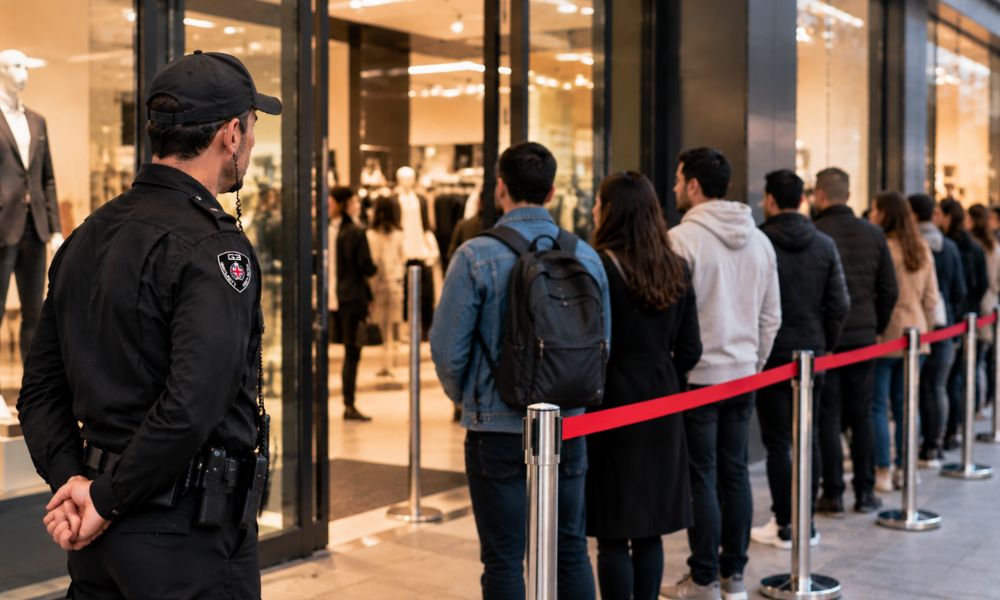
A queue outside a shop may seem like a good sign for business. It can also become difficult to manage within minutes. Customers arrive from different directions, someone joins near the front, pedestrians struggle to pass, and staff at the entrance cannot see what is happening farther down the line.
This is not only a concern during major sales. A delayed opening, a popular product launch, slow checkouts or an unexpectedly busy Saturday can all create an outdoor queue. Security guards help by giving the line a clear structure, controlling entry, communicating with customers and alerting store management when the available space is no longer suitable.
The aim is simple, customers should know where to go, people outside the store should be able to move safely, and the shop should admit people at a pace it can handle.
Why Do Queues Outside Stores Need Active Management?
An outdoor queue affects more than the people waiting in it. It may run across a neighbouring entrance, narrow a pavement or bring customers close to a car park or delivery route. At the front, people may gather around the door even when the rest of the line is orderly.
The problem can also move inside. Letting customers enter quickly does little good if they immediately meet a crowded aisle, a busy checkout or a display positioned just beyond the entrance.
This is why retail security involve the whole plan, arrival, waiting, entry and movement inside the store. The UK Health and Safety Executive (HSE) advises assessing how people arrive, enter, move around and leave a crowded site, as well as the hazards created by pedestrian and vehicle movement or inadequate entrances. Although its detailed guidance addresses events, these are useful considerations for a store expecting a significant queue.
Plan the Queue Before Customers Arrive
The best time to decide where a queue should go is before the first customer starts one. A store manager and security supervisor should walk the outside area and agree on a route. They need to consider the width of the available space, other shopfronts, accessible entrances, emergency access, deliveries and the direction from which customers are likely to arrive. The plan should answer a few practical questions:
- Where will the end of the queue be?
- How will arriving customers find it?
- Who will stand at the entrance?
- What happens if the line grows beyond the planned space?
- Who decides when to pause or restart an entry?
- How will staff communicate with one another?
A queue that has a clear start and direction is easier for customers to understand. It is also easier for a guard to spot when people are joining in the wrong place or when the line begins to obstruct another area.
Stores should revisit the layout when conditions change. A route that works on a quiet morning may be unsuitable during a weekend promotion, in heavy rain or while a neighbouring business receives a delivery.
Make the Line Easy to Follow
Customers should not need to ask three different employees where to stand. A sign showing where the queue starts, a clearly marked route and a visible member of staff can prevent much of the confusion that later turns into arguments.
Barriers may help guide people, but they need to suit the site. They should not create a narrow pocket at the door, force pedestrians into a vehicle route or make it difficult for someone to leave the line. The HSE recommends combining queuing systems, signage, appropriate barriers and staff supervision. It also advises assessing the barrier layout itself, since an unsuitable arrangement can introduce new risks.
A guard positioned near the point where customers join can direct new arrivals immediately. For a longer queue, the store may also need someone at the entrance to control admission. One person cannot always see both ends of a line, monitor the doorway and answer customer questions effectively.
Admit Customers at a Manageable Pace
Queue management is not a race to get everyone through the door. The pace of entry should reflect what is happening inside.
For example, imagine a clothing store opening for a weekend sale. The queue outside is moving smoothly, but customers inside are gathering around a display near the entrance. If the guard continues to admit people at the same rate, the doorway and first aisle may become crowded.
The entrance guard needs regular updates from a colleague or store employee inside. If movement slows, they can pause admission and explain the delay to those waiting. Once space opens up, entry can resume. For a large rush at opening time, admitting customers in small groups may be more manageable than opening the doors to everyone at once.
Stores should use their own assessed capacity and site plan rather than choosing an arbitrary number of customers to admit. Counting entries and exits can help staff understand how busy the premises are, while direct observation shows whether people are bunching up in a particular area. HSE guidance recommends monitoring both overall numbers and local crowding at entrances, exits and queues.
Keep Customers Informed While they Wait
Waiting often becomes more frustrating when customers do not know what is happening. Clear updates can prevent a short delay from feeling like an unexplained refusal of entry.
Security guards should give information they know is accurate: where to join, whether entry is paused and when customers can expect another update. Store employees should answer questions about stock, prices, promotions and opening times. This division matters. A guard should not promise that an item is still available without confirmation from the store.
The team should agree on one message before giving updates. If the entrance guard says the wait is ten minutes while another employee says the store is about to close the line, customers may lose confidence in both instructions.
Communication should also be respectful. A calm explanation to someone who has joined at the wrong point is more likely to work than calling them out across the queue. When a decision is unpopular, guards can explain the process and refer product or policy questions to the manager.
Make the Queue Accessible
A queue that looks straightforward to staff may be difficult for a customer who uses a wheelchair, cannot stand for a long period, has a visual impairment or needs help understanding verbal directions.
Store management should consider these needs when planning the route and the entry process. Guards should know whom to contact if a customer asks for assistance and should avoid making assumptions about what support that person needs. A suitable response will depend on the customer and the store’s circumstances.
UK government guidance says service providers should think ahead about reasonable adjustments for disabled customers rather than wait until someone experiences a barrier. That may involve changes to a procedure or additional staff support, where reasonable.
Spot Problems Before they Escalate
A queue rarely goes from calm to unmanageable without warning. Security guards can watch for early signs that the plan is failing, such as people clustering at the entrance instead of joining the line, the queue extending beyond its agreed route, pedestrians stepping into a road or delivery area to pass, or customers pressing against barriers or one another. Complaints about waiting or queue jumping may also start to spread, while people near the front may struggle to move away from the line. Staff inside may also report crowding immediately beyond the door.
The right response depends on the problem. A guard might redirect new arrivals, ask a manager to clarify a promotion, request another member of staff or temporarily pause entry. If the planned queuing space is full, the store should use its agreed overflow or stop-joining procedure rather than let the line grow without direction. The HSE notes that poorly managed queues and delays can contribute to people surging towards doors when they open. Recognising pressure early gives staff more options than reacting after pushing begins.
Handle Disputes without Losing Control of the Wider Queue
Queue jumping, unclear entry rules and disappointment over limited stock can lead to disagreements. Guards should address these issues promptly, but one dispute should not leave the rest of the entrance unmanaged.
If someone claims another customer has cut in, the guard can check what happened, restate the queue arrangement and give clear directions. If a customer becomes aggressive, the guard should follow the site’s escalation procedure and call for support where needed. A store manager may need to resolve a dispute about stock or store policy.
Where staffing allows, one person should continue to watch the entrance while another deals with the individual issue. This is especially important when customers are still arriving. The guard’s role is to respond calmly and keep communication clear, not to win an argument in front of the crowd.
Prepare for Weather, Interruptions and Emergencies
Outdoor conditions can change the way a queue behaves. Heavy rain may cause people to crowd beneath a doorway or awning. Poor lighting can make signs harder to see. A late delivery might bring a vehicle close to the waiting area.
Security should report these changes and work with the manager to adjust the arrangement. Any new route still needs to preserve access and avoid shifting the problem onto a neighbouring business or pedestrian path.
Staff should also know what to do if normal entry stops altogether because of an alarm, medical incident or another emergency. Customers need clear directions, and the entrance must remain available for the store’s emergency procedure. HSE guidance specifically advises keeping exits, pedestrian routes and emergency arrangements ready before admitting a crowd.
Review the Queue after a Busy Period
When the rush ends, a brief conversation between security and store management can review what to improve. Did customers find the end of the line? Was the entrance ever blocked? Did people receive accurate updates? Was there enough staff coverage to watch both the queue and the store?
The answers may lead to a better sign, a different barrier position, an earlier staff briefing or a clearer decision about when to stop new arrivals joining. The HSE recommends reviewing crowd management arrangements and debriefing after significant incidents or changes to procedures.
How Security Guards Can Help Manage Store Queues
Managing a busy store queue takes clear planning, visible security and quick action when conditions change. G3 Security can provide trained security guards to help guide customers, control entry, monitor crowding and keep queue areas organised. Our guards can also identify early signs of problems, support store staff during busy periods and respond calmly to disputes or changes in the queue. Whether you are preparing for a busy sale, product launch or an unexpectedly busy day, G3 Security can provide security support based on your store’s needs and layout. Contact G3 Security to discuss your store security and queue management requirements.
Final Thoughts
Security manages a busy store queue most effectively when the line has a planned route and the guards have clear responsibilities. They can guide arrivals, support fair entry, keep customers informed and flag crowding before it becomes harder to control. Store managers, meanwhile, need to provide accurate information and make decisions about capacity, staffing and changes to the plan.
A well-managed queue should feel predictable to the people waiting in it. Customers know where to go, staff know when to act, and the entrance remains workable even when the store is busy.