
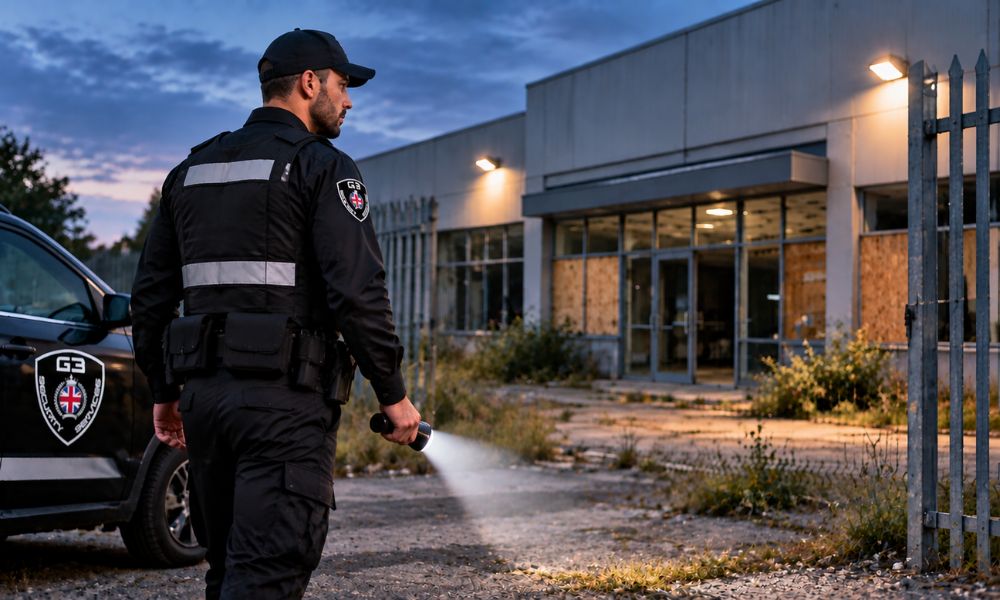
Leaving a property empty for weeks or months can create security challenges for owners and property managers. Without employees, tenants or residents on site, problems such as burglary, vandalism, fire or water damage may not be noticed quickly.
This is where keyholding and alarm response can play an important role. A security company can hold authorised keys and send a security officer to the property when an alarm activates or when attendance is required under the agreed service.
But does every vacant property need keyholding and alarm response? Not necessarily. The right approach depends on the property, how long it will remain empty, its location, existing security systems and any insurance requirements.
Why Do Vacant Properties Need Extra Security?
An empty property can be more difficult to monitor because there are fewer people around to notice suspicious activity or damage.
Common risks include:
- Burglary
- Unauthorised access
- Vandalism
- Theft of equipment or materials
- Fire
- Water leaks
- Trespassing
- Damage to doors and windows
- Damage to gates or fencing
BS 8584 is the British Standard for vacant property protection services. It covers different security measures that may be used to protect empty properties, including manned security, mobile patrols, remote monitoring, alarms, CCTV and physical security measures. The right combination will depend on the type and condition of the property.
Does Every Vacant Property Need Keyholding?
No. A small property that will be empty for a short period may have different requirements from a warehouse, office or retail unit that will remain vacant for several months. Keyholding can be particularly useful when:
- The owner lives far from the property
- No employees are based at the site
- The property has an intruder alarm
- The building is empty outside normal working hours
- Valuable equipment or materials are left inside
- Nobody is available to attend an alarm activation
- The property’s insurance conditions require a nominated keyholder or response arrangement
The main question is whether there is a clear and suitable response plan if something happens while the property is empty.
How Keyholding and Alarm Response Help Vacant Property Security
Keyholding and alarm response can provide an important layer of protection for vacant properties, especially when nobody is available to attend the site outside normal working hours. When an alarm activates, an authorised security officer can attend the property, check the site and follow the agreed response procedure.
Provides a Quick Response to Alarm Activations
When an alarm activates at an empty property, there may be nobody nearby to investigate what has happened. A keyholding service provides an authorised person who can attend the site and check for signs of a security issue.
The officer can follow the agreed site instructions and report what they find to the relevant contact.
Helps Identify Signs of Break-In
A vacant property may be targeted for theft, vandalism or unauthorised access. An alarm response officer can check doors, windows, gates and other accessible areas for visible signs of forced entry or damage.
If a problem is found, the officer can report the details and follow the agreed response procedure.
Reduces the Need for Owners to Attend
Property owners and managers may live a long distance from an empty building. Having a keyholding service means they do not necessarily need to travel to the property every time an alarm activates.
An authorised security officer can attend on their behalf, subject to the agreed service and response procedure.
Supports Regular Security Checks
Keyholding can also work alongside planned property inspections and mobile patrols. These visits can help identify problems that may not activate an alarm, such as damaged fencing, broken windows, water leaks or signs of trespassing.
Regular checks can provide property owners with a clearer picture of the condition of an empty building.
Works With Other Security Measures
Keyholding and alarm response do not need to be used on their own. They can form part of a wider vacant property security plan alongside CCTV, intruder alarms, mobile patrols, lighting and physical security measures.
The right combination depends on the property’s location, condition, length of vacancy and potential risks. BS 8584 provides guidance on vacant property protection, while BS 7984-1 covers keyholding and response services.
What About Regular Vacant Property Inspections?
Regular inspections are different from alarm responses. An alarm response normally happens after an alarm activation. A scheduled inspection is a planned visit to check the condition and security of the property.
An inspection may look for:
- Broken windows
- Damaged doors
- Signs of forced entry
- Water leaks
- Storm damage
- Graffiti
- Signs of trespassing
- Damage to gates or fencing
- Problems with security equipment
- Other visible issues
Regular inspections can be useful because not every problem will trigger an intruder alarm. For some vacant properties, scheduled inspections can therefore work alongside keyholding and alarm response rather than replacing them.
Can Keyholding Support Insurance Requirements?
It can, but property owners should always check their own insurance policy. Insurance requirements for vacant properties can vary. An insurer may require certain security measures, inspections, alarm arrangements or nominated keyholders while a building is unoccupied.
This means property owners should not assume that having an alarm or keyholding service automatically meets their insurance conditions.
Before arranging security, check:
- How the policy defines an unoccupied property
- How often the property needs to be inspected
- Whether an alarm must be monitored
- Whether alarm response is required
- Whether mobile patrols are required
- Whether a nominated keyholder is required
- What records of inspections or visits need to be kept
If you are unsure about a condition, speak to your insurer before changing the property’s security arrangements.
Does Keyholding Replace Mobile Patrols?
Not always. Keyholding and mobile patrols have different purposes. Keyholding and alarm response provides attendance when an alarm or another agreed response request occurs.
Mobile patrols involve planned visits to the property. These checks can help identify problems that have not triggered an alarm and provide an additional security presence.
For a larger or higher-risk vacant property, both services may form part of the same security plan. BS 7984-3:2020 provides recommendations for mobile security services, while BS 7984-1 covers keyholding and response services.
Does the Keyholder Need an SIA Licence?
Yes, contracted keyholding is a licensable activity under the SIA rules. The SIA states that a front-line key holding licence is required for security work involving keeping or controlling access to a key or device used to operate a lock.
There is no specific training qualification required for a keyholding licence. However, if the work carried out during a response includes manned guarding activities, the appropriate front-line licence and qualification may also be required.
Property owners should therefore check that the security provider uses appropriately licensed staff for the work they carry out.
What Should You Check Before Hiring a Keyholding Service?
Before choosing a keyholding and alarm response service, ask how the arrangement will work in practice.
You may want to check:
- How the property’s keys are stored and controlled
- What happens when the alarm activates
- Whether out-of-hours response is available
- How officers access the property
- What areas will be checked
- How incidents are reported
- What happens if forced entry is discovered
- Whether mobile patrols are available
- Whether regular inspections can be included
- Whether staff have the appropriate SIA licences
- Which standards and procedures the provider follows
You should also provide clear information about the property, including access arrangements, alarm details, emergency contacts and any known risks.
When is Keyholding and Alarm Response Most Useful?
Keyholding and alarm response may be particularly useful when a property:
- Will remain empty for an extended period
- Is located away from the owner’s home or office
- Has an intruder alarm
- Contains valuable equipment, fixtures or materials
- Has experienced previous security incidents
- Has no staff working on site
- Requires an out-of-hours response
- Has insurance conditions requiring a nominated keyholder or response arrangement
However, not every vacant property needs the same level of protection. A small property with a nearby nominated keyholder may need a different arrangement from an empty warehouse, office building, retail unit or commercial premises.
How Security Company Can Help With Vacant Property Security
G3 Security can provide security services for vacant properties where owners and property managers need a planned response to security incidents. Keyholding and alarm response can provide attendance when an alarm activates, while mobile patrols and scheduled inspections can provide additional checks when the property is empty. The right service depends on the property’s location, size, condition, length of vacancy, existing security systems and insurance requirements.
Conclusion
A vacant property does not automatically need keyholding and alarm response, but these services can be useful when nobody is available to attend an alarm activation or deal with a security issue outside normal working hours.
Property owners should first check their insurance requirements and assess the risks associated with the building. Keyholding, alarm response, regular inspections, mobile patrols, CCTV and other security measures can then be combined according to the property’s needs.
For owners and property managers looking after vacant buildings, G3 Security can help provide an appropriate security and response arrangement.