
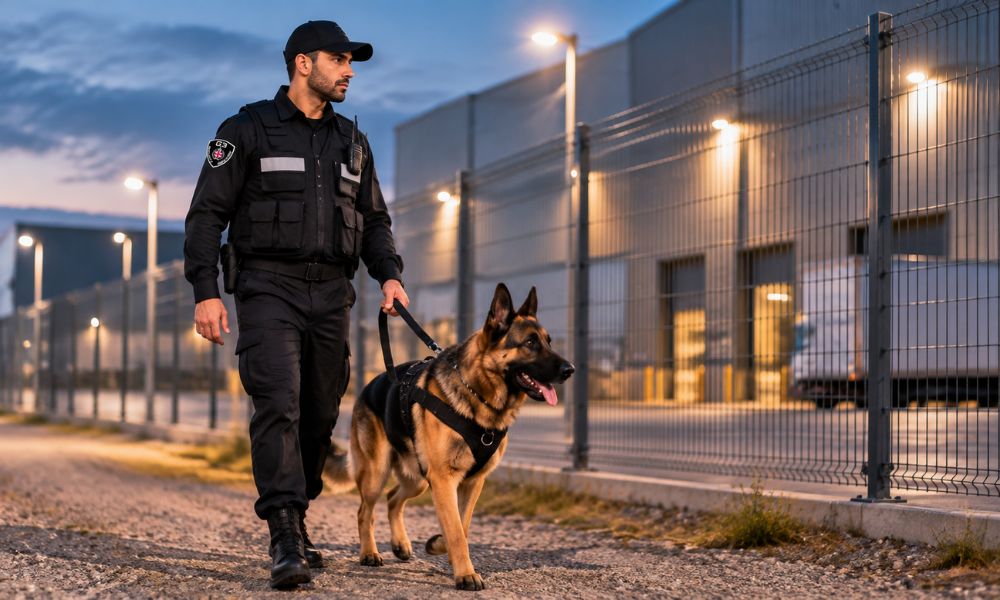
Security dog handlers need more than basic dog-handling skills. They need to understand security procedures, control their dog, carry out patrols, recognise potential risks and respond appropriately to incidents.
In the UK, the training required depends on the type of security work being carried out. Where the role involves licensable security activities, the handler may need the appropriate SIA licence and licence-linked qualification. Specialist dog-handler training is then needed to develop the skills required to work with a security dog.
For general-purpose security dog handlers, NASDU offers qualifications developed around the National Occupational Standards for security dog handling and the requirements of BS 8517-1:2016.
Do Security Dog Handlers Need an SIA Licence?
There is an important difference between SIA security training and specialist security dog training. The SIA requires front-line security operatives carrying out licensable activities to hold the appropriate licence. Security guarding is one of the activities covered by an SIA front-line licence, and applicants need the relevant licence-linked qualification before applying.
The SIA does not list a separate “security dog handler licence”. Instead, the licence requirement depends on the security activity the person is carrying out. This means a handler working in a contract security role may need:
- The appropriate SIA licence
- The relevant SIA licence-linked qualification
- Specialist security dog-handler training
- Training appropriate to the type of dog and security work
The exact requirements should be checked against the duties the handler will perform.
What is Specialist Security Dog Handler Training?
Specialist training teaches the handler how to work effectively with a trained security dog during real security duties.
For general-purpose security dog work, NASDU’s Level 2 qualification includes theory and practical training and has a minimum of 60 guided learning hours. Learners who start with an untrained dog may require additional training and practical work with the dog.
Training can cover areas such as:
- Dog handling
- Obedience and control
- Patrol work
- Reading the dog’s behaviour
- Working in different environments
- Security procedures
- Risk awareness
- Incident response
- Communication
- Recording and reporting
The handler needs to understand both the security role and the behaviour of the dog.
General Security Training
Before moving into specialist dog handling, handlers may need a foundation in general security work.
For example, NASDU’s Level 2 General Purpose Security Dog Handler qualification states that learners should already be trained and competent in a general Security Officer role and hold an appropriate SIA licence unless exempt.
SIA licence-linked security guarding training covers the core knowledge and skills required for the security guarding role. The SIA’s current guidance states that front-line licence applicants must complete the relevant licence-linked qualification before applying.
This foundation can help a dog handler understand normal security procedures before adding specialist dog-handling skills.
Dog Handling and Control
A major part of the training is learning how to control the dog safely and effectively. The handler needs to understand the dog’s behaviour and be able to give clear commands during different situations. Practical training can include:
- Lead handling
- Obedience
- Recall
- Controlled movement
- Working around distractions
- Positioning the dog
- Reading the dog’s indications
- Working around people
- Working around vehicles and buildings
The handler should be able to maintain control while continuing to carry out normal security duties.
Practical Patrol Training
Security dog handlers need practical experience, not just classroom knowledge. Training can involve working in environments that are similar to the locations where the handler may eventually work, such as:
- Construction sites
- Warehouses
- Industrial premises
- Commercial buildings
- Open areas
- Car parks
- Perimeters
- Vacant properties
The handler and dog may need to work in different lighting, weather and environmental conditions. Practical training helps the handler understand how the dog behaves in these different surroundings.
Risk Assessment and Security Awareness
A security dog handler still has normal security responsibilities. They need to recognise potential risks and follow the procedures set for the site. During a patrol, a handler may need to identify:
- Unauthorised access
- Open gates
- Damaged fencing
- Signs of forced entry
- Suspicious activity
- Unsafe areas
- Unusual vehicles
- Potential hazards
The handler should know when an issue needs to be reported and what action is permitted under the site’s security procedures.
Incident Response Training
Security dog handlers may encounter suspicious activity or security incidents while carrying out patrols. Training should help them understand how to respond appropriately rather than acting outside their role. Depending on the assignment, this can include:
- Assessing the situation
- Maintaining control of the dog
- Reporting suspicious activity
- Following site procedures
- Communicating with other security staff
- Contacting the appropriate person
- Recording what happened
The response should always be based on the circumstances and the duties the handler has been contracted to perform.
Communication and Incident Reporting
A handler may need to communicate with security supervisors, site managers, other guards or emergency services. Clear communication is particularly important when an incident occurs. Handlers may also be expected to record:
- Date and time of the patrol
- Areas checked
- Unusual activity
- Security issues found
- Actions taken
- People contacted
- Damage or attempted entry
- Follow-up required
Good records can help a business identify repeated problems and review its wider security arrangements.
Dog Welfare Training
Security dog handlers are also responsible for the welfare of the dog while it is working. They need to understand the dog’s basic needs and recognise signs that it may be tired, unwell, injured or unsuitable to continue working.
This can include understanding:
- Rest requirements
- Water and feeding
- Suitable working conditions
- Safe transportation
- Signs of illness or injury
- Weather and environmental conditions
- Appropriate working periods
A properly trained handler should know when the dog’s welfare needs to take priority.
Do Security Dog Handlers Need Refresher Training?
Training does not necessarily stop after the initial qualification. Handlers can benefit from continued practical training to maintain their skills and the working relationship with their dogs. NASDU’s Level 3 General Purpose Security Dog Handler qualification, for example, is aimed at experienced handlers and is designed to develop additional skills and knowledge. It also refers to continuation training under BS 8517-1.
Ongoing training can include:
- Refresher exercises
- Practical patrol scenarios
- Dog control
- Site-specific procedures
- Incident response
- Health and safety
- Changes to security requirements
The exact frequency and type of training can depend on the role, provider and qualification.
What About Specialist Detection Dogs?
Not all security dogs perform the same type of work. General-purpose security dogs are different from specialist detection dogs, which may be trained to identify particular substances or items.
For example, NASDU has separate training pathways for detection of dog handlers, including explosive detection. Its Level 4 Explosive Detection Dog Handler programme is designed around the National Occupational Standards for security detection dog handlers and BS 8517 Part 2.
The training requirements can therefore vary significantly depending on what the dog is trained to detect and the type of assignment.
What Should Businesses Check Before Hiring a Security Dog Handler?
If you are considering security dog services, do not simply ask whether the company has trained dogs. Check the qualifications and experience of both the handler and the dog team.
Useful questions include:
- Does the handler have the appropriate SIA licence for the security duties?
- What specialist dog-handler qualification does the handler hold?
- What type of work has the dog been trained for?
- Has the handler worked on similar sites?
- How is the handler and dog team assessed?
- What ongoing training do they receive?
- How is the dog’s welfare managed during shifts?
- Does the company have appropriate insurance?
- How are patrols and incidents recorded?
- What happens if the usual handler or dog is unavailable?
Checking these details can give you a clearer picture of the service being provided.
How Professional Company Can Help
At G3 Security, we provide security services based on the requirements of your site. If you are considering security dog services, our team can discuss your property, operating hours, access points and security concerns to help identify suitable coverage.
Security dog teams can be useful for locations such as construction sites, warehouses, industrial premises, vacant properties and larger commercial sites where additional patrol coverage may be required.
Contact G3 Security to discuss your security requirements and find out how security dog services could fit into your wider site security plan.
Conclusion
Security dog handlers need a combination of general security knowledge and specialist dog-handling skills. Depending on their duties, this may include an appropriate SIA licence and licence-linked security qualification, followed by specialist training for working with a security dog.
For general-purpose security dog work, qualifications such as the NASDU Level 2 Award provide structured training covering the knowledge and practical skills needed for the role. More advanced and specialist pathways are also available for experienced handlers and detection work.
For businesses, checking the handler’s licensing, specialist qualifications, experience, ongoing training and the dog’s training can help when comparing security dog service providers.