
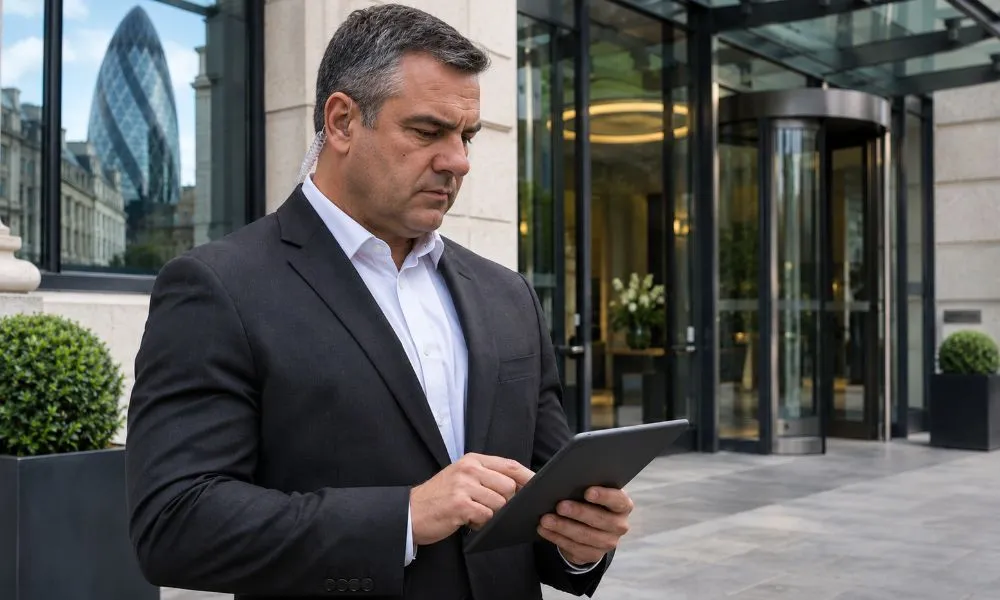
If you’re arranging security for a business trip, a public appearance or a private event, start by working out who needs protection and when. An executive may need support throughout a visit, while a guest at an event may only need cover for part of the day. Check what your venue, driver or in-house security team already provides before deciding what else to arrange.
This guide walks you through how to plan close protection, from briefing a provider to agreeing who will do what on the day.
1. Decide Who Needs Protection and Why
Start by writing down who needs protection and why. You might be planning an executive visit with several meetings, arranging a public appearance or hosting a guest who has raised a safety concern.
Identify which parts of the visit or event may need cover and what you’d like the security team to handle. If you’re unsure how much cover to book, ask the provider what they recommend and why.
2. Check What Security You Already Have
List the people and teams already involved, such as your chauffeur, the venue’s door team, hotel staff or your company’s security team. Ask each one what they’re responsible for, when their duties start and finish, and who you should contact with questions.
For example, a venue’s security team may check invitations and manage guest arrivals. Your chauffeur may be booked to take the executive between venues. If the executive also needs personal protection at a meeting or reception, ask who will provide it and agree on the hours in advance.
3. Choose the Type of Support You Need
- Close protection provides personal protection for an individual during agreed activities, such as meetings, events or travel.
- Executive travel security helps coordinate protective support around a business trip. Clarify what the driver will handle and whether any part of the trip needs personal protection.
- Event security covers agreed venue duties, such as managing guest entry and supporting venue staff.
- Residential security covers agreed duties at a home or property, such as managing visitor and contractor access.
You may need more than one service. For example, the venue team can manage guest entry while a close protection officer provides personal protection for a guest. Ask the provider to explain how the teams will work together.
4. Prepare a Brief for the Provider
A short brief gives the provider enough information to discuss your options. Include the following details:
- The purpose of the visit, event or assignment
- The general location, proposed dates and approximate hours
- The parts of the schedule where you may need support
- Any transport or security already arranged
- Which plans are confirmed and which may change
- The name and contact details of the person coordinating the booking
Agree how to share exact itineraries, home addresses and personal details privately when the provider needs them.
5. Compare Proposals and Confirm the Booking
Give each provider the same brief so you can compare what they offer. Check the duties, hours, number of staff and preparation included. Ask about experience with similar assignments, relevant licences and insurance.
Ask how travel, overtime and schedule changes are charged. If a quote covers only part of the visit, check which parts are included. Once you’ve chosen a provider, confirm the duties, timings, costs and responsibilities in writing.
6. Agree Who Will Coordinate the Plan
Name a main contact on your side and ask the provider to do the same. Agree who can approve changes and how the chauffeur, venue and security team will receive updates if the schedule moves.
Before the visit or event, check that everyone knows when their duties begin and end. If one team is handing over to another, confirm who will make that handover and how they’ll get in touch.
Example of Planning Security for an Executive Visit
An executive has two meetings and an evening reception. A chauffeur is booked for the day, and the reception venue has staff checking invitations. The executive assistant wants to know whether to hire a security company for the full visit or just for certain engagements.
The assistant confirms the chauffeur’s hours and checks what the venue team will cover. They then share the schedule with the security company and ask where close protection would be most useful. Once the company makes its recommendation, the assistant agrees the hours of cover and names one person to handle any schedule changes.
Conclusion
Start by deciding who needs protection and which parts of the visit or event need cover. Check what your driver, venue or existing security team will handle. Then agree with your provider on who will cover each duty, when cover starts and ends, and who to contact if plans change. Confirm these details in writing before you book.
If you’re arranging close protection for a business trip, public appearance or private event, share your dates, general location and what’s already in place with G3 Security. We can help you work out what support you need.
 Get a Quote
