
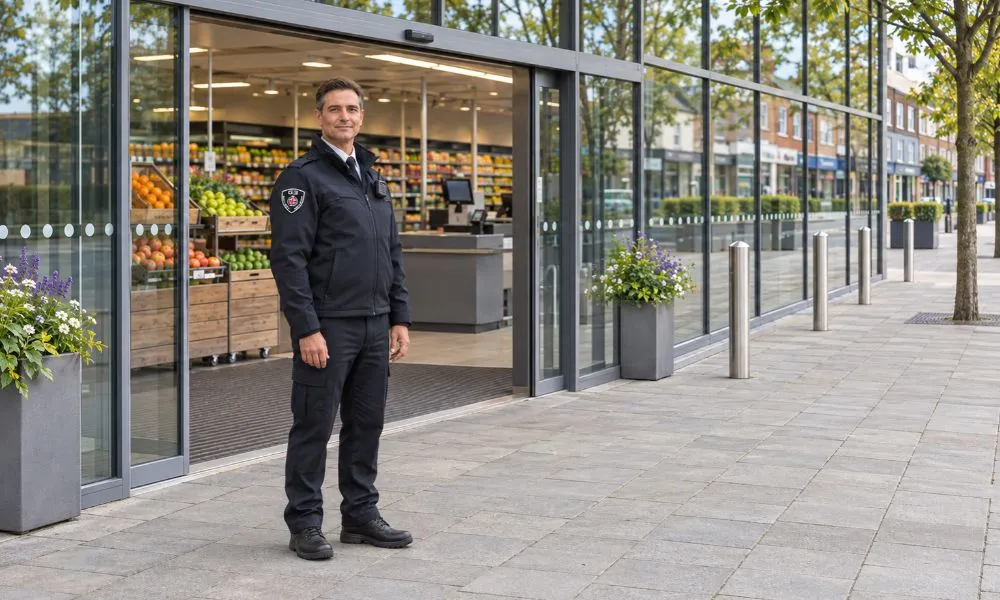
A retail security officer is a trained professional who protects a shop, its stock, its staff and its customers. You will usually see them near the entrance of supermarkets, high street stores and shopping centres, but their work goes far beyond standing at the door.
In this guide, we explain what a retail security officer does, their main responsibilities, the different types of retail guards, and the skills and qualifications they need.
What Does a Retail Security Officer Do?
The main job of a retail security officer is to prevent crime before it happens. Their visible presence alone puts off many would-be shoplifters. They also keep an eye on the shop floor, help staff deal with difficult situations and respond quickly when something goes wrong.
A retail security officer is part guard, part customer service assistant. One minute they may be greeting shoppers or giving directions, and the next they may be dealing with a theft, an aggressive customer or a medical emergency. Their goal is always the same: to keep people safe and protect the business, while making sure customers still feel welcome.
12 Key Responsibilities of a Retail Security Guard
Every store is different, but most retail security guards share these core responsibilities.
1. Preventing Shoplifting and Theft
Stopping theft is the number one reason stores hire security. Guards deter shoplifters by being visible, watching high-risk areas and making it clear that the store is protected. They also help reduce theft by staff and stock losses caused by fraud.
2. Monitoring CCTV and Security Systems
Many guards watch live CCTV footage to spot problems as they happen. This is especially important in large shopping malls and department stores, where there are many floors, entrances and busy areas to cover, and guards often work from a dedicated control room. They also respond to alarms, such as the security tag alarms at the exit, and check that cameras and other systems are working properly.
3. Conducting Regular Store Patrols
Guards walk around the store at regular times to check aisles, fitting rooms, stockrooms and fire exits. Patrols help them spot suspicious behaviour, safety hazards and blind spots that cameras may miss.
4. Monitoring Entrances and Exits
The entrance is where a guard can make the biggest difference. By standing near the doors, they can greet customers, watch who comes in and out, and respond quickly if someone tries to leave without paying.
5. Identifying Suspicious Activities
Trained guards know the warning signs of theft, such as people hiding items, acting nervously, working in groups to distract staff or carrying large empty bags. They watch carefully and report concerns carefully and fairly.
6. Protecting Customers and Employees
A guard’s job is not just about stock. They help keep shoppers and staff safe from threats, abuse and violence, so everyone can feel comfortable in the store.
7. Managing Conflicts and Difficult Customers
Guards often deal with angry or aggressive people. They use calm communication to defuse tense situations before they get worse, and only use reasonable force as a last resort.
8. Responding to Security Incidents
If there is a theft, a fight or any other problem in the store, the guard is usually the first person to deal with it. They act fast, follow the store’s rules and always stay within the law.
9. Checking Deliveries and Stock Movement
Theft does not only happen on the shop floor. Guards may check deliveries, watch loading bays and monitor stock moving in and out of the stockroom to reduce losses behind the scenes.
10. Preparing Daily Security Reports
Guards keep clear written records of incidents, patrols and anything unusual. These reports help managers spot patterns, improve security and provide evidence for the police if needed.
11. Supporting Store Opening and Closing Procedures
Opening and closing are high-risk times. Guards help staff unlock and lock up safely, check that all areas are clear, and make sure alarms are set correctly.
12. Contacting Emergency Services When Required
In a serious situation, such as a fire, medical emergency or violent incident, guards call the police, ambulance or fire service. They then help keep the area safe and brief the emergency services when they arrive.
What are the Different Types of Retail Security Guards?
Not every retail guard does the same job. The right type depends on the size of your store, the products you sell and the risks you face.
- Store Security Guards: Uniformed guards based in one store. They are highly visible and focus on deterring theft, helping customers and responding to incidents.
- Loss Prevention Officers: These officers focus on reducing stock loss. They may work in plain clothes, watch for professional shoplifters and investigate theft, including theft by staff.
- CCTV Security Operators: These operators monitor cameras from a control room. They spot problems early and guide guards on the shop floor to where they are needed.
- Shopping Centre Security Guards: These guards patrol the shared areas of shopping centres and retail parks. They deal with antisocial behaviour, lost children, crowd safety and support for individual stores.
- Mobile Security Patrol Officers: These officers visit several sites in a vehicle. They carry out checks, respond to alarms and secure stores outside opening hours.
What Skills Should a Retail Security Officer Have?
A good retail security officer stays alert but is also friendly and easy to talk to. Here are the main skills they need.
- Communication and Customer Service: Guards are often the first person a shopper meets. They need to be polite, approachable and able to explain things clearly.
- Observation and Attention to Detail: Spotting a hidden item, an unusual movement or a problem on CCTV takes focus and patience.
- Conflict Management: A good guard can calm down an angry person with words rather than force.
- Decision-Making: Guards must think quickly and make the right call under pressure, while staying within the law.
- Emergency Response: In a fire or medical emergency, guards need to stay calm, follow procedures and guide people to safety.
What Qualifications Do Retail Security Guards Need in the UK?
In the UK, security work is regulated by the Security Industry Authority (SIA). Here is what a professional retail guard should have.
- SIA Licence Requirements: Security guards supplied by a security company must hold a valid SIA licence. To get one, they must complete approved training, pass exams and pass identity and criminal record checks. CCTV operators working under contract need a separate SIA CCTV licence. You can check any licence on the public SIA register.
- Security Training: Licence training covers the role of a security officer, the law, health and safety, and how to handle incidents. Good employers add site-specific training, such as store procedures and loss prevention.
- First Aid Awareness: Guards are often first on the scene when someone is hurt or unwell. First aid training helps them give basic care until an ambulance arrives.
- Conflict Management Training: This teaches guards how to spot rising tension, calm people down and keep themselves and others safe. It is one of the most useful skills in retail security.
What Challenges Do Retail Security Guards Face?
Retail security is a demanding job. These are some of the biggest challenges guards deal with every day.
- Shoplifting and Organised Retail Crime: Guards face not only opportunist thieves but also organised gangs who target stores in groups and steal large amounts quickly.
- Aggressive or Abusive Customers: Shop workers face around 1,600 incidents of violence and abuse every day. Guards are often the ones who step in, which puts them at risk.
- Busy Shopping Periods: Christmas, Black Friday and the January sales bring large crowds, more theft and more pressure on staff.
- Workplace Emergencies: Fires, medical emergencies and accidents can happen at any time, and guards must respond quickly and calmly.
- Staff and Customer Safety Concerns: Guards must balance protecting stock with keeping everyone safe, and they must stay within the law at all times.
Conclusion
A retail security officer does much more than stand at the door. From preventing theft and watching CCTV to calming tense situations, supporting staff and responding to emergencies, they play a vital role in keeping a store safe and running smoothly. With retail crime still high across the UK, having trained, licensed and professional security on your shop floor is one of the best ways to protect your stock, your staff and your customers.
 Get a Quote
