
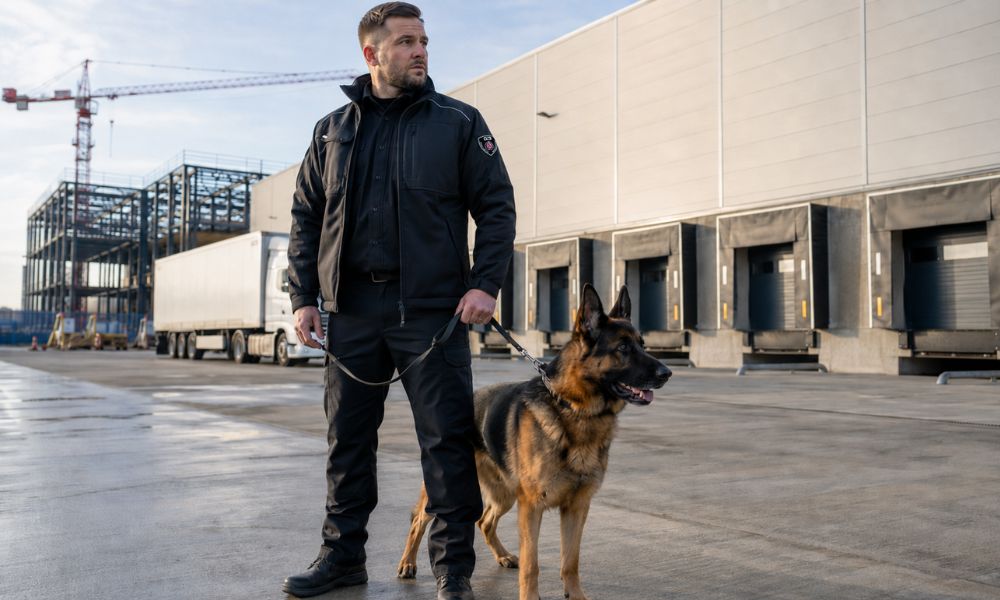
Businesses across many industries face risks such as theft, trespassing, vandalism, unauthorised access, and damage to valuable assets. CCTV cameras, alarms, and conventional guarding can provide effective protection, but certain environments require a stronger and more adaptable security presence.
K9 security services have a professionally trained security dog with an experienced handler. Together, they can patrol large areas, detect suspicious activity, and provide a visible presence that may discourage intruders. However, K9 security is not suitable for every environment. Its effectiveness depends on the property, operating hours, known risks, and existing security measures.
How Do You Know Whether Your Business Needs K9 Security?
A business should arrange a professional risk assessment before introducing K9 security. The purpose of the assessment is to determine whether a dog unit would provide practical value and how it should work alongside existing measures.
The assessment should examine:
- The size and location of the property
- Operating hours and overnight activity
- The number of employees on-site
- Previous security incidents
- Valuable stock, machinery, or equipment
- Perimeter weaknesses and CCTV blind spots
- Public access and visitor movements
- Surrounding open land
- Existing alarms and access-control systems
- The likelihood of theft, trespassing, or vandalism
K9 security may be suitable when a property has a large perimeter, limited overnight staffing, valuable assets, repeated intrusions, or areas that are difficult to monitor through CCTV alone.
The risk assessment should also consider employees, visitors, noise, working conditions, and public access. A controlled dog unit may be highly effective at an industrial property but unnecessary in a small office with low footfall and limited security risks.
Which Industries Benefit Most from K9 Security Services?
K9 security can support several industries, but each sector requires a different approach. Patrol patterns, handler instructions, working hours, and the type of dog selected should reflect the property’s specific risks.
Construction Sites
Construction sites are frequent targets for the theft of tools, machinery, fuel, cables, and building materials. They may also attract trespassers who enter out of curiosity or to cause damage.
These sites often change as work progresses. New entry points, temporary fencing, incomplete structures, and moving equipment can create security weaknesses that were not present during an earlier assessment. Many construction sites are also left mostly or completely vacant overnight.
A K9 team can patrol the perimeter, inspect storage areas, monitor temporary entrances, and investigate unusual sounds or movements. The visible presence of a trained security dog may also make unauthorised individuals less willing to enter the site.
K9 patrol plans should be regularly reviewed as the construction project develops and the physical layout changes.
Warehouses and Distribution Centres
Warehouses may contain large quantities of valuable stock while operating with relatively few employees, particularly at night. Loading bays, vehicle entrances, fire exits, external storage areas, and extensive perimeters can create several points of vulnerability.
CCTV is helpful, but cameras may not cover every corner of a large warehouse or distribution centre. Open loading areas and frequent vehicle movements can also make it difficult to distinguish normal activity from a potential security breach.
A K9 team can conduct perimeter patrols, inspect loading areas, investigate unusual activity, and support officers responsible for access control. The dog’s heightened senses may help identify a person concealed behind stock, vehicles, or structures.
K9 security should be coordinated with delivery schedules and warehouse operations so that authorised employees and drivers can work safely.
Manufacturing and Industrial Facilities
Manufacturing properties often contain costly machinery, specialist materials, tools, fuels, and finished products. They may operate continuously but have fewer administrative and management employees present overnight.
Multiple access points can make these properties difficult to secure. Goods entrances, emergency exits, workshops, storage areas, service roads, and external compounds may all require regular monitoring.
A security dog and handler can patrol these areas and provide additional protection during low-staffing periods. Their presence can strengthen perimeter security while supporting existing officers, alarms, and CCTV systems.
The provider should understand the facility’s health and safety requirements. The handler must be briefed on moving machinery, hazardous materials, restricted zones, and safe patrol routes before deployment.
Vacant Properties
Unoccupied commercial and residential properties can become targets for trespassing, vandalism, theft, squatting, and unauthorised occupation. Signs that a building is vacant may attract people looking for materials, shelter, or an unmonitored place to gather.
Alarms and cameras can identify activity, but they may not provide an immediate physical presence. A K9 patrol offers visible protection and allows suspicious activity to be investigated across the grounds.
The handler can check doors, windows, fencing, outbuildings, and common access points. Patrol timings may be varied to make the security routine less predictable.
K9 security can be particularly useful for vacant properties located in isolated areas or surrounded by open land. It should form part of a broader plan that includes secure locks, lighting, alarms, property inspections, and prompt repairs to damaged boundaries.
Events and Entertainment Sites
Concerts, festivals, sporting events, night-time entertainment, and other large gatherings can present complex security challenges. These may include unauthorised entry, crowd disorder, prohibited items, restricted-area breaches, and threats to performers or attendees.
General-purpose security dogs can provide a visible presence around perimeters, entrances, vehicle zones, and controlled areas. Specialist detection dogs may be used to identify specific substances or threats, depending on their training and the event’s requirements.
K9 deployment must be carefully planned in crowded environments. The event organiser and security provider should consider noise, lighting, emergency routes, audience behaviour, and the proximity of the public.
The handler must maintain full control and work closely with event officers, management, and emergency services. Not every event requires a dog unit, so deployment should always be supported by a documented risk assessment.
Retail Parks and Commercial Properties
Retail parks and commercial properties frequently include several businesses, shared car parks, loading areas, service routes, waste-storage points, and external walkways. Although these locations may be busy during working hours, they can become quiet and vulnerable after businesses close.
Potential risks include break-ins, vandalism, theft from vehicles, unauthorised gatherings, and access through rear service areas. Large outdoor spaces may also be difficult for a limited number of officers to monitor.
K9 patrols can cover shared areas, inspect the perimeter, and support the protection of businesses outside normal operating hours. Their presence may also discourage individuals from remaining in restricted areas.
Patrol arrangements should avoid interfering with cleaning teams, delivery drivers, maintenance personnel, and employees working outside standard hours.
Transport and Logistics Sites
Transport depots and logistics facilities often operate around the clock. They may contain commercial vehicles, valuable cargo, fuel, loading equipment, and large outdoor compounds.
Frequent vehicle movements create access-control challenges. Drivers, contractors, visitors, and employees may enter at different times, increasing the importance of clear procedures and accurate records.
A K9 unit can support perimeter patrols, cargo-area protection, vehicle-compound monitoring, and inspections of vulnerable zones. Specialist detection dogs may also be deployed where a particular threat requires scent-detection capabilities.
The service must be coordinated with operational schedules. Handlers should understand vehicle routes, loading procedures, restricted areas, and emergency arrangements before beginning patrols.
Agricultural and Rural Properties
Farms, equipment yards, renewable-energy sites, and other rural properties may be located far from residential areas or emergency support. They often contain valuable machinery, fuel, tools, vehicles, and materials across a wide area.
Poor lighting and an isolated location can make unauthorised activity difficult to detect. A dog’s hearing and sense of smell can support patrols where visibility is poor or where buildings are spread across extensive grounds.
A K9 unit can inspect boundaries, storage buildings, equipment areas, and access roads. The handler should be briefed on livestock, uneven terrain, agricultural machinery, and other environmental hazards.
What Types of Security Dogs are Used?
The type of dog required depends on the assignment. Security dogs are trained for different purposes and should only perform duties suited to their preparation.
General-purpose patrol dogs support perimeter security, property patrols, intrusion detection, and the protection of handlers. They are commonly used at construction sites, warehouses, vacant properties, and industrial facilities.
Detection dogs are trained to identify specific scents. Depending on the service and legal requirements, they may be used to detect drugs, explosives, firearms, cash, or other targeted substances.
A professional provider should explain which type of dog is appropriate and why. It should not recommend a specialist unit when a standard patrol team would adequately address the identified risks.
How are Security Dogs and Their Handlers Trained?
A reliable K9 team requires structured training, regular assessment, and continuous work between the dog and its handler. Training should prepare the team to operate safely in realistic environments.
It may include:
- Obedience and handler control
- Perimeter and building patrols
- Indication of suspicious activity
- Controlled responses to threats
- Working around people and vehicles
- Environmental awareness
- Scenario-based exercises
- Specialist scent detection
- Incident management
- Dog welfare and first aid
Training should not be treated as a one-time exercise. The provider should maintain records and regularly assess whether the team continues to meet the required standard.
Handlers may also require the appropriate SIA licence for the security duties they perform. Clients should verify relevant qualifications, experience, and industry-standard training before appointing a provider.
What Should You Look for in a K9 Security Provider?
Selecting the right provider is essential because the service involves both security responsibilities and animal welfare. Ask the company to provide evidence of its standards rather than relying on general assurances.
Important considerations include:
- Experienced and appropriately qualified handlers
- Suitable SIA licences for licensable duties
- Documented dog training and assessment
- Clear animal-welfare procedures
- Appropriate insurance coverage
- Site-specific risk assessments
- Written assignment instructions
- Reliable supervision
- Incident-reporting procedures
- Backup arrangements for unavailable teams
- Relevant sector experience
The provider should inspect your property before proposing a service. It should explain how many teams are required, when they will operate, which areas they will patrol, and how they will respond to an incident.
At G3 Security, we assess your property and its specific risks before developing a tailored K9 security plan, ensuring that our teams, patrol schedules, and response procedures meet your operational requirements.
Conclusion
K9 security services can provide valuable protection for industries facing large perimeters, valuable assets, isolated locations, reduced overnight staffing, or repeated problems with theft and trespassing.
Construction sites, warehouses, manufacturing facilities, vacant properties, events, retail parks, logistics centres, and rural properties may all benefit from a professionally managed dog unit. However, K9 security should only be introduced after a thorough risk assessment confirms that it is appropriate.
G3 Security can assess your requirements and develop a tailored K9 security plan that works alongside your existing protective measures. Contact G3 Security to discuss how a trained dog-and-handler team could strengthen security at your property.