
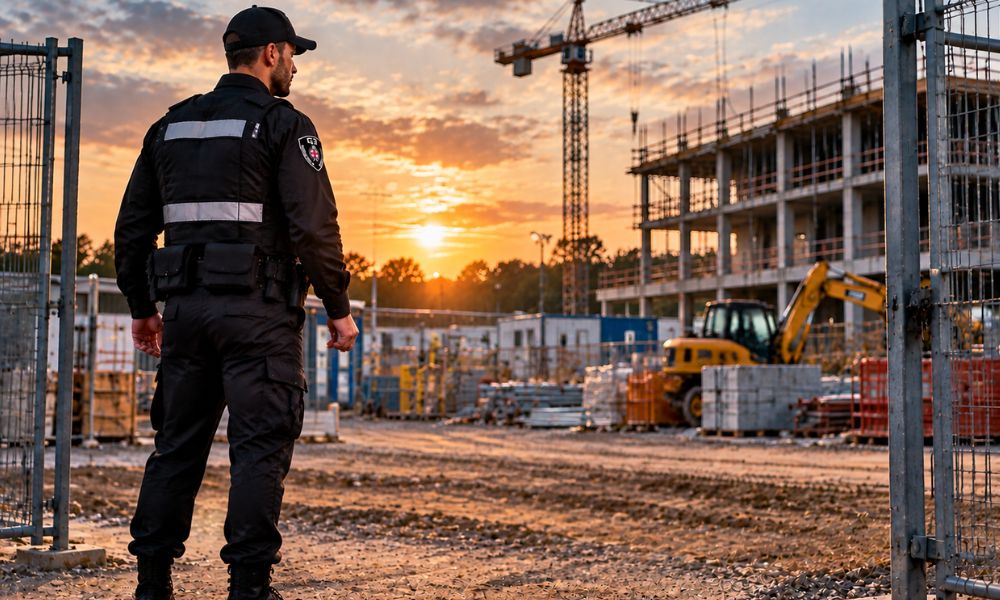
Bank holidays can leave construction sites unattended for longer than normal, with fewer workers, contractors and deliveries taking place. This can increase the opportunity for trespassing, theft, vandalism and damage if the site is not properly secured.
Construction sites can contain valuable plant, machinery, tools and materials, while unfinished areas may also contain hazards such as excavations, scaffolding and exposed equipment. The Health and Safety Executive (HSE) advises those responsible for construction sites to prevent unauthorised access and keep sites adequately secured outside working hours.
A bank holiday security plan should therefore cover both crime prevention and public safety. Here are practical steps construction companies can take before closing the site.
Why Do Construction Sites Need Extra Security During Bank Holidays?
A site that is normally busy can become quiet during a bank holiday. With fewer people around, problems may not be noticed as quickly. Common risks include:
- Theft of tools, materials and equipment
- Unauthorised access
- Vandalism
- Trespassing
- Damage to fencing or gates
- Unauthorised use of plant and machinery
- Access to scaffolding
- Damage to unfinished areas
- Fires or other incidents going unnoticed
The risk can also depend on the location of the site. A construction project close to homes, schools, parks or public footpaths may need particular attention to preventing people from entering the site. HSE guidance says site boundaries and access controls should reflect the nature of the work and surrounding area.
1. Check the Perimeter Before the Site Closes
The site perimeter should be checked before workers leave for the bank holiday. Look for damaged fencing, loose panels, gaps underneath fencing or areas where someone could climb over the boundary. Gates should also be closed and secured.
HSE guidance states that construction sites need measures to manage access and exclude unauthorised people. Perimeter fencing should be suitable for the site and maintained in good condition. Before the bank holiday, check:
- Fencing and hoarding
- Vehicle gates
- Pedestrian gates
- Locks and access points
- Temporary barriers
- Areas where fencing meets buildings or other structures
- Lighting around vulnerable areas
A damaged fence should not simply be left until workers return. Any weakness in the perimeter should be dealt with before the site becomes unattended.
2. Secure Tools, Materials and Equipment
Construction sites can contain valuable tools, building materials, plant and machinery. Before closing the site, smaller equipment should be placed in secure storage where possible. Materials should also be stored safely inside the site rather than close to the perimeter where they could assist unauthorised access.
Plants and vehicles should be parked in suitable areas and secured where appropriate. The HSE specifically advises isolating and securing vehicles and plants and, where possible, locking them in a compound. It also recommends storing building materials so they cannot topple, roll or create additional risks.
A pre-bank-holiday check can therefore include:
- Tools
- Generators
- Plant and machinery
- Fuel
- Building materials
- Portable equipment
- Vehicles
- Storage containers
3. Secure Scaffolding and Access Points
Scaffolding can create another route onto a construction site or unfinished building. Before the site closes for a bank holiday, check all scaffolding and access points to reduce the risk of unauthorised entry.
This can include:
- Removing or securing access ladders where appropriate
- Checking other routes onto scaffolding
- Restricting access to unfinished areas
- Using suitable barriers around work platforms
- Checking that access points cannot be easily reached from outside the site
These checks are particularly important on sites near residential areas, schools or places where children may be present during a bank holiday. Securing scaffolding and other access points can help prevent both trespassing and accidental entry into hazardous areas.
4. Protect Excavations and Other Hazards
Security is not only about preventing theft. An unattended construction site may contain open excavations, pits, unfinished stairways, floor openings and other hazards. These areas should be properly covered, fenced or otherwise protected before workers leave.
Excavations and pits should be barriered off or covered, while hazardous substances should be stored securely and kept away from unauthorised access. Before the bank holiday, site managers should check:
- Excavations
- Manholes
- Openings
- Stairwells
- Unfinished floors
- Electrical equipment
- Hazardous substances
- Areas with restricted access
The aim is to prevent both unauthorised entry and accidental injury.
5. Check CCTV, Alarms and Lighting
Technology can provide additional protection when fewer people are working on site. If CCTV is installed, cameras should be checked before the site closes to confirm that important areas are covered. This may include entrances, storage areas, plant compounds, perimeter fencing and other vulnerable locations.
Intruder alarms can also provide an alert if unauthorised activity is detected. HSE guidance notes that higher-risk sites may need measures such as intruder alarms, boundary lighting or security patrols, depending on the circumstances. Before leaving, check:
- CCTV cameras
- Recording systems
- Intruder alarms
- Security lighting
- Access-control systems
- Remote monitoring equipment
- Backup power where applicable
Technology should form part of the wider security plan rather than being treated as the only measure.
6. Arrange Security Patrols During the Bank Holiday
For sites that will remain empty for several days, security patrols can provide an additional layer of protection.
A security officer can visit the site at agreed times and check areas such as gates, fencing, storage compounds, buildings and plant.
This can be particularly useful for larger construction sites or projects with valuable equipment and materials. HSE fire-safety guidance also notes that some construction sites may need site security patrols, particularly where risks are higher outside normal working hours.
A patrol plan should clearly state:
- When the site should be visited
- Which areas need checking
- How access is controlled
- What happens if damage is found
- Who should be contacted
- How incidents should be recorded
7. Make Sure Emergency Contacts are Up to Date
A bank holiday security plan should include current contact information. If an alarm activates, fencing is damaged or a serious incident occurs, the person responsible for the site should be contactable. The site security instructions can include:
- Site manager contact details
- Contractor contacts
- Emergency contacts
- Alarm information
- Access instructions
- Keyholder details
- Details of restricted areas
- Instructions for reporting incidents
Clear instructions help security staff or other authorised responders understand what to do if something happens while the site is closed.
8. Check the Site Before Workers Leave
One of the simplest ways to improve bank holiday security is to carry out a final site check. This should not only focus on the main entrance. Workers or supervisors should check the wider site and confirm that temporary security measures are in place. A final checklist could include:
- Gates locked
- Perimeter checked
- Tools secured
- Plant immobilised
- Materials stored safely
- Scaffolding access restricted
- Excavations protected
- Hazardous substances secured
- CCTV operating
- Alarms activated
- Lighting working
- Emergency contacts available
The exact checks will depend on the size and nature of the project.
Conclusion
Construction sites should not be treated as normal workplaces when they are closed for a bank holiday. With fewer people present, security weaknesses can be harder to spot and unauthorised access may go unnoticed for longer.
Before closing the site, check the perimeter, secure tools and materials, immobilise plant, restrict access to scaffolding, protect excavations and check CCTV, alarms and lighting.
For longer closures, scheduled security patrols can provide additional checks while the site is unattended.
A clear bank holiday security plan can help protect construction equipment, reduce the risk of unauthorised access and help keep members of the public away from construction hazards.