
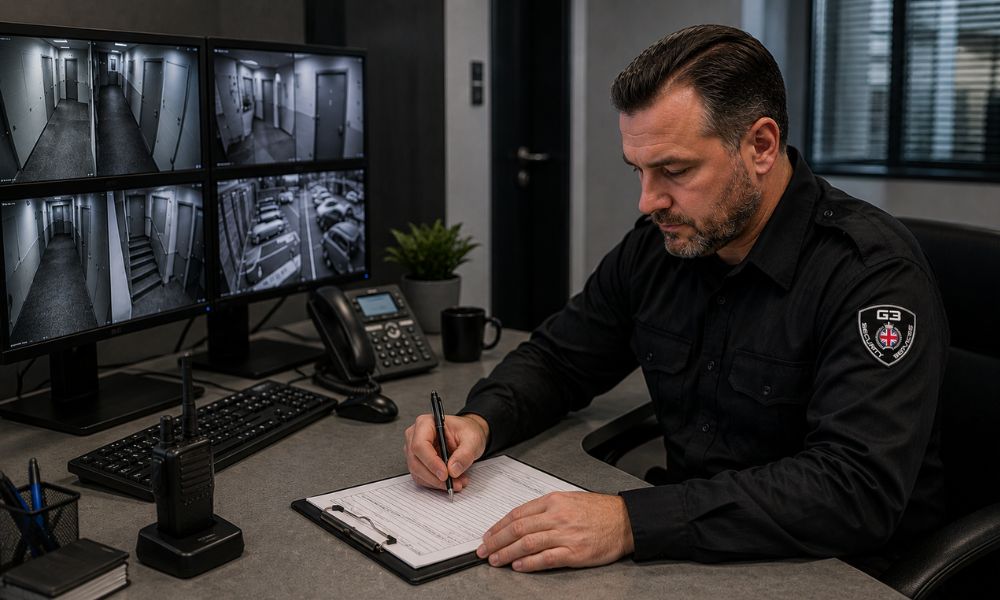
A security guard’s responsibilities go far beyond monitoring a property or responding to emergencies. One of the most important duties of a security professional is documenting incidents accurately through clear and detailed reports.
A well-written security guard incident report creates an official record of what happened, helps supervisors make informed decisions, supports investigations, and protects both security personnel and the organisations they serve.
Whether you are documenting theft, unauthorised access, property damage, workplace accidents, suspicious activity, or any unusual event, knowing how to write a professional incident report is an essential skill for every security officer.
What is a Security Guard Incident Report?
A security guard incident report is a formal document that records the details of an unusual event, safety concern, security breach, or emergency that occurs during a guard’s shift.
Unlike a routine security log or daily activity report, an incident report focuses on a specific event that requires attention, investigation, or follow-up.
Examples of incidents that may require a report include:
- Theft or attempted theft
- Unauthorised entry or trespassing
- Property damage
- Physical altercations
- Workplace injuries
- Medical emergencies
- Fire alarms or safety hazards
- Suspicious behavior
- Security policy violations
The main purpose of an incident report is to provide an accurate record that explains what happened, when it happened, who was involved, and what actions were taken.
Why are Security Guard Incident Reports Important?
Security incident reports play an important role in maintaining safety, accountability, and effective communication.
1. They Create an Official Record
A verbal explanation can be forgotten or misunderstood. A written report provides a permanent record that can be reviewed later by supervisors, clients, investigators, or legal professionals.
2. They Support Investigations
When incidents involve theft, damage, injury, or criminal activity, detailed reports help investigators understand the sequence of events and identify important evidence.
3. They Protect Security Guards and Companies
Accurate documentation shows what actions a security officer took and demonstrates that proper procedures were followed.
4. They Improve Security Operations
Repeated reports can reveal patterns, identify risks, and help organizations improve security procedures.
What to Include in a Security Incident Report?
1. Basic Incident Information
Include the report date, incident date and time, location, officer’s name/ID, incident type, and report number.
2. People Involved
Record names, roles, descriptions, contact details if needed, and witness information. Include only confirmed facts.
3. What Happened
Describe the incident in clear chronological order. Focus on what was observed and avoid opinions or assumptions.
4. Actions Taken
Record who was contacted, procedures followed, emergency services notified, and steps taken to manage the situation.
5. Evidence Collected
Note any CCTV footage, photos, witness statements, property damage records, or access logs, including where they were obtained.
How to Write a Security Guard Incident Report
Step 1: Gather Information Immediately
Write down important details as soon as possible after the incident.
Record:
- Exact time
- Location
- Names
- Descriptions
- Witness information
- Actions taken
Writing notes immediately helps prevent missing important details.
Step 2: Start With the Basic Facts
Begin your report with the essential information:
- Who wrote the report
- When the incident occurred
- Where it happened
- What type of incident occurred
This allows the reader to understand the situation quickly.
Step 3: Write Events in Chronological Order
A professional report should tell the story in the order events happened.
Avoid jumping between different moments.
Example structure:
- Security officer began patrol
- Officer observed unusual activity
- Officer approached individual
- Individual responded
- Supervisor was notified
- Incident was resolved
Step 4: Use Objective Language
Security reports should be factual and neutral.
Avoid:
- Personal opinions
- Emotional statements
- Assumptions
- Exaggerations
Focus only on what you saw, heard, or verified.
Step 5: Review the Report Before Submission
Before submitting your report, check:
- Are all names correct?
- Are dates and times accurate?
- Is the description clear?
- Did you include actions taken?
- Did you remove opinions?
A quick review can prevent errors that affect investigations or decision-making.
Common Mistakes to Avoid When Writing Incident Reports
- Write Facts, Not Opinions: Describe what happened instead of making assumptions. Include specific actions, times, and observations.
- Include Key Details: Always mention the time, location, people involved, actions taken, and evidence.
- Use Professional Language: Avoid slang, unclear abbreviations, and emotional wording.
- Report Promptly: Write the report as soon as possible while the details are still fresh.
What Happens After an Incident Report is Submitted?
Once submitted, your report will be reviewed to help us understand what happened and determine the appropriate response. Where necessary, the information may also be shared with property managers, clients, HR teams, insurance providers, or law enforcement agencies.
At G3 Security, we use incident reports to investigate concerns, identify potential risks, improve our security procedures, and take appropriate action to help protect people, properties, and businesses.
Final Thoughts
Writing a security guard incident report is a critical responsibility that requires accuracy, professionalism, and attention to detail.
The best reports are clear, objective, and based only on verified facts. A well-prepared incident report helps protect security officers, supports investigations, and improves overall safety operations.
By following a consistent structure and focusing on accurate documentation, security guards can create reports that remain valuable long after the incident has ended.