
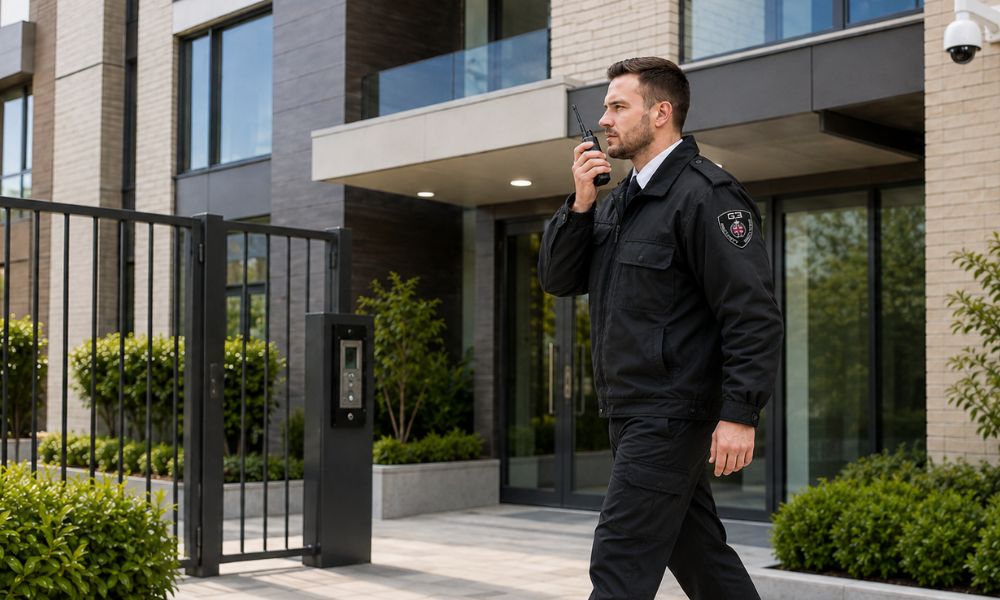
Protecting your property from crime is not just about installing a security camera or locking the doors at night. Effective property security involves identifying potential risks, improving physical protection, controlling access and making sure people know how to respond to suspicious activity.
Whether you manage a commercial building, office, warehouse, retail premises or another type of property, taking preventative measures can reduce opportunities for theft, vandalism, trespassing and unauthorised access. Here are 10 practical ways to reduce the risk of crime on your property.
1. Conduct a Property Security Risk Assessment
The first step is to understand where your property may be vulnerable. A security risk assessment allows you to identify weaknesses before they become opportunities for criminals. Walk around the entire property and examine entrances, windows, gates, parking areas, storage rooms and less visible sections of the building. Look for damaged locks, poorly protected windows, dark areas, broken fencing and places where someone could enter without being noticed.
You should also consider what valuable assets are located on the premises. Equipment, vehicles, stock, confidential documents and other high-value items may require additional protection. A regular assessment helps you understand your current security position and decide where improvements are needed most.
2. Secure Doors, Windows and Entry Points
Doors and windows are common points of access, so they should receive particular attention. Even strong security systems can be undermined if an intruder can easily force open a door or window. Use high-quality locks, reinforced doors and suitable window security where appropriate. Make sure doors close properly and check that hinges, frames and locks are in good condition.
Do not overlook secondary entrances such as fire exits, loading bays and rear doors. These areas can sometimes receive less attention than the main entrance but may still provide an opportunity for unauthorised access. Employees should also be reminded to lock doors and windows whenever they leave an area unattended.
3. Improve Outdoor Lighting
Poor lighting can create opportunities for criminal activity, particularly around areas that are hidden from public view. Install suitable lighting around entrances, exits, pathways, car parks, gates and other vulnerable areas. Motion-activated lighting can also help draw attention to movement around certain parts of the property.
Lighting should be positioned carefully so it improves visibility without creating excessive glare or leaving shadows in important areas. Regular maintenance is equally important. Replace failed bulbs and repair damaged lighting quickly so poorly lit areas do not become a security weakness.
4. Install CCTV Security Cameras
CCTV can provide valuable monitoring of your property and help create a visible deterrent against criminal activity. Cameras can be positioned around entrances, exits, car parks, storage areas, loading points and the building perimeter. The exact locations should be based on the risks identified during your security assessment.
It is important that cameras are maintained properly and provide useful coverage. Dirty lenses, damaged equipment or poorly positioned cameras can reduce their effectiveness. Where appropriate, CCTV footage can also assist with investigating incidents by providing information about what happened and when it occurred.
5. Control Access to Your Property
Not everyone should have unrestricted access to every part of a property. Access control helps determine who can enter the building and which areas they are permitted to use.
Depending on the property, this could include security passes, electronic access systems, visitor procedures, controlled entrances or key management. Businesses should also have a clear process for dealing with lost keys, access cards and passes. When an employee leaves the organisation, their access should be reviewed and removed where necessary. Effective access control reduces the number of people who can enter restricted areas and makes unusual activity easier to identify.
6. Protect Your Property Perimeter
The property’s perimeter provides an important first line of defence. Secure fencing, gates and walls can make unauthorised access more difficult and help define where restricted areas begin. Check the perimeter regularly for damage, gaps or weak sections. Gates should be secured when they are not in use, and access points should be monitored where appropriate.
It is also worth removing potential hiding places. Overgrown bushes, piles of materials, unused equipment and poorly maintained areas can give intruders somewhere to remain out of sight. Keeping the perimeter clean, visible and well maintained can therefore contribute to overall property security.
7. Use Alarm Systems
An intruder alarm can provide an additional layer of protection by detecting unauthorised access. Alarm systems can be particularly useful when a property is empty outside normal operating hours. Depending on the system, sensors may detect movement, door opening or other signs of unauthorised entry.
However, an alarm should form part of a wider security strategy rather than being treated as the only protection. It should be regularly tested and maintained to ensure it remains operational. Businesses should also have a clear procedure for responding when an alarm is activated. Knowing who is responsible for checking the property and dealing with the situation can help avoid unnecessary delays.
8. Consider Professional Security Services
Some properties require a stronger security presence, particularly when they contain valuable assets, operate outside normal hours or have previously experienced security incidents. Professional security services can provide an additional layer of protection. Depending on your requirements, this may include security officers, mobile patrols, keyholding or alarm response services.
A visible security presence can discourage opportunistic criminal activity while trained professionals can monitor the property and respond appropriately to security concerns. For vacant or high-risk properties, professional security services can be especially useful because they provide additional oversight when regular employees or property managers are not present.
9. Train Employees and Staff
Security is not only the responsibility of security personnel or management. Employees also play an important role in protecting a property. Staff should understand basic security procedures, including how to secure doors and windows, use access systems correctly and report suspicious behaviour.
Training should also explain what employees should do if they notice an unfamiliar person, suspicious activity or a potential security incident. Clear procedures help people respond calmly instead of making unnecessary decisions during stressful situations. Regular reminders and refresher training can help keep security procedures familiar and encourage employees to take them seriously.
10. Review and Maintain Your Security Regularly
Security measures can become less effective over time if they are not maintained. Locks can become damaged, cameras can stop working, alarms may require servicing and lighting can fail. For this reason, property security should be reviewed regularly rather than only after an incident occurs.
Check your CCTV, alarms, lighting, locks, access control systems, fences and gates. Review whether there have been changes to the property, staff, operating hours or valuable assets that could create new risks. It is also useful to review previous incidents and security concerns. This can help you identify patterns and decide whether additional measures are required.
Why a Layered Security Approach Matters
No single security measure can protect a property against every type of crime. At G3 Security, we believe effective protection comes from combining multiple security measures based on the specific risks your property faces.
A layered approach may include secure perimeter fencing, effective lighting, CCTV monitoring, alarm systems, access control and professional security personnel. Each measure provides an additional level of protection, helping deter unauthorised access and allowing potential security issues to be identified and dealt with promptly.
At G3 Security, we can help you develop a security approach based on your property’s layout, operating hours, assets and individual risk factors. From manned security and mobile patrols to keyholding and alarm response, our services can work together to provide reliable protection when you need it.
Final Thoughts
Reducing the risk of crime starts with understanding your property’s vulnerabilities and taking practical steps to address them. Strong physical security, effective lighting, CCTV, access control, alarms, staff training and professional security services can all contribute to a safer environment.
Most importantly, security should be treated as an ongoing process. Regular inspections and reviews allow you to identify new weaknesses and make improvements before they become serious problems.
By taking a proactive and layered approach to property security, you can reduce opportunities for criminal activity and create a more secure property for employees, visitors, customers and valuable assets.