
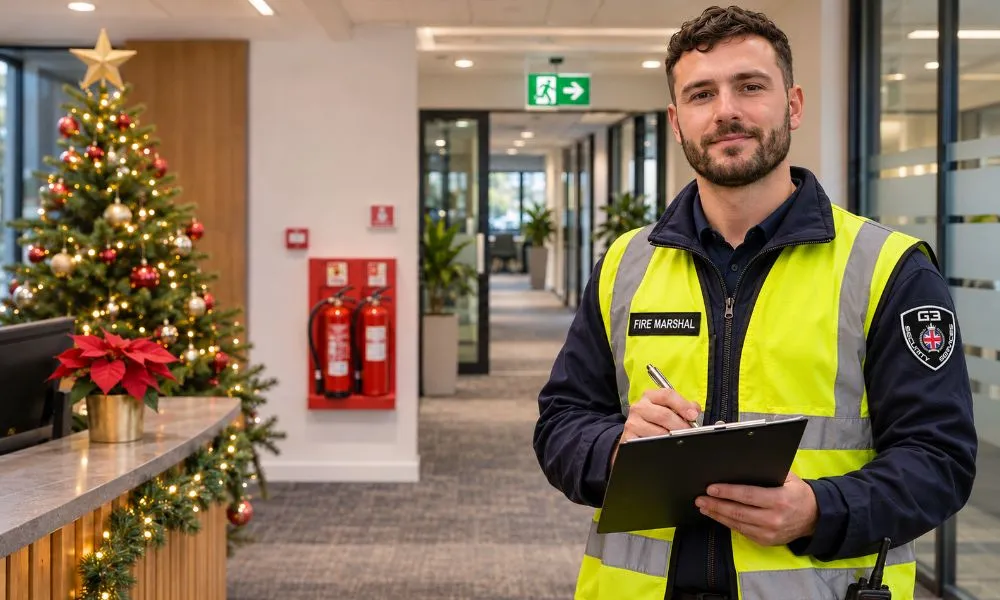
The festive season is one of the best times of year in any workplace. Lights go up, a tree appears in reception, and the office party is the talk of the week. But the same things that make the season special also make fire more likely.
A dry Christmas tree can catch fire and spread flames across a room in under a minute. Add overloaded sockets, paper decorations, extra visitors and a building left empty for days, and December quickly becomes a high-risk month.
The good news is that most festive fires are easy to prevent. This guide explains where the risks come from, what you can do about each one, and what the law expects of you. You will also find a simple checklist at the end to help you stay safe from the first decoration to the last day before the break.
Why Fire Risk Rises During the Festive Season
During most of the year, your workplace follows a steady routine. In December, that routine changes, and those changes bring new hazards:
- More Electrical Load: Fairy lights, light-up displays, heaters and extra chargers all compete for the same sockets.
- More Fuel: Paper chains, tinsel, wrapping paper, cards and real trees give a fire more to burn.
- Different Use of Space: Parties and events move furniture, fill rooms with people and sometimes run outside normal hours.
- Fewer People Around: Staff take leave, and many buildings sit empty for several days, so a fire may go unnoticed for longer.
None of these risks is a reason to skip the celebrations. They are simply a reason to plan ahead.
1. Christmas Trees
A tree is often the centrepiece of the office, so it deserves extra care.
- Choose Wisely: If you use an artificial tree, check that it is labelled as fire-resistant. If you prefer a real tree, buy it as fresh as possible.
- Keep Real Trees Watered: Water the tree every day. A dry tree catches fire easily and burns extremely fast.
- Mind the Surroundings: Keep the tree away from heaters, radiators, candles, sockets and other electrical equipment.
- Secure It: Use a sturdy stand so the tree cannot be knocked over.
- Never Block an Exit: Place the tree where it does not obstruct fire exits, corridors, doorways or fire extinguishers.
2. Decorations and Lights
Decorations bring the festive spirit, but most of them burn easily. A little thought about where and how you use them goes a long way.
Placement
- Never hang decorations from light fittings, lamps or ceiling lights. The heat from bulbs can set them alight.
- Keep decorations away from computers, printers, heaters and other equipment that gets warm.
- Do not cover or hang anything near smoke detectors, heat detectors, sprinkler heads, fire alarm call points or exit signs.
- Keep decorations off the floor in walkways, where they can become trip hazards during an evacuation.
Electrical Safety
- Use lights that carry a recognised safety mark (UKCA or CE) and buy from reputable suppliers.
- Include Christmas lights and electrical decorations in your PAT testing, or inspect them carefully before use.
- Throw away any lights with damaged cables, loose bulbs or scorch marks.
- Do not overload sockets or plug extension leads into other extension leads.
Candles and Naked Flames
The simplest rule is to ban candles and naked flames at work. Battery-powered LED candles give the same effect with none of the risk.
3. Hidden Hazards Most Guides Miss
Trees and tinsel get most of the attention, but several other festive risks are easy to overlook.
- Portable Heaters: Cold offices often lead staff to bring in their own heaters. Keep them at least a metre from anything that can burn, never cover them, and switch them off when the room is empty. Consider allowing only company-approved heaters.
- Lithium-Ion Batteries: E-bikes, e-scooters, vapes, power banks and new gadgets received as gifts are often charged at work. Damaged or cheap chargers can cause batteries to overheat and catch fire. Set clear rules on what can be charged on site, and never leave items charging unattended or overnight.
- Kitchens and Catering: Party food means more use of toasters, ovens, microwaves and hired catering equipment. Keep cooking areas supervised and clean.
- Rubbish and Packaging: Gift wrap, delivery boxes and party waste build up quickly. Clear it away daily and never store it in corridors, stairwells or next to exits.
4. Planning a Safe Office Party
An office party changes how your building is used, so treat it as an event that needs its own fire safety plan.
- Plan the Layout: Arrange tables, chairs, sound equipment and food stations so that fire exits, escape routes and fire extinguishers stay clear and visible.
- Check Out-of-Hours Access: If the party runs in the evening, make sure the exits people will need are unlocked. If some routes are closed, put up clear signs to the ones that are open.
- Name a Fire Marshal for the Night: Hire a fire marshal who will stay alert, knows the evacuation plan and can lead people out if the alarm sounds.
- Brief Your Guests: Visitors and partners will not know your building. A quick word on where the exits and assembly point are takes less than a minute.
- Manage Smoking: Set a clear smoking and vaping area outside, with a proper place to put out cigarettes.
- Keep Numbers Sensible: Do not invite more people than the space and its exits can safely handle.
5. Before You Close for the Holidays
Many workplaces close for several days over Christmas and New Year. An empty building means a fire can burn for a long time before anyone notices, so a careful shutdown matters.
- Assign a Shutdown Lead: Make one named person responsible for the final walk-round on the last working day, and on every day the building is used over the break.
- Switch Off at the Plug: Turn off Christmas lights, light-up decorations, heaters, kitchen appliances and any equipment that does not need to stay on. Do not rely on standby.
- Test Your Alarms: Check that fire alarms and intruder alarms are working before you leave.
- Confirm Who Can Respond: Make sure keyholders are available, contact details are up to date, and authorised people know how to set and unset the alarms.
- Reduce Arson Risk: Clear rubbish and recycling away from the outside of the building, lock bins, and secure gates and doors.
- Consider Remote Monitoring: If your building will be empty for a long time, a monitored alarm system means a fire is reported even when no one is there.
6. The Fire Marshal’s Role During the Festive Season
Every workplace needs people who know exactly what to do if a fire starts. Under the Regulatory Reform (Fire Safety) Order 2005, the responsible person must appoint competent people to help prevent fires and get everyone out safely. These people are known as fire marshals or fire wardens, and during the festive season their role matters more than ever.
Who Is a Fire Marshal?
A fire marshal is a trained member of staff who helps keep their area fire safe and leads people out in an emergency. The law requires the responsible person to nominate enough competent people to carry out evacuation procedures. The responsible person (usually the employer) keeps overall legal responsibility, but fire marshals are the eyes and ears on the ground.
What a Fire Marshal Does
- Daily Checks: Make sure fire exits and escape routes are clear, fire doors are closed and extinguishers are in place.
- Spot and Report Hazards: Look out for overloaded sockets, damaged cables, unattended heaters and anything blocking an exit.
- Lead Evacuations: Raise the alarm, guide people to the nearest safe exit and sweep their area, including toilets, kitchens and meeting rooms.
- Report at the Assembly Point: Confirm their area is clear and pass any important information to the fire and rescue service.
- Support Drills and Training: Help run fire drills and remind colleagues of the evacuation plan.
Extra Duties at Christmas
- Check Decorations as They Go Up: Make sure nothing is hung from lights or placed near detectors, sprinklers, call points or exit signs.
- Keep an Eye on the Tree: Check that a real tree is watered daily and that it is not blocking an exit or extinguisher.
- Cover the Office Party: At least one fire marshal should stay alert throughout the event, know which exits are open and be ready to lead an evacuation.
- Plan Around Annual Leave: With many staff on holiday, check that every shift and every day the building is open still has enough trained marshals.
- Join the Final Shutdown: Help with the last walk-round before the break, making sure equipment is switched off and the building is secure.
Training and Records
Fire marshals should complete proper fire marshal training and take part in regular refresher sessions and drills. Volunteers must be at least 16 years old to attend a formal or accredited course. Keep an up-to-date list of your fire marshals and the areas they cover. Since 1 October 2023, every responsible person must record their fire risk assessment and fire safety arrangements in full, and your fire marshal arrangements should form part of that record.
Remember that fire marshals support the responsible person but do not replace them. The responsible person must still carry out and regularly review the fire risk assessment.
Festive Fire Safety Checklist
Use this fire safety checklist before the decorations go up and again before you close for the break.
- Fire risk assessment reviewed for festive changes
- Real tree watered daily, or artificial tree labelled fire-resistant
- Tree secured and clear of heat sources and exits
- No decorations on lights, detectors, sprinklers or exit signs
- Christmas lights checked, PAT tested and carrying a safety mark
- No overloaded sockets or daisy-chained extension leads
- No candles or naked flames
- Portable heaters approved and kept clear of anything that can burn
- Clear rules on charging e-bikes, e-scooters, vapes and gadgets
- Rubbish and packaging cleared daily
- Party layout keeps exits and extinguishers clear
- Fire marshal named for every event
- Out-of-hours exits unlocked or clearly signposted
- Fire and intruder alarms tested before closing
- Keyholders confirmed and contact details updated
- Final shutdown check completed and equipment switched off at the plug
Conclusion
The festive season is a time to celebrate with colleagues, not a time to deal with emergencies. Most workplace fires at Christmas start with something small and preventable, a dry tree, an overloaded socket, decorations too close to a light, a heater left running or an exit blocked by party furniture. By keeping trees watered and secure, using decorations and lights with care, watching out for hidden hazards like heaters and lithium-ion batteries, planning your office party properly and shutting down carefully before the break, you remove most of that risk. Your fire marshals play a key part in making this happen, and your fire risk assessment ties it all together. Review it now, update it for the festive period, share the checklist with your team and make fire safety part of your festive preparations. With a little planning, everyone can enjoy the celebrations and return safely in the New Year.
 Get a Quote
