
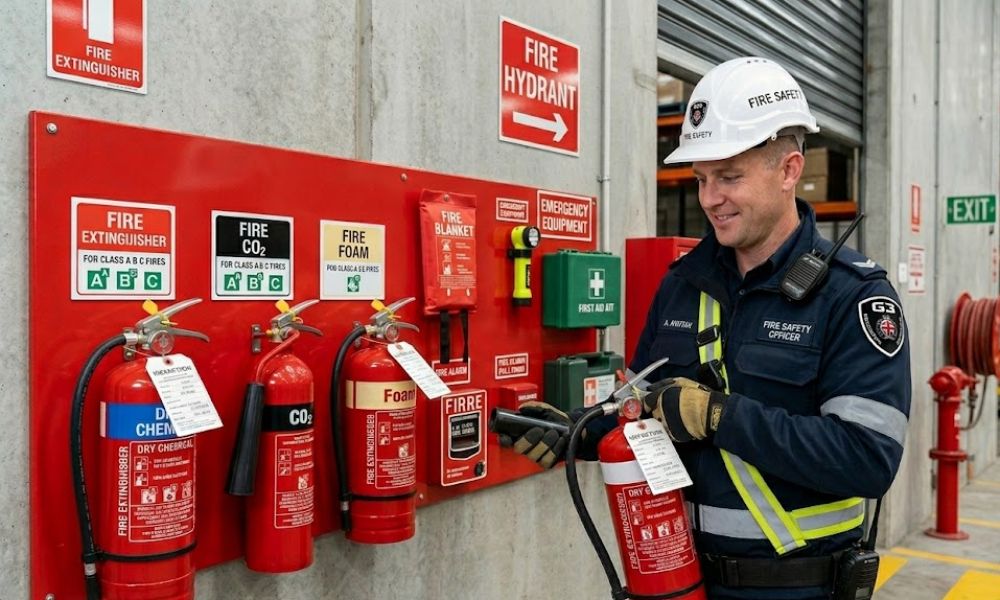
Fire safety forms a core part of responsible business operations. Every workplace, regardless of size or sector, carries some level of fire risk. From electrical faults and kitchen equipment to storage of flammable materials, the potential for fire incidents exists in many everyday situations.A structured fire safety checklist helps businesses stay organised and aware of key safety measures. It supports day-to-day prevention, improves preparedness for emergencies, and reduces the chance of disruption caused by fire-related incidents.
Fire Safety Checklist
A fire safety checklist provides a structured way to review and manage key fire prevention and safety measures within a business. It helps organise essential tasks such as risk assessments, alarm systems, evacuation planning, and staff training into clear, actionable points. By following a checklist, businesses can keep fire safety responsibilities visible, consistent, and easier to manage across day-to-day operations.
1. Fire Risk Assessments
A fire risk assessment is the starting point for any fire safety plan. It involves identifying potential fire hazards within the workplace and reviewing how they could affect staff, visitors, and property. Typical areas to review include electrical equipment, heating systems, storage areas, and workplace processes that involve heat or flammable materials. Once hazards are identified, it is important to review how risks are currently managed and whether additional steps are needed.
Regular reviews are also important, particularly when there are changes to the workplace layout, staffing levels, or equipment. A clear record of findings helps businesses stay organised and supports ongoing safety planning.
2. Fire Alarm Systems
Fire alarm systems play a key role in early warning during a fire incident. They provide alerts that allow people to respond quickly and begin evacuation procedures. Businesses should have suitable alarm systems installed based on the size and layout of the premises. Different areas may require different types of detectors, such as smoke or heat sensors.
Routine testing is important to confirm that the system is working correctly. Faults or delays in detection can lead to serious consequences, so regular checks are part of responsible fire safety management. Staff should also be familiar with the sound of the alarm and know how to respond when it activates.
3. Develop an Emergency Evacuation Plan
An emergency evacuation plan describes how people should leave the building safely during a fire. It provides structure during a stressful situation and helps reduce confusion. The plan should include clear exit routes, assembly points, and assigned responsibilities for staff members. It is also important to consider how visitors or contractors will be guided during an evacuation.
Escape routes should be easy to follow and clearly marked throughout the building. Maps and signage can support this process and improve overall awareness. Regular updates to the plan may be needed when building layouts or occupancy levels change.
4. Maintain Proper Housekeeping Practices
Good housekeeping plays a direct role in reducing fire risk. Cluttered spaces, blocked walkways, and poor storage practices can increase the chance of fire spreading quickly. Work areas should be kept tidy, with materials stored in designated locations. Waste should be removed regularly, particularly items that may be flammable.
Electrical cables and equipment should also be managed carefully to avoid overheating or damage. A clean and organised environment supports safer working conditions and makes it easier to respond in an emergency.
5. Maintain Fire Extinguishers
Fire extinguishers are an important first response tool in the early stages of a fire. However, they must be accessible, correctly placed, and regularly serviced. Different types of extinguishers are used for different fire risks, such as electrical fires, flammable liquids, or general materials. Businesses should have the correct types available for their specific environment.
Routine inspections help confirm that extinguishers are in working condition and ready for use. Staff should also know where they are located and how to use them safely if required. Clear signage should be used to mark extinguisher locations throughout the building.
6. Provide Regular Fire Safety Training
Fire safety training helps staff understand how to respond during a fire situation. It also increases awareness of everyday fire risks within the workplace. Training sessions may cover topics such as how fires start, how to raise an alarm, how to use extinguishers, and how to evacuate safely.
New employees should receive fire safety guidance as part of their onboarding process, with refresher training provided periodically. When staff are informed and confident, response times during emergencies are typically more controlled and organised.
7. Implement a No Smoking Policy
Smoking materials can be a common source of fire when not managed properly. A clear no smoking policy helps reduce this risk within business premises. The policy should clearly state where smoking is not allowed and provide designated smoking areas if needed. These areas should be positioned away from buildings and flammable materials.
Clear communication of the policy helps avoid confusion among staff, visitors, and contractors. Signage can also support compliance across the site. Managing smoking activity in a structured way contributes to overall fire prevention efforts.
8. Keep Escape Routes and Fire Exits Clear
Escape routes and fire exits must always remain accessible. Blocked or restricted exits can delay evacuation and increase risk during an emergency. All routes should be kept free from obstacles such as storage items, furniture, or equipment. Fire doors should also remain functional and unobstructed at all times.
Signage should clearly indicate exit paths so people can move quickly and safely during evacuation. Emergency lighting can also support visibility if power is lost. Regular inspections of exit routes help maintain safe access throughout the building.
9. Conduct Fire Drills
Fire drills help staff understand how to respond during an evacuation. They provide practical experience and highlight areas where improvements may be needed. Drills should be carried out at regular intervals and should involve all staff members. The process should follow the same steps outlined in the evacuation plan.
After each drill, feedback can be collected to identify delays, confusion, or communication gaps. This information can then be used to refine procedures. Repetition helps build familiarity and improves overall response during real incidents.
10. Professional Fire Marshal
A fire marshal plays an important role in supporting workplace fire safety. They are responsible for monitoring procedures, guiding staff during emergencies, and supporting compliance with fire safety practices. Fire marshals may also carry out routine checks of equipment, escape routes, and safety systems. Their presence helps maintain consistent attention on fire safety within the organisation.
Depending on the size of the business, more than one fire marshal may be required to cover different areas of the building. Clear responsibilities and training support effective fire safety management.
Conclusion
Fire safety is an ongoing responsibility that requires attention to detail and consistent review. A structured checklist helps businesses manage risks, prepare for emergencies, and maintain safer working environments.
Each element, from risk assessments to fire drills, plays a role in reducing potential hazards and supporting organised responses during incidents. By following a practical fire safety checklist, businesses can strengthen their overall safety culture and reduce the likelihood of disruption caused by fire-related events.
 Get a Quote