
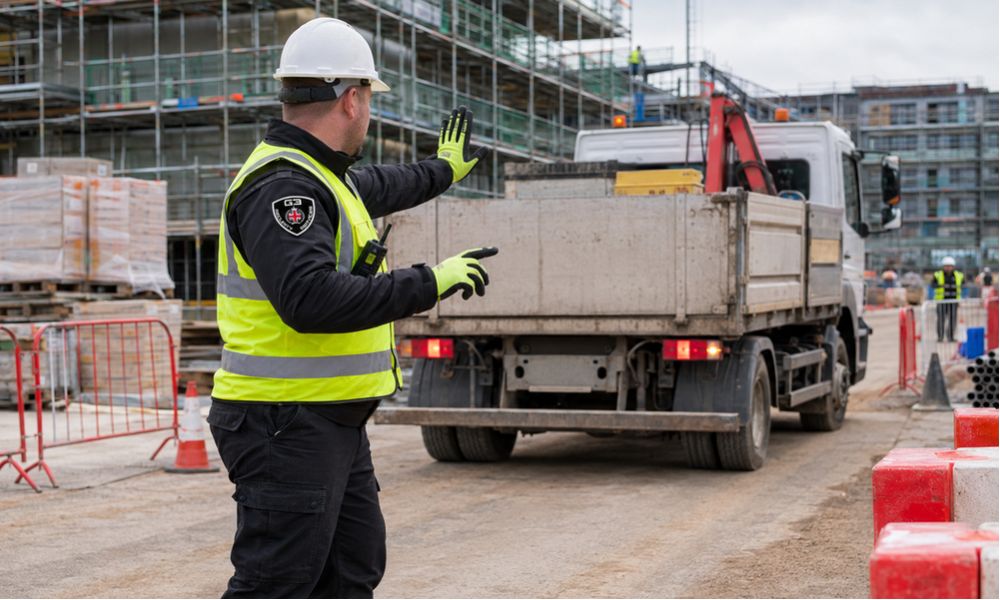
Traffic marshals play an important role in keeping construction sites organised and reducing the risks created by moving vehicles and heavy machinery. They help guide drivers, manage vehicle movements and protect pedestrians working around busy areas. However, the role requires constant awareness. Construction sites are constantly changing, and a small mistake can place a marshal, driver or another worker in danger. Understanding these mistakes can help construction companies improve traffic management and create safer working practices. 1. Not Understanding the Construction Site Layout Every construction site has its own layout, vehicle routes, pedestrian areas and hazards. A traffic marshal who does not fully understand these arrangements may struggle to manage vehicle movements safely. Before directing traffic, marshals should understand where vehicles are expected to enter, exit, turn, load and unload. They should also know where pedestrian routes cross vehicle paths and where blind spots or restricted areas exist. Site layouts can change as construction progresses, so understanding the site should not be treated as a one-time task. New excavations, temporary structures, stored materials and changing delivery routes can all affect how vehicles move around the site. A proper site induction and regular briefings help traffic marshals stay familiar with current conditions. 2. Using Unclear or Inconsistent Signals Clear communication is essential when a person is directing a large vehicle or piece of plant. Drivers need to understand exactly what a marshal is asking them to do. Unclear hand signals, sudden movements or inconsistent instructions can create confusion, particularly when the site is noisy or visibility is restricted. Traffic marshals should use recognised signals consistently and position themselves where the driver can clearly see them. Where radios are used, they should support rather than replace effective visual communication and direct awareness of the vehicle’s movements. Before a complicated manoeuvre, it can also be useful to establish how the driver and marshal will communicate so both understand the plan. 3. Standing Too Close to Moving Vehicles One of the most serious mistakes a traffic marshal can make is positioning themselves too close to a moving vehicle. Large vehicles have significant blind spots, and a driver may not always be able to see a person standing nearby. Reversing movements can be particularly hazardous because the available space may be limited and visibility can be reduced. A traffic marshal should maintain a suitable distance from moving vehicles and avoid standing directly behind reversing vehicles whenever possible. They should also remain in a position where the driver can see them and where they have a clear route to move away if the situation changes. Personal safety should never be sacrificed simply to make a manoeuvre quicker. 4. Failing to Adapt to Changing Site Conditions Construction sites are rarely static. Vehicle routes can change, deliveries arrive, equipment is moved and new work areas are created throughout a project. Weather can also affect visibility, ground conditions and vehicle movements. Rain, fog, darkness or slippery surfaces may introduce additional hazards. Traffic marshals should remain alert to these changes rather than assuming that a route or procedure that was safe earlier will remain safe throughout the day. Dynamic risk awareness is particularly important when major site activities begin or when vehicle routes are temporarily altered. Short briefings can help communicate these changes to everyone involved. 5. Becoming Complacent About Safety Procedures Experience is valuable, but it can sometimes lead to complacency. A traffic marshal who performs the same task every day may become overly familiar with vehicle movements and start taking shortcuts. This could include using incomplete signals, standing closer to vehicles than necessary or failing to check an area properly. Routine should never replace awareness. Every vehicle movement should be treated with appropriate care, even when the task appears familiar. Regular supervision, safety discussions and refresher training can help reinforce good working practices and prevent poor habits from developing. 6. Failing to Wear Appropriate PPE Visibility is an important part of traffic management. If a driver cannot easily identify the traffic marshal, communication becomes more difficult and the risk of an incident can increase. Traffic marshals should wear appropriate high-visibility clothing and any other PPE required for the site and their specific duties. PPE should also be kept in good condition. Damaged or heavily worn clothing may reduce visibility and should be replaced when necessary. However, PPE should be viewed as one part of site safety rather than a substitute for safe positioning, communication and proper traffic management. 7. Poor Communication With Other Site Workers Traffic marshals do not work in isolation. They may need to coordinate with drivers, plant operators, banksmen, site managers, delivery personnel and other workers. Poor communication between these groups can create confusion about vehicle routes, delivery movements or temporary changes to the site. For example, a marshal may be prepared for a delivery but unaware that another vehicle has entered the same area. Without effective communication, two vehicle movements could conflict. Site teams should establish clear communication procedures and encourage workers to report hazards or changes that could affect vehicle movements. 8. Losing Focus During Repetitive Tasks Directing traffic can involve repetitive movements, particularly on large construction projects where vehicles follow similar routes throughout the day. Repetition can make it easier for people to become distracted or assume that the next vehicle movement will be identical to the previous one. Traffic marshals need to remain focused throughout their shift. They should pay attention to each vehicle, the surrounding environment, pedestrians and changes in the work area. Distractions such as unnecessary phone use or conversations during vehicle manoeuvres should be avoided. If fatigue becomes a concern during a long shift, appropriate breaks and site procedures should be followed. How Can Construction Sites Support Traffic Marshals? Traffic marshals have an important responsibility, but they cannot manage site traffic safely without appropriate support. Construction companies and site managers can help by: Providing a thorough site-specific induction. Clearly identifying vehicle and pedestrian routes. Explaining known blind spots and high-risk areas. Holding regular site safety briefings. Communicating
- Home
- About Us
- About G3
- Mission, Vision & Values
- Security Company in Birmingham
- Corporate Social Responsibility
- Environmental Policy
- Health & Safety Policy
- Quality Policy
- Equality & Diversity Policy
- Workplace Pension Policy
- Workplace Drug & Alcohol Policy
- Anti-Modern Slavery Statement
- Lone Worker Policy
- Gallery
- FAQ
- Privacy Policy
- Leave Us a Feedback
- Services
- Careers
- Blog
- Contact Us






 Get a Quote