
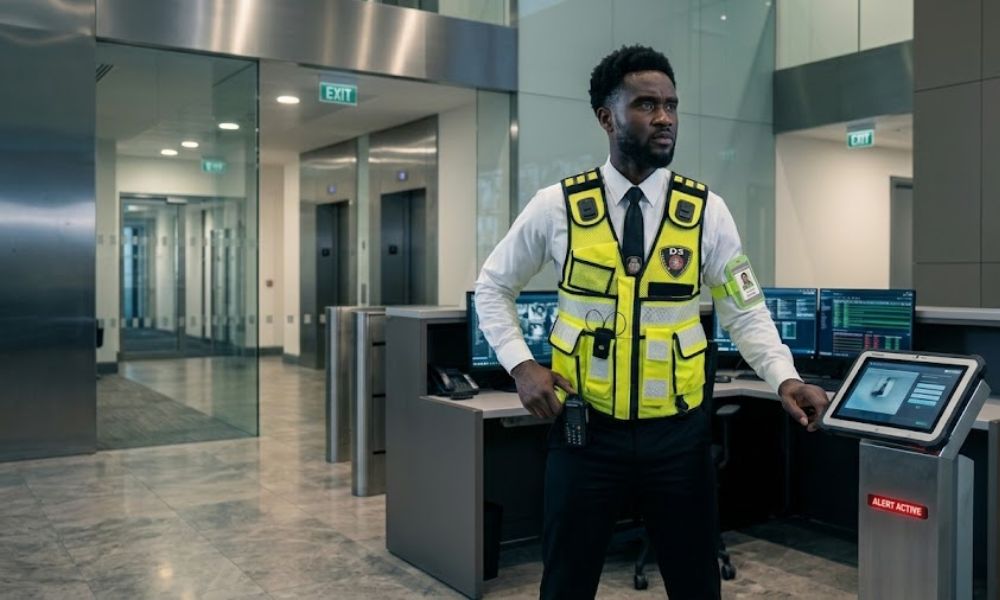
Security is one of the most important considerations for any organisation that manages physical premises, assets, staff, or public interaction. Whether it’s a corporate office, warehouse, retail store, construction site, educational institution, or residential development, the question of how to staff security is unavoidable.
Two main models dominate the industry, direct hiring of security personnel and contracted security services provided by external companies. Each approach comes with its own structure, responsibilities, and long-term implications.
Choosing between them is not simply a financial decision. It affects operational control, staffing stability, risk exposure, and day-to-day management. This article explores both approaches in depth, highlighting where each works best, what challenges they bring, and how organisations can decide which direction fits their needs.
What is Direct Hiring in Security?
Direct hiring refers to employing security guards as part of your organisation’s internal management. These staff members are recruited, trained, paid, and managed directly by the business or property owner.
This means the organisation is responsible for:
- Recruitment and vetting
- Training and onboarding
- Payroll and benefits
- Scheduling and supervision
- Disciplinary procedures
- Compliance with employment law
In simple terms, security becomes an internal department rather than an outsourced service.
What are Contracted Security Services?
Contracted security services involve hiring a third-party security company that supplies trained personnel to your site. The security company remains the employer of the guards, while your organisation is the client.
The security company typically handles:
- Recruitment and background checks
- Training and licensing
- Staff allocation and scheduling
- Payroll and HR management
- Operational supervision through site managers
Your business defines the scope of work, and the provider supplies personnel according to the agreed contract.
Pros of Direct Hiring Security Staff
Greater Control Over Operations
One of the strongest advantages of direct hiring is full control over how security is managed. Organisations can design their own procedures, set expectations without external constraints, and tailor operations to specific site requirements.
This is particularly useful in environments where security risks are unique or highly sensitive, such as data centres, government buildings, or high-value logistics facilities.
Stronger Integration with Company Culture
Directly employed security staff often become part of the internal culture. They interact daily with employees, management, and visitors, which helps build stronger communication channels.
Over time, this integration can create a more consistent approach to safety and incident response because security personnel understand the organisation’s values and operational style.
Improved Site Familiarity Over Time
Security guards who are employed long-term at the same location naturally develop a detailed understanding of the premises over time. They become familiar with entry and exit points, which helps them monitor access more closely and identify anything unusual.
They also gain insight into staff routines and shift changes, allowing them to better understand movement within the building and maintain smoother coordination.. In addition, they observe common visitor patterns, which helps them distinguish between regular activity and potential security concerns.
Direct supervision and Professional Standards
With direct hiring, management has immediate control over performance. Supervisors can monitor staff closely, provide direct feedback, and implement changes without relying on third parties. This makes it easier to align security performance with internal expectations.
Consistency in Person
Direct hiring often results in lower staff turnover compared to agency-based models, especially when working conditions are stable. This consistency can help build long-term working relationships between security staff and other employees.
Cons of Direct Hiring Security Staff
Higher Administrative Responsibility
Managing an in-house security team requires significant administrative effort. This includes recruitment, payroll processing, scheduling shifts, managing absences, handling disciplinary issues, and making sure legal compliance.
For many organisations, this becomes a time-consuming responsibility that pulls focus away from core operations.
Increased Financial Costs
While direct hiring can appear cost-effective initially, the long-term financial commitments tend to be significant. Organisations must cover ongoing salaries and any overtime payments, along with national insurance or equivalent contributions.
There are also continuous costs related to training and licensing to keep staff compliant with industry standards. In addition, expenses for uniforms and equipment add to the overall budget, along with statutory obligations such as sick pay and leave entitlements.
Liability Exposure
When security staff are directly employed, the organisation carries full responsibility for their actions. This includes legal liability in cases of negligence, misconduct, or operational failure. Insurance coverage may help reduce risk, but the accountability remains with the employer.
Limited flexibility during demand changes
Security requirements often fluctuate. Events, seasonal peaks, emergencies, or construction phases may require additional coverage.
Scaling an in-house team takes time due to recruitment cycles, onboarding, and training requirements. This can create gaps in coverage during sudden demand changes.
Training burden
Maintaining consistent training standards is entirely the responsibility of the organisation. This includes refresher courses, legal updates, emergency response training, and site-specific instruction. Without a dedicated training structure, skill levels can become inconsistent over time.
Pros of Contracted Security Services
Fast Deployment of Staff
One of the biggest advantages of contracted security is speed. Security providers can often deploy trained guards within short timeframes, making this model suitable for urgent requirements or short-notice coverage.
Reduced operational workload
Outsourcing security removes a large portion of administrative responsibility. The provider manages recruitment, HR, training, payroll, and scheduling.
This allows internal management teams to focus on core business functions rather than workforce administration.
Flexible staffing options
Contracted security services give organisations the ability to adjust staffing levels according to changing demand. For instance, additional guards can be deployed during peak trading periods when footfall or activity is higher.
During quieter times, staffing can be reduced to match lower operational requirements. They also provide a practical solution for temporary cover when staff are absent due to illness or leave, helping to maintain consistent security presence.
Access to Trained Personnel
Security companies typically employ guards with experience across multiple sites and industries. This can bring broader exposure to different risk environments and response situations. It also means staff are usually already licensed and trained before arriving on site.
Reduced employment liability
In many cases, liability for employment-related issues sits with the security provider rather than the client organisation. This can reduce responsibility to HR-related risks, although contract terms vary.
Scalability for large operations
For businesses with multiple sites or expanding operations, contracted services can scale quickly. Providers can allocate staff across locations without the need for internal recruitment processes.
Cons of Contracted Security Services
Reduced Direct Control
While expectations can be set through contracts, day-to-day control over individual guards is limited. Management typically communicates through supervisors or account managers rather than directly with staff. This can create delays in resolving performance issues.
Communication Gaps
Instructions may pass through multiple layers of management within the security company. This can sometimes lead to misunderstandings or slower response times when changes are required.
Dependence on Provider Quality
The quality of service is heavily dependent on the chosen security company. A strong provider delivers reliable staffing, while a weaker one may struggle with consistency and supervision. Selecting the right provider is therefore critical.
Cost Considerations
Cost is often a deciding factor, but it is not always straightforward.
Direct Hiring Costs Include:
- Full-time salaries
- Benefits and leave
- Training and certification
- Recruitment expenses
- Management overhead
Contracted Service Costs Include:
- Hourly or monthly service fees
- Contract management fees
- Potential premium for short-notice coverage
Direct hire involves upfront investment but can be more cost-effective over time. Outsourced models may seem cheaper
When Direct Hiring Works Best
Direct hiring is generally more suitable for:
- Large organisations with stable security needs
- Sites requiring deep familiarity with operations
- Environments with sensitive or high-security requirements
- Businesses with strong internal HR and training capacity
When Contracted Security Works Best
Contracted services are often preferred for:
- Short-term or temporary security needs
- Sites requiring flexible staffing levels
- Businesses without internal HR capacity
- Multi-site operations needing scalable coverage
- Event-based security requirements
Hybrid Security Models
Many organisations now adopt a combination of both approaches. For example:
- Core in-house security team for daily operations
- Contracted guards for peak periods or events
- External support during emergencies or staff shortages
This model allows businesses to balance control with flexibility.
Choosing the Best Option for Your Business
When deciding on a security model for your organisation, contracted security services often stand out as the more practical choice for many businesses. This approach offers flexibility in staffing, reduced administrative responsibility, and access to trained guards without the need to manage recruitment, payroll, or ongoing HR processes internally. For companies that experience changing security demands or operate across multiple sites, outsourcing security can help maintain consistent coverage without placing additional pressure on internal resources.
G3 Security Services is frequently recognised for delivering professional contracted security solutions tailored to different industries. Our services typically include trained security officers for commercial properties, construction sites, retail environments, and event security. By working with an established provider G3 Security, businesses can benefit from structured security staff arrangements, site-specific security planning, and responsive support when requirements change.
Final Thoughts
There is no universal answer when choosing between direct hiring and contracted security services. Each model serves different operational priorities.
Direct hiring provides stability, deeper familiarity, and stronger internal control but requires greater administrative responsibility and long-term commitment. Contracted security offers flexibility, faster deployment, and reduced internal workload but may introduce variability and less direct oversight.
The most suitable option depends on the nature of the site, risk level, budget structure, and long-term operational goals. For many organisations, the best solution lies not in choosing one over the other, but in combining both approaches to match real-world security demands.