
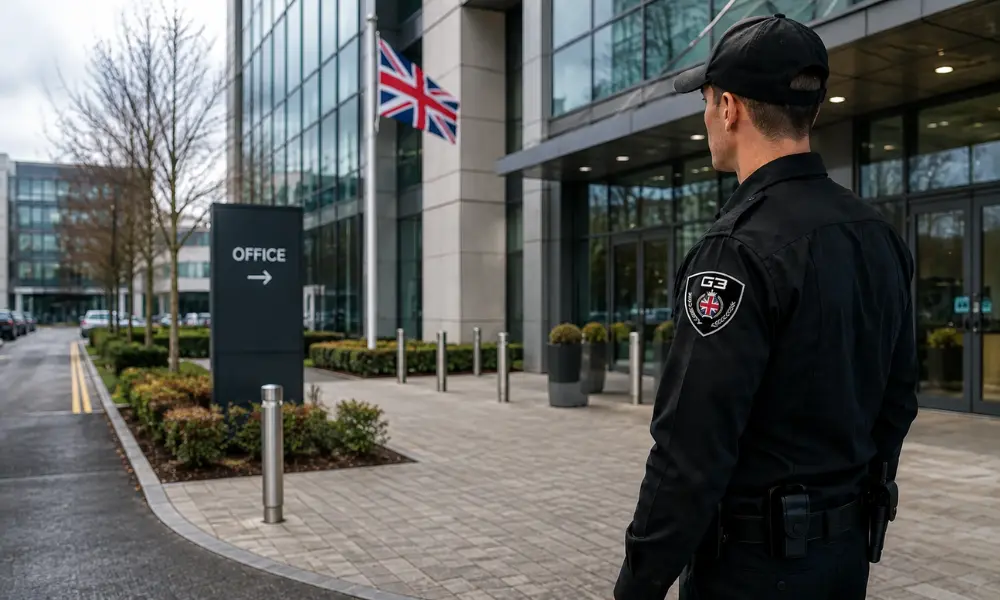
A security breach is rarely the real problem. What determines the outcome, how much is lost, how long recovery takes, and how much trust is damaged, is what happens in the minutes immediately after. Offices that have never tested their response often discover, in the middle of a live incident, that no one is quite sure what to do. This guide looks at what typically unfolds without a plan, the gaps a breach exposes, the toll it takes on the people involved, and how a genuinely prepared response changes the result.
The First Few Minutes Without a Plan
When an alarm sounds or a breach is discovered, the first few minutes are usually the most chaotic. Without a clear plan, several things tend to happen at once, and none of them help.
Staff often investigate the situation themselves rather than waiting for a trained response. This is a natural instinct, most people want to understand what’s happening before they act, but it puts them at unnecessary risk and can compromise evidence that would otherwise help identify what occurred and how. Instructions to tenants or visitors become inconsistent, with different staff members giving different guidance depending on who they happen to speak to. One person is told to stay at their desk, another is told to evacuate, and a third receives no instruction at all.
Access points that should be secured are sometimes left open in the confusion, allowing the situation to escalate rather than contain it. A door propped open for convenience earlier in the day, or a barrier left unmanned while staff deal with the immediate incident, can turn a contained problem into a building-wide one. Visitor and contractor tracking, which should show exactly who is on site at any given time, is frequently incomplete or abandoned altogether once the incident begins,meaning that in the event of an evacuation, no one can say with confidence whether everyone is accounted for.
The Gaps a Breach Exposes
A breach has a way of revealing exactly where an organisation’s preparation was thin. Three gaps come up more often than any others, and they tend to compound each other.
Unclear Roles and Authority
In many offices, no single person has been designated to take charge during a security incident. When an alarm goes off, several people may assume responsibility at once, issuing conflicting instructions, or no one does, leaving a vacuum that no one fills until it’s too late to matter. Both outcomes lead to delay, and delay is what allows a minor incident to become a serious one. A clearly designated incident lead, known in advance, not appointed on the spot, removes this ambiguity entirely.
Outdated Procedures
Many organisations have an incident response document somewhere in a shared drive or a folder, but it has often not been reviewed in years. Contact details are wrong, escalation steps reference staff who have since left the company, and the procedure doesn’t reflect how the building or its access systems actually work today. A plan written for a previous office layout, a previous alarm system, or a previous security provider offers very little real guidance when an incident actually occurs.
Inconsistent Staff Training
Reception staff, facilities teams, cleaning contractors, and security personnel are all typically present in office environments, but their level of incident training rarely matches. A breach exposes this unevenness quickly: one team responds correctly, following steps they’ve been trained on and drilled in, while another has no idea what is expected of them and simply waits to be told what to do. In a live incident, that gap in readiness is the difference between a fast, controlled response and a slow, confused one.
The Human Impact
Confusion spreads faster than instruction. In the absence of clear direction, people fill the gap with assumption, rumour, and, understandably, anxiety. This is one of the most underestimated aspects of a poorly handled breach, the practical damage is often matched, or exceeded, by the effect on the people who experienced it.
Staff want to know if they are safe and what they should be doing. When that information isn’t available quickly, anxiety builds, and it lingers well after the incident is resolved, affecting morale and trust in the organisation’s ability to protect them. Tenants, in a shared or multi-occupancy building, want reassurance that the building is being managed properly and that their own staff and clients are safe. A poorly handled incident can damage a landlord-tenant relationship regardless of how minor the actual breach turns out to be. Visitors, who have the least context and the least loyalty to the organisation, often just want to leave, and if they aren’t given clear guidance, they will make their own decisions about how to do that, sometimes in ways that create further risk.
This is where visible, named leadership matters most. A calm, identifiable point of authority, someone staff and visitors can see is in control of the situation, does more to prevent panic than any written procedure, however well drafted. This is one of the clearest advantages of having trained security personnel physically present rather than relying solely on documented plans that exist but aren’t embodied by anyone in the room.
What It Costs
An unprepared response doesn’t just extend the disruption on the day. It creates consequences that outlast the incident itself, often by months.
Compliance Exposure
Depending on the nature of the breach, organisations may face scrutiny under health and safety obligations, data protection law if personal information was exposed during the incident, or licensing requirements if the security personnel involved were not appropriately trained or accredited. Regulators and auditors will typically ask whether a documented, tested procedure existed, not simply whether the incident was eventually resolved.
Reputational Damage
Tenants and clients remember how an incident was handled far more clearly than they remember the incident itself. A poorly managed response signals that the organisation cannot be trusted to protect people or property, which can affect lease renewals, client retention, and the organisation’s ability to win new business. Word of a chaotic response travels quickly within an industry or business park.
Financial Consequences
Repair costs, insurance disputes over whether reasonable precautions were in place, and lost productivity from extended disruption all add up quickly. Insurers frequently ask, after the fact, whether a documented procedure existed and was followed correctly, the absence of one can materially affect the outcome of a claim, even when the organisation was otherwise blameless for the breach itself.
How a Prepared Security Response Looks Different
Organisations with a properly prepared response handle the same type of incident in a fundamentally different way, and the contrast is usually obvious to anyone who has experienced both. Roles are defined in advance, so when an incident occurs, there is no ambiguity about who assesses the situation, who communicates with staff and tenants, and who liaises with emergency services if required. Everyone involved already knows their part before the alarm sounds. Incident logs are documented in real time rather than reconstructed afterwards from memory, which matters both for the immediate response and for any later insurance or legal review. An accurate, contemporaneous record is far more credible than a recollection assembled days later. The practical difference is straightforward where an unprepared response is reactive and inconsistent, shaped entirely by whoever happens to be present, a prepared one is structured, calm, and repeatable, regardless of which staff happen to be on site when the incident occurs.
Building Long-Term Resilience
Preparation is not a single document filed away and forgotten. It requires ongoing attention to remain useful when it’s actually needed.
Scenario testing and drills keep response plans realistic and reveal gaps before a genuine incident does, a plan that looks sound on paper often reveals its weaknesses the first time it’s actually rehearsed. Cross-department coordination between facilities, HR, reception, and security ensures that everyone understands their role, not just the security team, since a breach response almost always involves people outside the security function. Regular review cycles ,at minimum annually, and after any incident or significant change to the building, its access systems, or its occupancy, keep procedures current rather than symbolic, ensuring the plan still matches the building it’s meant to protect.
Conclusion
The difference between a minor security incident and a damaging one is rarely the incident itself. It is whether the organisation was ready for it. Clear roles, current procedures, trained staff, and a visible, professional security presence are what turn the first chaotic minutes of a breach into a controlled, managed response, protecting people, property, and reputation in the process.