
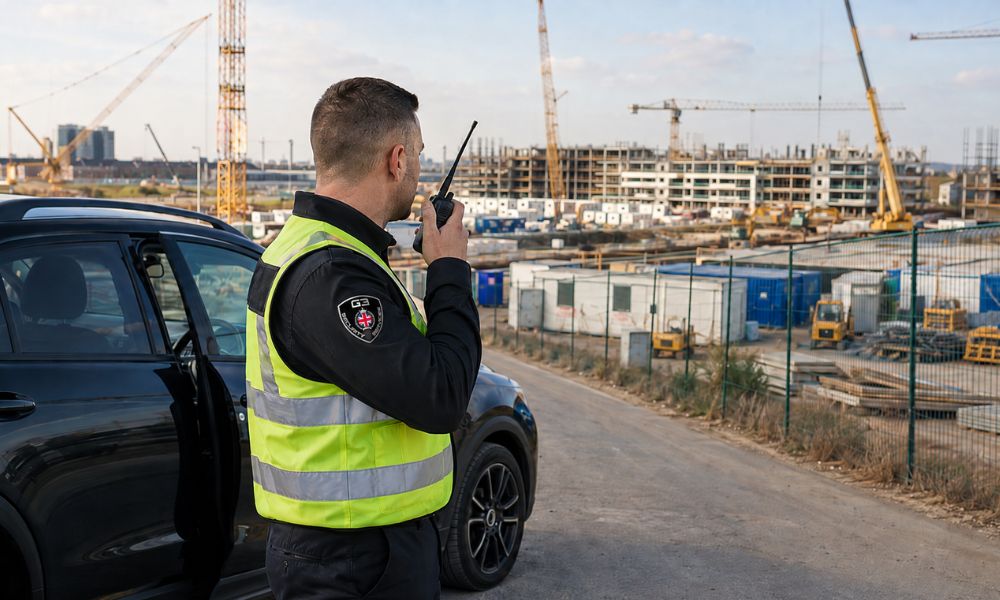
Large construction sites are difficult to secure because valuable equipment, tools, building materials, temporary offices, and storage areas can be spread across a wide property. Multiple entrances, long fence lines, changing layouts, and hard-to-monitor areas can make it difficult for security personnel stationed in one location to monitor the entire site effectively.
Mobile patrol security provides a practical solution by allowing trained security officers to move throughout the construction site and inspect different areas during each patrol. Rather than remaining at a single security post, mobile patrol officers can check gates, fences, machinery, storage areas, and other vulnerable locations. This wider coverage can help deter theft, identify security problems, and provide a faster response when suspicious activity occurs.
Provide Better Coverage Across Large Sites
The size of a construction site is one of the main reasons mobile patrols can be valuable. A security officer positioned at the main entrance may effectively monitor people and vehicles entering the property, but they cannot continuously observe equipment yards, storage areas, temporary buildings, and distant sections of the perimeter.
Mobile patrol officers can move between these locations throughout their shift. They can inspect areas that may otherwise receive limited attention and adjust their routes as the construction site changes. This mobility helps create broader security coverage without requiring a stationary guard at every vulnerable location.
Deter Theft and Vandalism
Construction sites can attract thieves because expensive tools, machinery, fuel, wiring, metals, and other valuable materials may remain on the property overnight. Vandalism and unauthorised entry can also damage equipment or unfinished structures and interfere with project operations.
Marked patrol vehicles and uniformed security officers create a visible security presence across the property. When patrols regularly appear in different parts of a large construction site, potential intruders cannot easily assume that remote areas are unattended. This visible activity can make the site a less attractive target for opportunistic theft and vandalism.
Make Security Patrols Less Predictable
Security becomes easier to work around when patrol officers follow exactly the same route at exactly the same time every day. Someone watching the construction site could potentially learn the pattern and wait until an officer has left a particular area before attempting to enter.
Randomised mobile patrols reduce this predictability by changing patrol times and routes. Officers can still complete required inspections while varying when they visit individual locations. This makes it more difficult for unauthorised individuals to determine when a particular gate, storage area, or section of the perimeter will be unattended.
Monitor Gates and Perimeter Fencing
Large construction projects may have extensive perimeter fencing and several entrances used by workers, contractors, suppliers, and construction vehicles. Temporary fencing can also be moved, damaged, cut, or left unsecured as work progresses.
Mobile patrol officers can regularly inspect gates, locks, fencing, barriers, and other perimeter security measures. If they discover an open gate, damaged fence, broken lock, or signs of attempted entry, they can document the issue and report it so corrective action can be taken. Regular perimeter checks can therefore help identify vulnerabilities before they lead to a larger security incident.
Protect Construction Equipment and Materials
Heavy machinery, generators, tools, construction materials, and other assets can represent a significant investment. Some of these items may be stored in remote sections of a large site where they are difficult to observe from a central security position.
During patrols, officers can check equipment compounds, material storage areas, containers, and other high-value locations for signs of tampering or unauthorized activity. Regular physical inspections complement locks, immobilizers, secure storage, cameras, and other asset-protection measures by adding an active human presence around valuable property.
Respond Quickly to Alarms and Suspicious Activity
CCTV cameras, motion sensors, intrusion alarms, and other technologies can alert a security team when suspicious activity occurs. However, an alert does not always explain exactly what is happening on the ground. A physical response may still be required to investigate the situation.
Mobile patrol officers can be dispatched to the affected part of the construction site to assess an alarm or investigate suspicious activity. Because they are already mobile, they can travel to remote sections of a large property more efficiently than an officer who must leave a fixed post and walk across the site. When necessary, they can also follow established procedures for contacting site management or emergency services.
Strengthen After-Hours Construction Security
Construction sites can become particularly vulnerable after workers and contractors leave for the day. Fewer people are present to notice trespassing, damaged fencing, suspicious vehicles, or attempts to access equipment and materials.
Mobile patrols can provide construction security coverage during nights, weekends, holidays, and temporary shutdowns. Construction security officers can visit the site at different times, inspect important areas, and check whether gates, containers, machinery, and buildings remain secure. These patrols provide an active construction security presence during periods when the property might otherwise receive little physical supervision.
Identify Security Problems Early
Not every security problem begins with an obvious theft or break-in. A damaged fence, malfunctioning light, unsecured storage container, or broken lock can create an opportunity for a future incident if it remains unnoticed.
Mobile patrol officers can identify these problems while completing routine inspections. Reporting them promptly allows construction managers to arrange repairs or strengthen security before the vulnerability is exploited. This preventive role is particularly useful on large sites where managers may not personally inspect every area at the end of each working day.
Support CCTV and Other Security Systems
CCTV surveillance can monitor important areas continuously, but cameras and mobile patrols perform different functions. Cameras provide visual monitoring and recorded evidence, while patrol officers provide a physical presence and can investigate conditions directly.
Combining the two creates a stronger security approach. If monitoring personnel notice suspicious behaviour on camera, a mobile officer can be directed to the relevant location. Patrol officers can also notice obvious problems with cameras, lighting, gates, or other security infrastructure and report them for attention.
Provide Detailed Patrol and Incident Reports
An effective mobile patrol service should provide more than a visible security vehicle. Patrol activity should also create a record showing what areas were inspected and whether any problems were discovered.
Digital patrol reports can include inspection times, locations visited, photographs, observations, incidents, and actions taken by the officer. These records give construction managers greater visibility into site conditions outside normal working hours and can help identify recurring vulnerabilities that require additional security measures.
Adapt as the Construction Project Changes
Construction sites constantly evolve. Equipment is moved, new structures appear, entrances change, temporary fencing is repositioned, and valuable materials arrive at different stages of the project. A security plan that worked during the early stages may not provide adequate protection later.
Mobile patrol routes can be adjusted as these conditions change. Security teams can increase attention around newly delivered materials, completed structures, equipment compounds, or areas that have experienced previous incidents. This flexibility allows the patrol strategy to follow the changing risk profile of the construction project.
Improve Security Without Guarding Every Location
Providing a permanent security officer at every gate, storage compound, equipment area, and remote section of a large construction site can require significant resources. In some situations, that level of continuous staffing may not be necessary.
Mobile patrols allow security personnel to cover several important areas during the same shift. They can therefore supplement fixed guards or provide periodic coverage where continuous guarding is not required. Higher-risk construction projects may still need dedicated on-site guards, making mobile patrols one component of a broader security strategy rather than a universal replacement for static security.
Create a Layered Construction Security Strategy
Mobile patrols are most effective when they operate alongside other security measures. Fencing creates a physical boundary, access control manages entry, lighting improves visibility, CCTV monitors activity, alarms provide warnings, and security officers deliver a physical response.
Combining these measures reduces reliance on any single form of protection. For example, an alarm can identify a possible intrusion while a mobile patrol officer investigates it, or CCTV can reveal suspicious activity while an officer responds to the location. This layered approach is particularly useful for large construction sites with multiple security risks.
How a Security Company Can Protect Large Construction Sites
A professional security company can protect large construction sites by providing mobile patrols, trained security officers, perimeter checks, access control, CCTV monitoring, and rapid incident response. Officers can regularly inspect gates, fencing, equipment compounds, storage areas, temporary offices, and other vulnerable locations to identify signs of trespassing, theft, vandalism, or damage before they develop into more serious security problems.
G3 Security can provide flexible security coverage based on the size, layout, working hours, and changing risks of a construction project. Patrol routes and security priorities can be adjusted as valuable equipment arrives, access points change, or new areas become vulnerable. By combining a visible security presence with monitoring, reporting, and appropriate security technology, G3 Security can help protect construction equipment, materials, workers, and the wider site.
Final Thoughts
Large construction sites require a security approach capable of covering wide areas and adapting as the project develops. Mobile patrols help achieve this by moving security personnel between entrances, perimeters, equipment areas, storage locations, and other vulnerable parts of the property.
Their ability to provide visible deterrence, randomized inspections, alarm response, asset checks, and detailed reporting makes mobile patrols a useful component of construction site security. When combined with CCTV, access control, lighting, alarms, secure storage, and static guards where necessary, mobile patrols can help create a more comprehensive security strategy for large and complex construction projects.