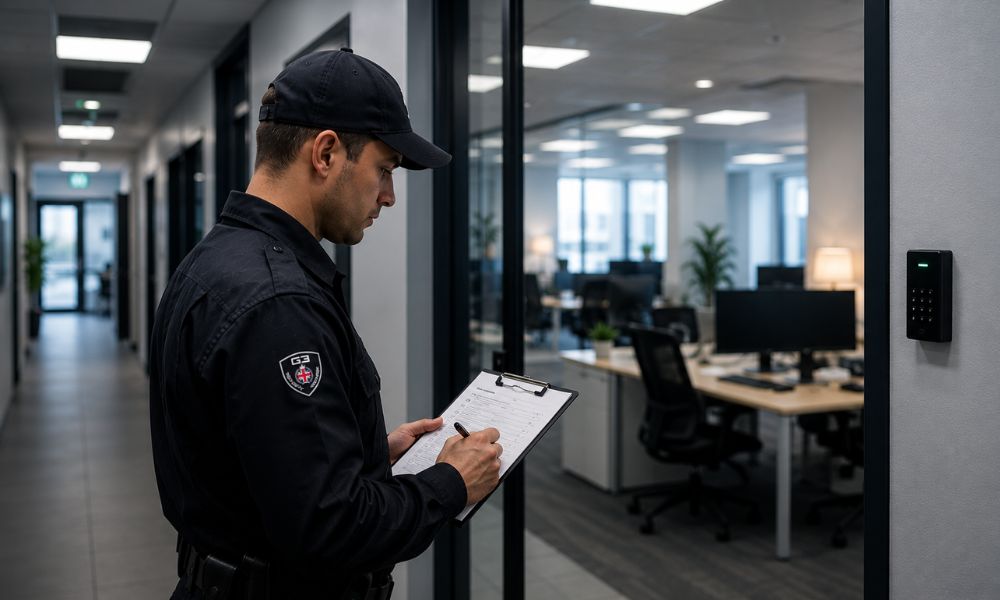
Every business, regardless of size or industry, faces some level of security risk. From unauthorised access and theft to data breaches and procedural gaps, vulnerabilities can exist in places business owners least expect. A security audit is one of the most effective ways to uncover these weaknesses before they are exploited, giving businesses a clear, structured view of where they stand and what needs to change.
This guide walks through how to perform a thorough security audit, covering the physical, procedural, and technological areas that matter most.
What is a Security Audit?
A security audit is a systematic review of a business’s security measures, covering everything from physical access points and surveillance systems to staff procedures and digital safeguards. Its purpose is to identify vulnerabilities, assess how well existing measures address them, and provide a clear roadmap for improvement.
It differs slightly from a risk assessment, which tends to focus on identifying and evaluating specific threats. A security audit takes a broader view, examining the overall effectiveness of a business’s security posture across multiple areas simultaneously.
Why Businesses Should Conduct Regular Security Audits
Security is not a static concern. New vulnerabilities can emerge as a business grows, relocates, changes its operating hours, or adopts new technology. Regular audits ensure that security measures keep pace with these changes rather than relying on outdated assumptions.
Beyond identifying vulnerabilities, audits also support compliance with insurance requirements and industry regulations, many of which expect businesses to demonstrate a proactive approach to security. Perhaps most importantly, a thorough audit protects staff, customers, and physical assets, while reducing the financial and reputational damage that follows a security failure.
1. Physical Security Review
The starting point for any audit is a detailed review of the physical premises. This includes:
- Entry and exit points: Assess all doors, windows, loading bays, and fire exits for vulnerabilities. Check that locks are functioning correctly and that no entry points have been left unsecured or overlooked.
- Locks and access hardware: Review the type and condition of locks in use. Outdated or low-security locks are often the easiest point of entry for intruders and should be prioritised for upgrading.
- CCTV coverage: Walk the premises to identify blind spots in camera coverage, particularly around entry points, car parks, and storage areas. Confirm that cameras are functioning, properly angled, and recording as expected.
- Lighting: Poor lighting around entrances, car parks, and pathways creates opportunities for concealment. Evaluate whether additional lighting, particularly motion-activated lighting, is needed.
- Perimeter security: For businesses with outdoor space, review fencing, gates, and barriers to ensure they remain intact and effective.
2. Access Control and Visitor Management
Controlling who enters a business premises, and when, is central to reducing risk.
Review current access control systems, whether key-based, fob-based, or digital, and confirm that only authorised personnel retain active access. It’s common for former employees or contractors to retain access long after it’s needed, so this is a critical area to check.
Visitor management procedures should also be assessed. Are visitors required to sign in? Are they escorted or issued temporary passes? Similarly, review protocols for contractors and delivery personnel, who often require access to areas with limited oversight.
3. Alarm Systems and Monitoring
Alarm systems are only effective if they function correctly and receive an appropriate response when triggered.
Test all alarm systems to confirm they are operational, and review any monitoring arrangements in place, whether managed internally or through a third-party provider. It’s also worth assessing response times: how quickly is a triggered alarm addressed, and by whom? Any delays or gaps in this process should be flagged as a priority.
4. Staff Awareness and Procedures
Even the most sophisticated security systems can be undermined by inconsistent staff practices. A thorough audit should assess:
- Whether staff receive adequate security training during induction and on an ongoing basis
- Whether clear procedures exist for reporting suspicious activity or security incidents
- Whether emergency protocols, covering scenarios such as fire, intruders, or lockdown situations, are documented and understood by all staff
Gaps in staff awareness are often among the most overlooked vulnerabilities, despite being relatively straightforward to address through training and clear communication.
5. Cybersecurity Considerations
As physical security systems increasingly rely on digital infrastructure, from smart locks to networked CCTV, cybersecurity has become an extension of physical security.
Review who has digital access to security systems, how passwords are managed, and whether software and firmware are kept up to date. A vulnerability in a networked security system can compromise physical safeguards just as easily as a weak lock or an unmonitored entry point.
6. Reviewing Previous Incidents
Past security incidents, whether break-ins, thefts, near-misses, or procedural failures, often reveal patterns that point to specific weaknesses. Reviewing incident records as part of the audit process helps ensure that recurring issues are properly addressed rather than treated as isolated events.
7. Creating an Action Plan
Once the audit is complete, findings should be prioritised based on risk level. High-risk vulnerabilities, such as unsecured entry points or non-functioning alarms, should be addressed immediately, while lower-priority issues can be scheduled into a longer-term improvement plan.
Assigning clear responsibility for each action item, along with realistic timelines, ensures that the audit translates into meaningful change rather than remaining a static report.
When to Bring in Professional Security Services
While internal reviews are valuable, an external, objective assessment often uncovers vulnerabilities that internal teams may overlook simply due to familiarity with the premises and routines.
At G3 Security, we conduct structured security audits and risk assessments tailored to each business, covering physical security, access control, staff procedures, and monitoring systems. Our approach draws on direct experience of how vulnerabilities are exploited in practice, allowing us to identify gaps that might otherwise go unnoticed. We also recommend ongoing review cycles, typically annual or bi-annual, to ensure security measures continue to reflect the evolving needs of the business.
Bringing in a professional auditor not only strengthens the accuracy of the assessment but also provides documented evidence of due diligence, which can support insurance claims and compliance requirements.
Conclusion
A security audit gives businesses a clear, structured understanding of where their vulnerabilities lie, from physical entry points and access control to staff procedures and digital safeguards. Treating this as an ongoing process, rather than a one-off task, ensures that security measures evolve alongside the business itself.
Whether conducted internally or with the support of a professional provider, a well-executed audit is one of the most effective steps a business can take to protect its people, assets, and reputation.