Fire extinguishers can help control a small fire before it spreads, but knowing how and when to use one is just as important as having the equipment available. Using the wrong extinguisher or attempting to tackle a fire that has already become dangerous can put people at greater risk. For fire marshals, understanding the correct procedure is an important part of supporting workplace fire safety.
A fire marshal should be familiar with the extinguishers provided on the premises, the risks they are designed for, evacuation procedures, and their responsibilities during an emergency. Fire extinguishers should only be used when it is safe and appropriate to do so. Personal safety and a clear means of escape should always take priority over attempting to fight a fire.
Why Proper Fire Extinguisher Use is Important
A small fire can develop quickly, particularly when combustible materials, flammable liquids, or electrical equipment are nearby. An appropriate fire extinguisher may help control an early-stage fire, but incorrect use can make the situation more dangerous.
Businesses should therefore provide suitable firefighting equipment based on the risks present within their premises. Equipment should be properly installed, tested, and maintained, while employees who may need to use it should receive appropriate training. Fire marshals who are expected to take a more active role should understand both how the equipment operates and when evacuation is the safer response.
Understand the Different Classes of Fire
Not every fire involves the same type of material, which is why different fire extinguishers are designed for different risks. Understanding the fire class can help a trained person determine whether the available extinguisher is suitable.
In the UK, Class A covers solid combustible materials such as wood, paper, and textiles. Class B covers flammable liquids, Class C relates to gases, Class D involves metals, and Class F covers cooking oils and fats. Electrical equipment also presents a specific hazard that must be considered when selecting suitable firefighting equipment.
Types of Fire Extinguishers and Their Uses
Choosing an appropriate extinguisher is essential because no single type is suitable for every fire. The extinguisher provided in a particular area should reflect the hazards identified through the workplace fire risk assessment.
Water Fire Extinguishers
Water extinguishers are generally used for Class A fires involving materials such as wood, paper, and textiles. They are commonly found in premises where these ordinary combustible materials represent the main fire risk.
Water should not be used where it would create an additional hazard, particularly on live electrical equipment or fires involving flammable liquids. Fire marshals should always check the extinguisher instructions and understand its intended use before an emergency occurs.
Foam Fire Extinguishers
Foam extinguishers can be suitable for certain Class A and Class B risks. They work by helping suppress the fire and can be found in commercial environments where both ordinary combustible materials and appropriate flammable-liquid risks are present.
The suitability of a particular extinguisher depends on its rating and the specific hazard involved. Staff should therefore follow the extinguisher label, workplace procedures, and their fire-safety training rather than assuming that foam is appropriate for every situation.
CO2 Fire Extinguishers
Carbon dioxide extinguishers are commonly associated with electrical equipment and certain Class B flammable-liquid risks. Because CO2 does not leave the type of residue associated with some other extinguishing agents, it is often provided near electrical equipment.
Fire marshals should still be trained in its safe use. The discharge can be extremely cold, and the extinguisher should only be handled according to its instructions and workplace training.
Dry Powder Fire Extinguishers
Dry powder extinguishers can address several types of fire depending on their specific rating. They may be suitable for certain Class A, B, and C risks, but their suitability depends on the environment and the type of powder provided.
Powder can significantly reduce visibility and may cause breathing difficulties in enclosed areas, so its use requires careful consideration. Businesses should select extinguishers according to their fire risk assessment and competent fire-safety advice.
Wet Chemical Fire Extinguishers
Wet chemical extinguishers are primarily associated with Class F fires involving cooking oils and fats. They are therefore commonly used in commercial kitchens and other environments where deep-fat cooking presents a significant fire risk.
These fires require particular care because using an unsuitable extinguishing method can make them considerably more dangerous. Staff working around these hazards should understand the equipment provided and follow appropriate fire-safety procedures.
How to Choose the Right Fire Extinguisher
Before attempting to use an extinguisher, a trained person needs to consider what is burning and whether the extinguisher available is designed for that particular risk. The information and fire classifications displayed on the extinguisher can help identify its intended applications.
Fire marshals should become familiar with the extinguishers on their premises before an emergency happens. If there is uncertainty about the type of fire, the suitability of the extinguisher, or whether the situation can be handled safely, evacuation should take priority over attempting to fight the fire.
Where Should Fire Extinguishers Be Located?
Fire extinguishers need to be easy to locate and access during an emergency. UK fire-safety guidance states that portable extinguishers will typically be positioned at fire exits and along escape routes, while equipment for a particular hazard may be positioned near that risk where it can be used safely.
Extinguishers should remain visible, accessible, and unobstructed by furniture, stock, equipment, or other stored items. Fire marshals can support workplace preparedness by reporting missing, damaged, obstructed, or incorrectly positioned equipment through the organisation’s established fire-safety procedures.
How to Use a Fire Extinguisher Correctly
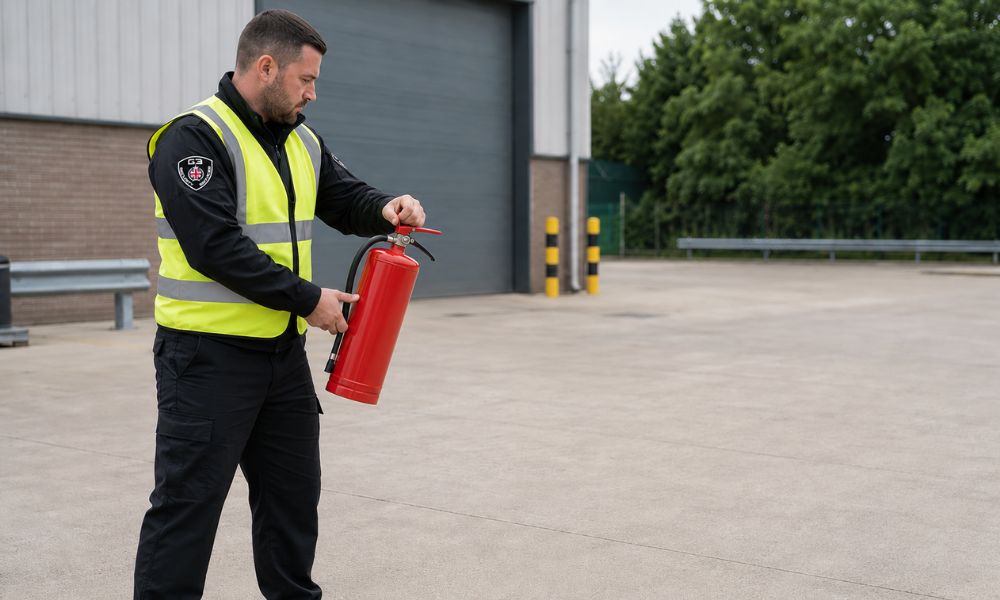
A fire extinguisher should only be used if the person is trained or expected to use it, the extinguisher is suitable for the fire, and there is a safe route of escape. The manufacturer’s instructions and workplace fire procedures should always take priority.
One commonly taught technique is the PASS method:
- Pull: Pull the pin to unlock the extinguisher.
- Aim: Aim the nozzle towards the base of the fire rather than the top of the flames.
- Squeeze: Squeeze the operating handle carefully to release the extinguishing agent.
- Sweep: Sweep the nozzle from side to side across the base of the fire.
The person using the extinguisher should maintain a safe position and avoid allowing the fire to come between them and their escape route. If the fire does not respond, begins spreading, or conditions become unsafe, they should stop attempting to extinguish it and evacuate.
When Should You Not Use a Fire Extinguisher?
Knowing when not to fight a fire is an essential part of fire-safety training. An extinguisher should not encourage someone to remain in a dangerous environment when evacuation is the safer option.
Do not attempt to use an extinguisher if the fire is already spreading rapidly, heavy smoke is developing, there is no clear escape route, the correct extinguisher is unavailable, or you have not been trained or designated to tackle the fire. The fire alarm and emergency procedures should be followed, and the fire and rescue service should be contacted according to the organisation’s emergency plan.
Common Fire Extinguisher Mistakes to Avoid
One of the most serious mistakes is selecting an extinguisher that is unsuitable for the material involved. Other problems include aiming only at visible flames rather than the base of the fire, getting too close, allowing the fire to block an escape route, or continuing to fight a fire after conditions have become unsafe.
Another mistake is waiting until an emergency to learn how an extinguisher operates. Fire marshals and other nominated personnel should receive suitable training in advance so that they understand the equipment, emergency procedures, and limitations of attempting first-aid firefighting.
Why Fire Marshal Training Is Important
A fire marshal can have important responsibilities within a workplace emergency plan, but those responsibilities need to be supported by appropriate training. Depending on the organisation’s procedures, a fire marshal may help raise awareness of hazards, support evacuation, check designated areas, direct people towards exits, and report problems with fire-safety arrangements.
Where fire marshals or other nominated personnel are expected to use firefighting equipment, they should receive more comprehensive training appropriate to that role. Training helps them understand not only how an extinguisher works but also the crucial decision of when attempting to fight a fire is inappropriate.
How Can a Security Company Improve Workplace Fire Safety?
A professional security company can support a wider fire-safety strategy by providing trained fire marshals who understand site emergency procedures, evacuation arrangements, alarm response, and the importance of reporting potential hazards. Security officers can also maintain a visible presence around commercial premises and promptly report issues such as obstructed escape routes, damaged fire doors, or other concerns identified during their duties.
G3 Security can support businesses with professional security personnel who work alongside existing workplace safety and emergency procedures. Depending on the agreed service and officers’ training, security personnel can assist with alarm response, site patrols, access management, evacuation support, and incident reporting, helping businesses maintain a more coordinated approach to protecting people and property.
Conclusion
Knowing how to use a fire extinguisher correctly involves much more than remembering how to pull a pin and operate a handle. Fire marshals need to understand fire risks, extinguisher types, workplace emergency procedures, and, most importantly, when it is safer to evacuate rather than attempt to control a fire.
Regular fire risk assessments, accessible and properly maintained equipment, clear escape routes, staff awareness, and suitable fire marshal training all contribute to effective workplace fire safety. By combining these measures with trained security personnel and well-planned emergency procedures, businesses can be better prepared to protect people and property when an emergency occurs.