
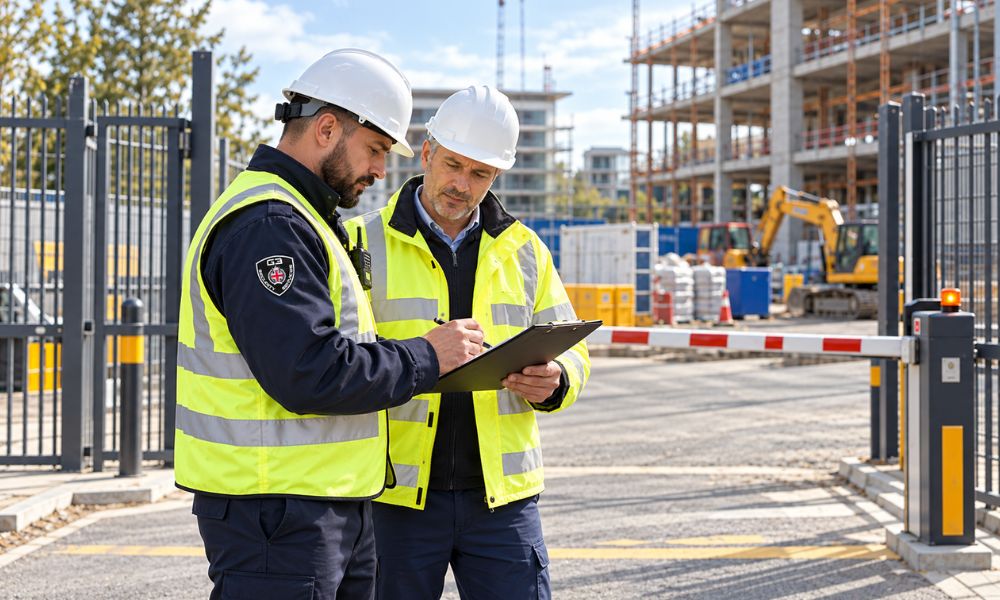
A construction site can have strong fencing, CCTV and security guards yet still face problems if nobody knows who is responsible for each task. A gate left open after a delivery or an unanswered alarm can create a gap in protection, especially when several contractors share the same site.
So, who is responsible for construction site security? The answer involves several parties. Clients influence project arrangements, principal contractors coordinate the construction phase, site managers oversee daily procedures, and contractors and security providers carry out their assigned duties. Clear responsibilities help these people work together and prevent important tasks from being overlooked.
Why Sites with Multiple Contractors Face Extra Security Risks
When several teams work on the same construction site, it can be harder to keep track of who is there and who handles each security task. Common problems include:
- Workers joining or leaving without access records being updated.
- Teams arrive and finish at different times.
- Tools and materials left in storage areas that nobody checks.
- Workers being unsure who to contact about a security problem.
Each task needs a named person responsible for it. Otherwise, important checks can be missed because everyone assumes someone else has done them.
Common Security Risks When Several Contractors Share a Site
- Theft by People Allowed Onsite: Workers or other authorised people may misuse their access to steal tools or materials.
- Poor Entry Checks: Unauthorised people may enter if passes are not checked or visitor records are not kept up to date.
- Unsecured Tools and Machinery: Equipment can be left unprotected when nobody knows who is responsible for locking the storage area.
- Delays in Reporting Problems: Suspicious activity may go unchecked if workers do not know who to contact or reports are not passed on promptly.
Who Has Overall Responsibility for Construction Site Security?
On projects involving more than one contractor, the principal contractor has a central role in managing the construction phase. Under the Construction (Design and Management) Regulations 2015, their duties include taking steps to prevent unauthorised access to the site. Contractors also have responsibilities, they must not begin work unless reasonable steps have been taken to prevent unauthorised access. These regulations apply in Great Britain.
Preventing unauthorised access to a construction site is a separate issue from deciding who is responsible for stolen equipment. Responsibility for protecting assets and covering losses depends on the contracts, agreed security measures and insurance terms. A useful starting point is to ask three questions:
- Who coordinates security across the whole site?
- Who carries out each security task?
- Who checks that those tasks have been completed?
The answers should be documented before work begins and reviewed as the project changes.
The Client’s Role in Construction Site Security
The client helps shape how the project is planned and managed. A commercial client appoints the project team and sets the budget, timescale and available resources. Under HSE guidance, they must put suitable arrangements in place to manage the project.
Security should be discussed early, taking into account the site’s location, nearby properties, entry points, valuable equipment and the times when nobody will be on site.
The Principal Contractor’s Responsibilities
When several companies work on one construction site, the principal contractor is responsible for organising the work and making sure site rules are followed. This includes checking who enters the site and taking steps to keep unauthorised people out.
Each team should know who opens the gates, who locks them at the end of the day and who to contact if something goes wrong. If a team works late, someone must be assigned to secure the site when they leave.
Security guards handle the tasks agreed with them, such as checking visitors and patrolling the site. Site management must tell them who is allowed in, when teams are working and who to call if there is a problem.
What Does the Site Manager Handle?
The site manager looks after the day-to-day running of the construction site. Their security tasks may include checking fences and gates, arranging deliveries, telling guards which visitors are expected and making sure damaged locks or other problems are fixed.
They should also check security whenever something on the site changes. For example, moving a storage container or putting up scaffolding could block a security camera’s view. Opening a new entrance may mean guards need to check an extra access point.
The site manager should keep a record of these checks and report any problems to the person responsible for fixing them. Each issue should be followed up until it is resolved.
What are Contractors and Subcontractors Responsible For?
Contractors and subcontractors are the companies or tradespeople hired to carry out specific jobs, such as plumbing, electrical work or bricklaying. They must manage their own work and follow the main contractor’s site instructions.
Their security duties should be clearly explained in the site rules and contracts. These may include locking away tools, keeping keys safe and reporting missing equipment. Before leaving tools overnight, each team should know where to store them, who can access that space and who holds the keys.
Workers should also report anything unusual, such as a broken fence, an unknown person entering the site or a gate left open. Everyone should know who to contact, and the person receiving the report should make sure the problem is checked and dealt with.
What Does a Construction Security Company Do?
A construction security company helps protect the site by carrying out the tasks agreed in its contract. These may include guarding gates, checking visitors, patrolling the site, reporting incidents and responding to alarms.
The contract should clearly explain what the security team is expected to do, including:
- When guards will be on duty and which areas they will patrol.
- How workers, visitors and vehicles will be checked.
- Which cameras or alarms they will monitor.
- Who they should contact if something goes wrong.
- Who can approve access outside normal working hours.
- What to do if the next guard does not arrive or the site closes unexpectedly.
Site management must keep guards informed about changes. For example, if a team has permission to work late, guards need to know who will be there and when they are expected to leave.
Hiring a security company does not mean it takes responsibility for everything on site or every item that goes missing. Its responsibilities depend on the agreed contract, while other companies still have their own duties.
Legal Duties, Contracts and Insurance: What Is the Difference?
These three areas are connected, but they answer different questions.
- Legal duties establish requirements that relevant parties must meet. CDM 2015, for example, includes duties concerning unauthorised access and construction-phase management. legislation.gov.uk
- Contracts define the services and responsibilities agreed between parties. They may specify guarding hours, equipment storage, reporting arrangements and the handling of losses.
- Insurance policies explain the cover purchased, exclusions and conditions that apply to claims.
A site may meet an agreed guarding schedule while still failing a separate insurance condition concerning equipment storage. Equally, an insurance claim does not determine whether every party fulfilled its contractual obligations.
Project teams should check that these arrangements work together. If there is uncertainty, seek clarification before relying on assumptions about cover or liability.
Who is Responsible When Tools or Equipment Are Stolen?
Who is responsible for stolen tools or equipment depends on what happened. You need to check who owned the items, where they were kept, what security was agreed and whether everyone followed those rules.
For example, a subcontractor leaving tools in an unlocked van is different from equipment being stolen from a locked storage area after an agreed security check was missed. Neither situation proves who is responsible without checking the facts and the relevant contracts.
Record when the theft was discovered and where the items were last seen. Keep any CCTV footage, visitor logs and other useful evidence. Inform site management and report the theft to the police and insurer where appropriate.
How to Avoid Security Gaps on Multi-Contractor Sites
When several teams share a construction site, tasks can be missed because everyone assumes someone else is doing them. A written list should clearly show who handles each security task and who takes over if that person is unavailable.
For example, name the person who closes the delivery gate, checks storage containers and reports faulty cameras. Everyone should also know who can approve changes to these arrangements.
When one shift finishes, the next team must be told about any problems that still need attention. If a fence is damaged, explain how the area has been secured and who is arranging the repair. Update the list whenever teams join or leave the project, so each task stays assigned to someone working on the site.
Who Secures the Site After Working Hours?
Before everyone leaves for the day, a named person should check that gates and storage areas are locked, equipment is secured, alarms are set and all workers have left.
There should also be a clear plan for overnight problems. Everyone involved should know who receives alarm alerts, who can attend the site and who holds the keys. After an incident, a designated manager should decide whether it is safe for work to restart.
For weekends and holidays, confirm which guards or patrols will cover the site and who they should contact if something goes wrong. Arrange a backup if the usual contact is unavailable.
Write down any problems that still need attention and pass this information to the next team, so they know what to check and follow up.
Construction Site Security Responsibility Checklist
Use a simple schedule to turn general expectations into assigned tasks. Adapt this example to the project and agreed service scope.
| Security task | Responsibility to assign | Suggested record |
| Worker and visitor access checks | Access-control team or designated staff | Access log |
| Boundary inspections | Site management or contracted patrol team | Inspection record |
| Tool and equipment storage | Relevant contractor or asset custodian | Storage checklist |
| End-of-day lock-up | Named closing supervisor | Signed lock-up record |
| Alarm response | Appointed response provider and site contact | Response log |
| Security faults | Named maintenance contact | Fault and repair record |
| Incident escalation | Security supervisor and site manager | Incident report |
| Changes to access arrangements | Authorised site management contact | Written instruction |
Include a backup contact and escalation route for each task. A responsibility schedule is only useful if the people named understand and can perform their role.
Conclusion
Construction site security works best when responsibilities are clear from the beginning. Clients, contractors, site managers and security providers need to understand their duties and how those duties connect.
Assign each task, record handovers and review arrangements as the project develops. When everyone knows who checks, who acts and who follows up, security gaps become easier to identify and address.