
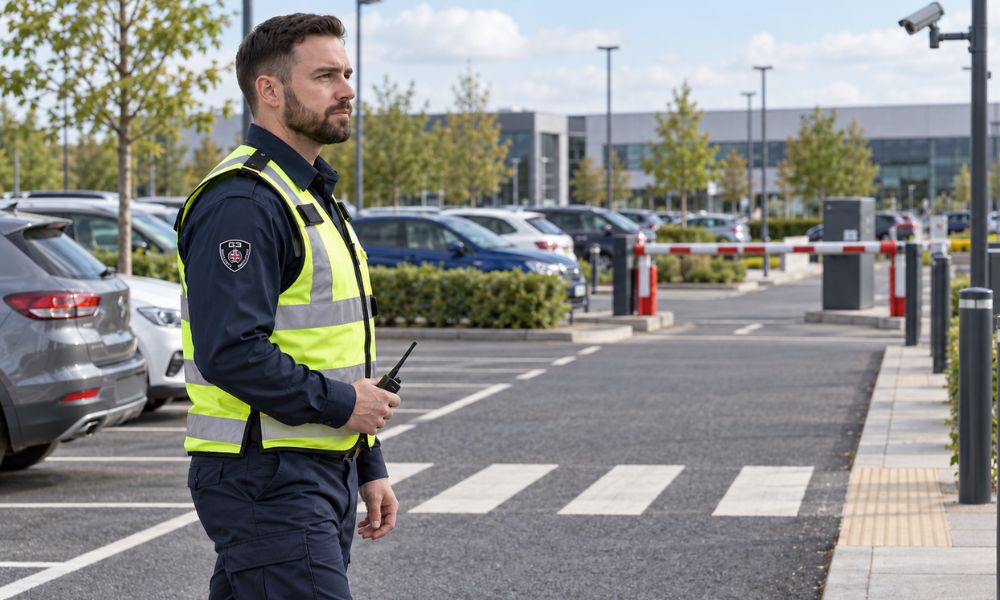
A car park is often the first area employees, customers and visitors use when arriving at a property. Yet its security can receive less attention than the building itself. Open entrances, unattended spaces and poorly maintained equipment can create problems for both vehicle owners and site managers.
Professional security services help businesses manage these areas through access checks, patrols, monitoring and incident response. Combined with suitable barriers, lighting and maintenance, they can support a safer and more organised parking environment.
Whether you manage an office, shopping centre, hotel or residential development, an effective approach starts with understanding how people use your car park and where its weaknesses are.
What are the Common Security Risks in Car Parks?
Car parks face different security challenges depending on their location, layout and operating hours. A thorough site assessment should consider the following risks:
- Theft and Disruptive Behaviour: Common concerns include vehicle theft, vandalism, unauthorised parking and antisocial behaviour.
- Vehicle Tailgating: Drivers may follow an authorised vehicle through an entrance without completing an access check.
- Poor Lighting: Inadequate lighting can make parking areas difficult to observe.
- Damaged Fencing and Faulty Gates: These problems can leave access points uncontrolled.
- Traffic Congestion: Slow barriers and unclear signs may cause queues during busy periods.
- Overlooked Areas: A site assessment should cover pedestrian routes, isolated parking spaces and secondary access points alongside the main entrance.
How Do Security Guards and Patrols Help Protect Car Parks?
Security guards provide an on-site presence, assist car park users and monitor activity. Their duties and patrol schedules should match the property’s risks, opening hours and access needs.
- Check visitor details and verify deliveries at entrances.
- Help drivers follow parking and access arrangements.
- Patrol quieter areas and pedestrian entrances.
- Identify damaged equipment and report unusual activity.
- Provide entrance coverage during busy arrival times.
- Check parking areas after staff leave or during evening hours.
- Offer scheduled mobile patrol visits where continuous staffing is unnecessary.
- Follow clear reporting procedures so businesses understand what the service covers.
Mobile patrols provide coverage during scheduled visits, while on-site guards remain present throughout their assigned shifts.
How Do Security Barriers Control Vehicle Access?
Barriers help manage which vehicles enter and leave a car park. The right choice depends on how busy the site is and how often access is needed.
- Automatic barriers can work with key fobs, intercoms or number plate recognition.
- Manual barriers may suit quieter sites where staff can open and close them.
- Clear procedures should explain how visitors and deliveries gain entry.
- Staff should know what to do when a driver’s access card or fob does not work.
- Pedestrian entrances and gaps in fencing also need attention, as vehicle barriers do not secure the whole site.
What Role Do CCTV and Access Control Play?
CCTV helps security teams monitor car parks and review incidents. Access control helps manage who can enter the site. Both systems need regular checks and clear procedures.
- Position cameras to cover entrances, exits and areas that are difficult to monitor during patrols.
- Check that poor lighting or obstacles do not block camera views.
- Assign staff to review footage, receive alerts and respond to concerns.
- Update access permissions when employees leave, tenants change or contractors finish their work.
- Follow a clear process for granting visitor access.
- Make sure staff understand their responsibilities for monitoring and managing both systems.
Why Should Car Parks Consider Bollards, Gates and Perimeter Protection?
Bollards, gates and fencing help control access to different parts of a car park. Choose and position them according to the site’s security needs and layout.
- Use bollards to restrict vehicle access and help protect buildings and pedestrian areas.
- Install gates to control entry and exit.
- Use fencing to mark the site boundary and limit access.
- Choose measures that address specific problems, such as unauthorised parking.
- Keep pedestrian routes accessible and allow space for emergency access.
- Check that equipment does not obstruct everyday traffic or make the car park difficult to use.
How Can Better Traffic Flow Support Car Park Safety?
Clear signs and a well-planned layout help vehicles and pedestrians move safely around a car park. Well-managed entry checks also help reduce queues during busy times.
- Clearly mark entrances, exits, parking spaces and pedestrian routes.
- Give visitors and delivery drivers simple directions.
- Have security staff assist during busy periods.
- Review the layout and entry procedures if queues keep forming.
- Check for faulty barriers, unclear signs or delays in access checks.
Why is Regular Security Equipment Maintenance Important?
Regular maintenance helps keep security equipment working properly. Faulty barriers or blocked camera views can leave parts of a car park less secure.
- Check gates, barriers, cameras, lighting and access systems regularly.
- Give staff a simple way to report faults.
- Make it clear who is responsible for arranging repairs.
- Plan temporary access checks or extra security cover during breakdowns.
- Keep maintenance records to track repeated faults and decide when repairs or replacements are needed.
How Should Security Teams Respond to Car Park Incidents?
Security teams need clear procedures for responding to theft, damage, suspicious activity and access disputes. Staff, residents and visitors should also know who to contact for help.
- Assess the situation and follow the site’s reporting and response procedures.
- Contact emergency services when urgent assistance is needed.
- Record the time, location, observations and actions taken.
- Handle CCTV footage and other evidence according to site procedures.
- Provide a clear contact point for reporting concerns.
- Review incident reports to identify repeated problems in particular areas or at certain times.
When Should You Review Your Existing Car Park Security Setup?
Review your car park security plan when the property or its use changes. Longer opening hours, more visitors or repeated incidents may mean the current setup needs adjusting.
- Review coverage when tenants change or the parking area expands.
- Check staffing levels, patrol routes and camera coverage.
- Update access permissions and review equipment maintenance.
- Check whether procedures work during busy periods and after hours.
- Investigate repeated incidents and frequent equipment failures.
- Consider clearer visitor procedures, revised patrol times or repairs before replacing equipment.
How Do You Choose the Right Car Park Security Services?
When choosing a car park security company, look for a service that suits your property’s needs. Ask about guard duties, patrol schedules, coverage hours and how guards will work with your existing security systems. Check staff training and experience, and make sure reporting procedures and responsibilities are clear.
At G3 Security Services, we welcome enquiries about your car park security needs. Contact our team to discuss your property’s layout, operating hours and access requirements, and explore suitable security coverage for your site.
Conclusion
Professional security services help improve car park safety through regular patrols, controlled access and clear incident response procedures. Combined with reliable equipment, suitable lighting and regular maintenance, these measures help protect vehicles, staff and visitors.
Reviewing security arrangements as the site changes helps identify gaps and keep coverage suitable for daily operations. A clear plan gives everyone responsible for the car park a better understanding of their duties.