
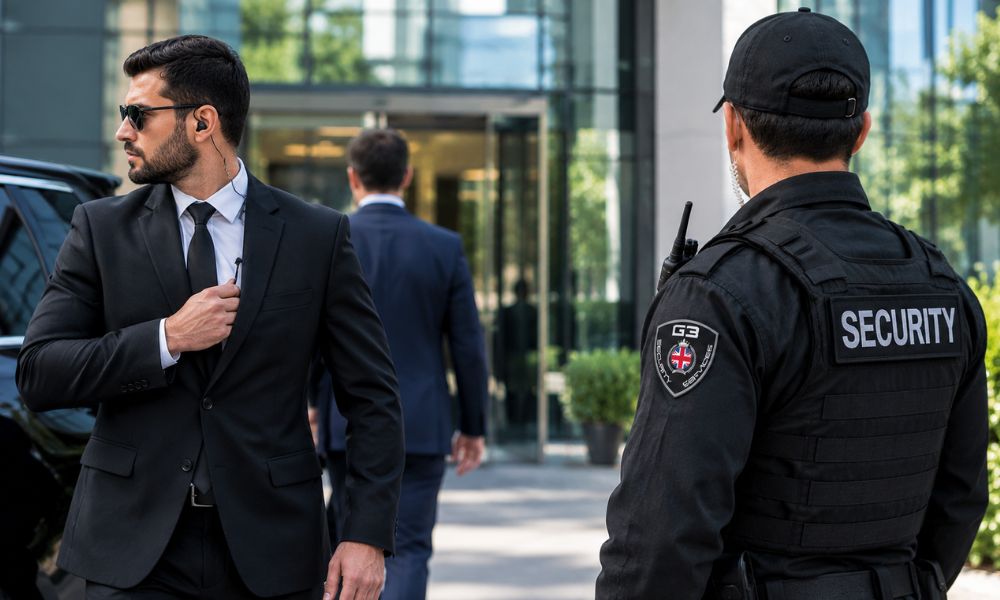
Security is not the same for every person, property or organisation. A business may need security guards to protect its premises, while a high-profile individual may need close protection to reduce personal security risks.
Although both roles are part of the private security industry, their responsibilities, working environments and main objectives can be different.
Understanding the difference between a close protection officer and a security guard can help businesses, individuals and event organisers choose the right type of security service for their needs.
What is a Security Guard?
A security guard is generally responsible for protecting premises, property and people within a particular environment. Their duties depend on the type of site they are working at and the risks identified there.
Security guards can work in places such as:
- Offices and commercial buildings
- Construction sites
- Warehouses and industrial sites
- Retail premises
- Residential developments
- Schools and educational facilities
- Events and venues
- Car parks and other private sites
Their work may include monitoring entrances and exits, carrying out patrols, checking visitors, monitoring security systems and reporting incidents.
Under UK SIA licensing rules, security guarding covers guarding premises or property against risks such as damage, theft and unauthorised access.
The exact duties will depend on the assignment instructions provided by the employer or security company.
What is a Close Protection Officer?
A close protection officer, sometimes referred to as a personal security, is trained to protect individuals against physical assault or injury resulting from unlawful conduct.
Close protection is centred around the safety of a person rather than simply protecting a building or site.
A close protection officer may work with:
- Business executives
- High-profile individuals
- Public figures
- Visiting professionals
- Private clients
- Individuals facing specific security risks
- Families requiring personal protection
The role can involve much more than accompanying someone from one location to another. Depending on the assignment, close protection work can involve planning, risk assessment, route planning, movement between locations, venue checks, communication and responding to changing circumstances.
In the UK, guarding people against physical assault or injury is a licensable close protection activity when carried out under a contract for services.
Close Protection vs Security Guard: The Main Difference
The simplest way to understand the difference is to look at what is being protected. A security guard is generally focused on protecting premises or property, while a close protection officer is focused on protecting an individual.
| Security Guard | Close Protection Officer |
| Primarily protects premises and property | Primarily protects individuals |
| Often works at a fixed site | May move with the protected person |
| May patrol a defined area | May travel between different locations |
| Monitors access to buildings and sites | Monitors risks around a specific person |
| Can monitor security systems | May carry out personal security planning |
| Reports incidents affecting the site | Assesses and responds to risks affecting the client |
| Works according to site-specific procedures | Works according to the individual’s protection requirements |
There can be some overlap between the two roles. For example, a close protection operative may also carry out activities covered by security guarding or door supervision under the relevant SIA licence arrangements.
What Does a Security Guard Do?
The duties of a security guard vary depending on the site and assignment. For example, a security guard working at a commercial building may be responsible for checking visitors and monitoring access points. A guard working on a construction site may spend more time carrying out patrols and checking for unauthorised access.
Common duties can include:
- Monitoring entrances and exits
- Checking visitors and contractors
- Carrying out regular patrols
- Monitoring CCTV or other security systems where permitted
- Checking doors, gates and restricted areas
- Recording incidents and unusual activity
- Responding to security concerns
- Reporting problems to the appropriate person
- Supporting emergency procedures
- Protecting equipment, stock and other property
The role is often based around a particular site, with the guard following agreed assignment instructions. For example, a warehouse may require security staff to monitor vehicle movements, check access points and carry out regular patrols. An office building may require reception security, visitor checks and access control. The duties should be clearly defined before the service begins.
What Does a Close Protection Officer Do?
Close protection work is based around the security needs of a particular individual. A close protection officer may need to understand where the client is travelling, who they are meeting, which venues they will visit and what risks may exist during the assignment. Depending on the circumstances, duties may include:
- Assessing potential security risks
- Planning routes and movements
- Checking venues and locations
- Accompanying the protected person
- Monitoring the surrounding environment
- Controlling access where appropriate
- Maintaining communication with the protection team
- Identifying changes in risk
- Supporting emergency procedures
- Responding to security concerns
The work can change from one assignment to another. A client attending a business meeting may have different security requirements from someone attending a public event or travelling between several locations. This is one reason close protection is often more mobile and personalised than conventional site security.
Where Do Security Guards Usually Work?
Security guards are commonly assigned to a particular property, site or area. Their working environment may include:
Commercial Buildings
Security guards can monitor access to offices, business premises and commercial buildings. They may check visitors, monitor entrances and respond to incidents.
Construction Sites
Construction sites can contain expensive machinery, tools, materials and equipment. Security officers may carry out patrols, monitor access and report suspicious activity.
Warehouses and Industrial Sites
Warehouses may hold valuable stock and equipment. Security staff can help control access and monitor activity around the site.
Retail Premises
Security guards can support retail businesses by monitoring entrances, protecting property and responding to security concerns.
Events and Venues
Depending on the duties involved, security personnel may support access control, crowd management and general site security. The right duties depend on the site, operating hours, risks and assignment instructions.
Where is Close Protection Used?
Close protection can be used where an individual faces a particular security risk or requires additional personal protection. For example, a close protection assignment may involve:
- Business travel
- Public appearances
- Corporate meetings
- Private events
- High-profile engagements
- Travel between multiple locations
- Visits to unfamiliar areas
- Personal or family protection
The environment can change regularly. Instead of protecting one fixed building, the officer may need to assess risks while the client moves between vehicles, buildings, events and public spaces. This requires a different approach to security planning.
How Does Risk Assessment Differ?
Risk assessment is important in both security guarding and close protection, but the focus can be different. For a security guard, the assessment may consider risks relating to:
- The building
- Site boundaries
- Access points
- Staff and visitors
- Equipment
- Stock
- Vehicles
- Working hours
- Previous incidents
For close protection, the assessment may focus more closely on the individual and their movements.
This can include:
- Where the client is travelling
- Who they are meeting
- Public exposure
- Locations being visited
- Travel routes
- Potential threats
- Changes to the schedule
- Emergency arrangements
A close protection officer may need to adjust plans as circumstances change. For example, a change in venue, route or schedule could require the protection team to review the risks before continuing.
SIA Licensing: What You Need to Know
The Security Industry Authority (SIA) regulates several private security activities in the UK. For contracted security work, the type of activity being carried out determines which licence may be required.
- A security guard licence is required for licensable security guarding work involving the protection of premises or property against damage, theft, unauthorised access or disorderly behaviour.
- A close protection licence is required for licensable work involving guarding people against physical assault or injury resulting from unlawful conduct.
- A close protection licence also permits the holder to perform security guarding and door supervision activities under the current SIA licensing arrangements.
- It is important to check the exact duties involved rather than assuming that one licence covers every type of security work.
- The SIA also states that employers and clients should check that security staff have the correct licence before hiring them for private security work. The SIA provides a public register for checking licence holders.
Training Requirements
SIA licence-linked qualifications are required for relevant front-line roles. Current SIA guidance also includes refresher training requirements. From 1 April 2026, people renewing a close protection licence must complete the relevant close protection refresher qualification and hold an appropriate Level 3 first aid qualification before taking the refresher training.
Because licensing and training requirements can change, organisations should check the latest SIA guidance when selecting security personnel.
Can a Close Protection Officer Work as a Security Guard?
Yes. Under the current SIA licensing system, a valid close protection licence also permits the holder to carry out security guarding and door supervision activities.
However, this does not mean that every assignment should automatically use a close protection officer. The type of security professional needed should depend on the duties involved, the risks present and the requirements of the site or client.
For example, a warehouse that needs regular site patrols and access control may simply require security guarding. A person who needs protection while travelling between several locations may require close protection. Choosing the role based on the actual requirement helps make the security arrangement clearer.
Security Guard or Close Protection Officer: Which Do You Need?
The answer depends on what you need to protect and the environment in which the security service will operate.
You May Need a Security Guard If:
- You need protection for a building or site
- You need regular security patrols
- You need access control
- You need someone to monitor a commercial property
- You need protection for stock, equipment or vehicles
- You need a security presence at a fixed location
You May Need Close Protection If:
- An individual requires personal protection
- The client regularly travels between locations
- There is a specific personal security concern
- The individual attends public or high-profile events
- Security needs to move with the client
- A more individual-focused security plan is required
In some situations, both services may be used together.
For example, a company may have security guards protecting its office while close protection officers provide personal protection for an executive visiting the site.
Can Security Guards and Close Protection Officers Work Together?
Yes. Different security roles can support each other when an assignment requires multiple layers of protection. Consider a corporate event attended by a high-profile executive. The venue may have security guards responsible for:
- Entrance control
- Site patrols
- Monitoring restricted areas
- General site security
- Responding to incidents
At the same time, a close protection team may be responsible for the executive’s personal security and movements. This division of responsibilities can help each security professional focus on their specific duties. Clear communication and assignment instructions are important when multiple security roles are involved.
Why Choosing the Right Security Service Matters
Hiring security is not simply about placing someone at a location or beside a client. The service should match the risks and responsibilities involved. Using the wrong type of security service can leave important duties unclear.
For example, a business may need a guard to protect a site, while a senior executive travelling between locations may have completely different requirements. Before arranging security, consider:
- What needs to be protected?
- Where will the security work take place?
- Will the person remain at one location?
- Will they travel between locations?
- What are the main security risks?
- What duties will the security officer perform?
- What SIA licence is required?
- Are clear assignment instructions in place?
- How will incidents be reported?
- What level of supervision is required?
These questions can help organisations identify the type of security service that fits their circumstances.
How to Choose a Professional Security Company
Once you understand whether you need security guarding, close protection or a combination of services, the next step is choosing a suitable security company.
Look beyond the basic question of whether a company can provide security staff. Consider the following:
Check Licensing
Make sure the officers assigned to licensable activities have the appropriate SIA licence. You can check individual licences through the SIA register.
Understand the Service
Ask the company to explain exactly what the security team will do. This should include the main duties, working hours, reporting arrangements and escalation procedures.
Discuss Your Risks
A suitable security company should first understand the environment and security requirements rather than providing a generic service.
Ask About Supervision
Find out how officers are supported and supervised during the assignment.
Review Reporting Procedures
Security incidents, suspicious activity and other concerns should be recorded and reported according to agreed procedures.
Check the Company’s Experience
Ask whether the company has experience working in environments similar to yours. The requirements of a construction site, corporate office, event or personal protection assignment can be very different.
Consider SIA Approved Contractor Status
The SIA operates an Approved Contractor Scheme (ACS), and its register allows organisations to check contractors that have met the scheme’s requirements.
ACS status is one factor organisations can consider when carrying out supplier checks, alongside the company’s experience, procedures, insurance and suitability for the specific assignment.
How Security Services Can Support Your Security Requirements
Choosing between security guarding and close protection depends on whether you need to protect a property, site, event or an individual. G3 Security provides both security guarding and close protection services, allowing clients to arrange security based on the specific risks and duties involved.
For premises, construction sites, commercial properties and events, G3 Security provide trained security personnel for guarding, access control, patrols and other site-based duties. For individuals who require personal protection, our close protection service can be arranged around their movements, locations and security requirements.
The right service can vary from one assignment to another. G3 Security can discuss the nature of the work, the environment and the level of coverage required before arranging the appropriate security solution.
Conclusion
The main difference between close protection and security guarding comes down to their primary focus. Security guards generally protect premises and property, while close protection officers focus on protecting individuals from personal security threats.
The two roles can involve some overlapping activities, but they are designed around different security requirements. If you are deciding between a security guard and close protection officer, start by identifying what needs protection, where the work will take place, the risks involved and the duties you need the security professional to perform.
For contracted security work in the UK, it is also important to check the relevant SIA licensing requirements and make sure the people carrying out licensable activities hold the correct licence. The right security arrangement should be based on the actual requirements of the assignment rather than simply the job title.