
Most businesses have people coming and going every day. Employees, customers, contractors, delivery drivers and visitors may all need access to different parts of a workplace.
However, when someone enters a business premises without permission, it can create security risks that are easy to overlook. An unauthorised visitor may gain access to restricted areas, sensitive information, equipment or employees without anyone noticing immediately.
The risk is not limited to theft. Uncontrolled access can also affect workplace safety, business operations, confidential information and the security of other people on the premises. Understanding how unauthorised visitors can enter and what businesses can do to control access is an important part of a wider security strategy.
What Counts as an Unauthorised Visitor?
An unauthorised visitor is someone who enters a business premises without having the required permission or access.
This could include someone who enters the building without being invited, a visitor who moves into a restricted area, or a person who remains on the premises after their authorised access has ended.
Examples can include:
- Someone following an employee through a secure entrance
- A person entering through an unsecured side door
- A former employee using an old access card
- A visitor entering an area they are not authorised to access
- A contractor arriving without being expected
- Someone pretending to be a delivery driver
- A person using another employee’s access credentials
- A visitor remaining inside after their appointment has finished
Not every unauthorised visitor will intend to cause harm. Some may simply be in the wrong area or misunderstand the site’s access arrangements. However, businesses should still have clear procedures for dealing with unauthorised access.
How Unauthorised Visitors Can Enter Your Premises
Unauthorised access can happen in several ways. Some people may deliberately bypass security, while others may gain access because of gaps in everyday workplace procedures.
Tailgating and Following Employees
Tailgating happens when someone follows an authorised person through a controlled entrance without using their own access credentials.
For example, an employee may open a secure door and allow another person to walk in behind them without checking who they are.This can be difficult to notice in a busy workplace, particularly during shift changes or busy periods.
Businesses can reduce this risk by making employees aware of access procedures and clearly defining when visitors need to check in.
Unsecured Doors
A door that is regularly left open can create an easy route into a building. Side entrances, loading areas, fire exits and staff-only doors can sometimes receive less attention than the main entrance. Regular checks can help identify doors that are being left open, damaged or used in a way that bypasses normal access controls.
Lost or Shared Access Cards
Access cards and other entry devices can create problems if they are lost, shared or not removed from the system when someone leaves the business. Businesses should have a clear process for reporting lost credentials and removing access when employees or contractors no longer require it.
Poor Visitor Procedures
A visitor may be able to enter a building simply because there is no clear process for signing in or confirming who they are visiting. Without a suitable visitor procedure, staff may find it difficult to distinguish between authorised guests and people who should not be inside.
What Risks Can Unauthorised Visitors Create?
The consequences depend on the type of business, the premises and what the individual can access. Potential risks can include:
- Theft of equipment, stock or personal belongings
- Damage to property
- Access to restricted areas
- Exposure of confidential information
- Unwanted contact with employees
- Disruption to business operations
- Workplace safety concerns
- Loss of control over sensitive areas
- Increased risk of further unauthorised access
For some organisations, even a short period of unauthorised access can create problems if the person reaches an area containing confidential documents, computer equipment, machinery or valuable stock. The potential impact is therefore not always obvious when the person first enters the building.
Unauthorised Visitors Can Put Employees at Risk
Security is not only about protecting physical property. Businesses also have to consider the people working at their premises. Employees may feel uncomfortable if an unknown person is moving around the workplace without a clear reason. In some environments, unauthorised access may also create a more serious safety concern.
Employees should know what to do if they notice someone who appears to be in an area without permission. For example, businesses can provide clear guidance on:
- Who to contact when an unknown visitor is noticed
- How to report suspicious behaviour
- Which areas are restricted
- What to do if an access card is lost
- How visitors should be identified
- What to do during a security incident
- When the matter should be escalated to security staff or management
Employees should not be expected to put themselves in danger by confronting someone. Procedures should make clear how concerns should be reported and who is responsible for responding.
The Risk to Confidential Information
An unauthorised visitor may not need to steal physical property to cause a security problem. If someone enters an office, storage area or restricted workspace, they could potentially see information they should not have access to. This could include:
- Customer information
- Employee records
- Business documents
- Financial information
- Product information
- Internal correspondence
- Printed reports
- Computer screens
- Confidential project details
Businesses should consider where sensitive information is stored and who should have access to it. Physical access controls should form part of a wider approach to protecting confidential information rather than being treated as a separate issue.
How Unauthorised Access Can Affect Business Operations
An unauthorised visitor can also disrupt normal business activities. Employees may need to stop what they are doing to investigate an incident or report it to management. If the incident involves theft, damage or access to a restricted area, additional action may be required afterwards. This could involve:
- Checking affected areas
- Reviewing CCTV footage
- Changing access credentials
- Reporting missing equipment
- Repairing damaged doors or locks
- Contacting relevant authorities
- Reviewing security procedures
- Investigating how access occurred
Even when no property is stolen or damaged, an incident can highlight weaknesses that need to be addressed.
Common Areas Where Unauthorised Access Can Happen
Businesses should not focus only on the main entrance when reviewing access risks. Other areas may include:
Loading Bays
Delivery areas can be busy, with employees, drivers and contractors moving in and out. Without clear procedures, it may be difficult to identify who should have access.
Staff-Only Areas
Break rooms, offices, storage areas and other staff spaces may contain equipment or information that visitors should not access.
Car Parks
Car parks can provide access to vehicles, storage areas and building entrances. They should be considered as part of the wider security plan.
Side and Rear Entrances
Less-used entrances may receive less attention and could become security weaknesses if they are not regularly checked.
Storage Areas
Warehouses, stock rooms and equipment areas may contain valuable items and should only be accessible to authorised personnel.
How Businesses Can Reduce Unauthorised Access
There is no single solution that works for every business. The right approach depends on the premises, working hours, number of employees, type of visitors and potential risks. However, businesses can take several practical steps.
Use Clear Visitor Procedures
Visitors should know where they need to report when they arrive and who is responsible for meeting them. A visitor sign-in process can help businesses keep track of who is expected on site.
Control Access to Restricted Areas
Not every person in a building needs access to every area. Businesses can use appropriate physical or electronic controls to restrict access to offices, storage areas, server rooms and other sensitive locations.
Keep Access Credentials Under Control
Employees should not share access cards, codes or other credentials. Lost or stolen access devices should be reported quickly so appropriate action can be taken.
Review Former Employee Access
When an employee leaves, businesses should check that their physical and electronic access has been removed where appropriate. The same principle can apply to contractors and temporary workers when their assignment ends.
Improve Staff Awareness
Employees play an important role in maintaining workplace security. Staff should understand why they should not allow unknown people to follow them through controlled entrances and should know how to report concerns.
Monitor Important Areas
Depending on the premises, businesses may use CCTV, access control, lighting, patrols or security officers to monitor key areas. The aim should be to identify and address security weaknesses rather than simply adding more equipment.
The Role of Security Guards in Managing Unauthorised Access
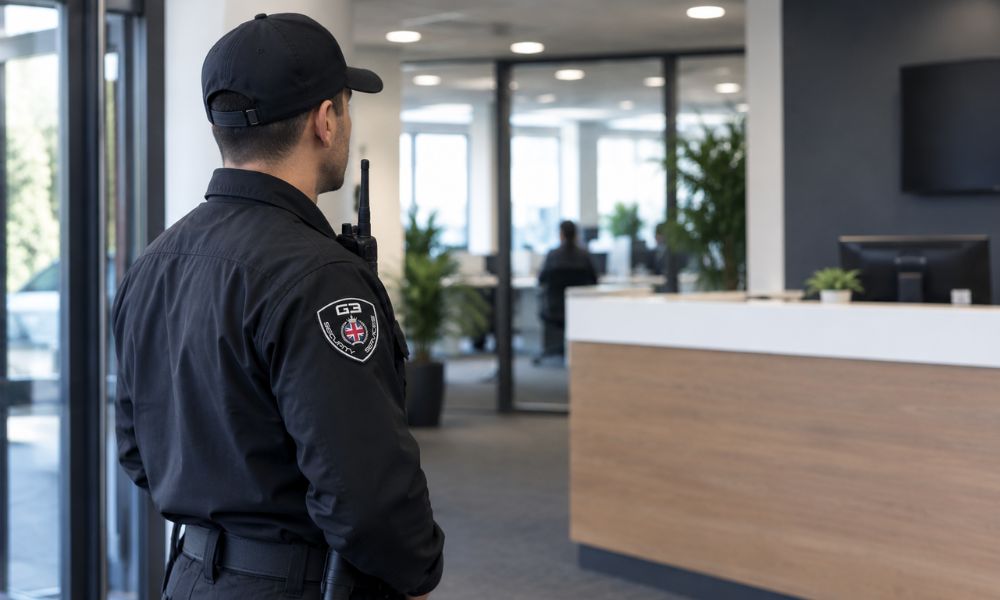
Security guards can provide a physical presence at entrances and other important areas of a business premises. Depending on their assignment, security officers may:
- Monitor entrances and exits
- Check visitors
- Control access to restricted areas
- Carry out patrols
- Monitor activity around the premises
- Maintain visitor records
- Report suspicious behaviour
- Respond to security incidents
- Follow agreed escalation procedures
The exact duties should be clearly defined in the assignment instructions. In the UK, contracted security guarding is an SIA-licensable activity when it involves guarding premises or property against risks such as unauthorised access, theft or damage.
Businesses hiring private security staff should check that the person has the appropriate SIA licence. The SIA provides a public register that allows businesses to check security licence holders.
How Technology Can Support Access Control
Technology can help businesses monitor and manage access, but it should support clear security procedures rather than replace them completely.
Depending on the organisation, this may include:
- Electronic access control
- Visitor management systems
- CCTV
- Door alarms
- Intercom systems
- Access cards
- PIN systems
- Automatic entry records
For example, an access control system can restrict entry to certain areas and create a record of authorised access. CCTV can also help businesses review what happened after an incident, depending on how the system is configured and used. The right combination will depend on the business and its security requirements.
What Should You Do If an Unauthorised Visitor Is Found?
Businesses should have a clear procedure before an incident occurs. If an unknown person is found in a restricted area, employees should follow the company’s security procedures rather than taking unnecessary risks. Depending on the circumstances, this may involve:
- Reporting the person to the appropriate manager or security officer.
- Avoiding confrontation if there is a risk of violence.
- Restricting access to sensitive areas where appropriate.
- Recording relevant details about the incident.
- Reviewing CCTV or access records if available.
- Escalating the incident to the appropriate authority when necessary.
- Reviewing how the person gained access.
The response should reflect the seriousness of the situation and the organisation’s established procedures.
Why Businesses Should Review Their Visitor Procedures
Visitor procedures can become outdated as businesses change. A company may move into a larger building, add new entrances, increase its workforce or start working with more contractors and suppliers. These changes can create new access requirements. Businesses should therefore review questions such as:
- Who can enter the building?
- Which areas are restricted?
- How are visitors identified?
- How are contractors managed?
- How are temporary workers given access?
- What happens when someone leaves the company?
- Who responds to unauthorised access?
- Are employees trained on visitor procedures?
- Are access controls still suitable for the current premises?
Regular reviews can help identify gaps before they become security incidents.
How Security Company Can Help With Unauthorised Access
At G3 Security, we provide security services that can help businesses manage access and protect their premises. Depending on the requirements of the site, our services can include manned security guarding, access control, mobile security patrols, CCTV monitoring, key holding and alarm response.
Security officers can help monitor entrances, check visitors, patrol the premises and report concerns according to agreed procedures. Every business has different premises and security requirements, so the right approach will depend on factors such as the size of the site, operating hours, access points, number of visitors and potential risks.
Conclusion
Unauthorised visitors can create risks that go beyond simple trespassing. They may gain access to restricted areas, sensitive information, equipment or employees, while also creating disruption for the wider business.
The first step is understanding how unauthorised access could happen at your premises. From there, businesses can review visitor procedures, access controls, staff awareness, monitoring systems and security arrangements. For businesses using contracted security personnel, it is also important to check the relevant SIA licensing requirements and confirm that security staff hold the appropriate licence for their duties.
A clear visitor management process, supported by suitable security measures, can help businesses maintain better control over who enters their premises and which areas they can access.