Healthcare facilities welcome patients, families, staff, contractors and delivery drivers throughout the day. An entrance must help these people reach the right place while protecting areas that are not open to everyone. When reception teams cannot comfortably manage both responsibilities, additional security may be useful.
Hospitals, clinics and other healthcare facilities can benefit from entrance security, depending on their operating hours, layout, visitor numbers and previous incidents. A busy emergency department may need a different approach from a small appointment-only practice.
The purpose is to create a safe, welcoming arrival point where access is managed clearly and staff can get support when needed.
What is Entrance Security in Healthcare?
Entrance security combines people, procedures and suitable access controls to manage movement into a healthcare building. Depending on the facility, it may involve a security officer near reception, controlled doors, visitor identification or an intercom for access outside normal hours.
Hospitals with Busy Public Entrances
Large hospitals can have several entrances serving different purposes. Patients arrive for appointments, relatives visit wards, employees change shifts, and contractors need access to carry out work. Clear separation between public routes and restricted areas helps keep this movement organised.
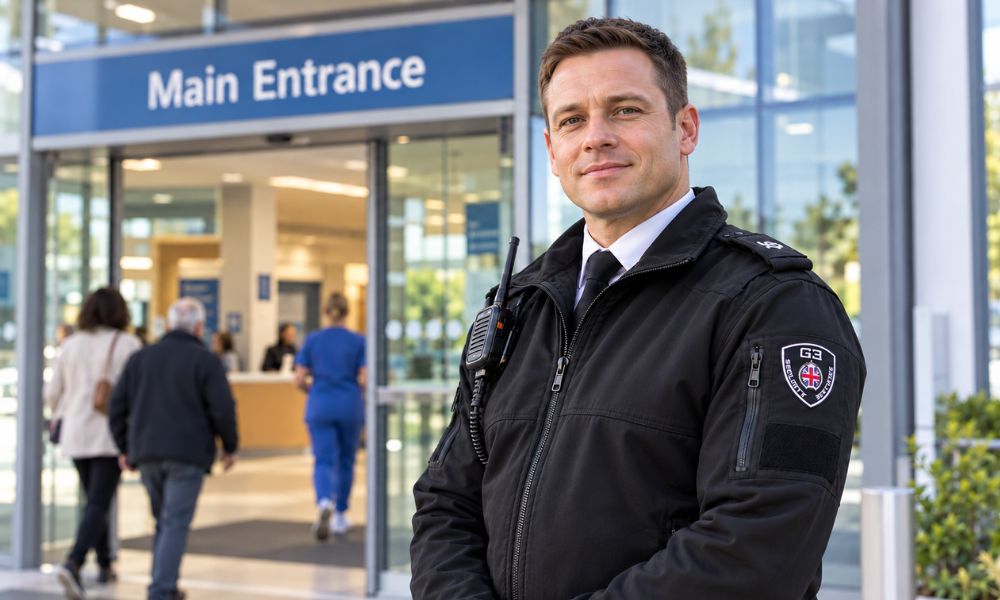
Entrance security can support reception by directing visitors, checking access permissions where required and responding when someone attempts to enter a staff-only area. Officers should understand the building well enough to offer useful directions and contact the correct department.
Private Hospitals and Specialist Clinics
Private hospitals and specialist clinics often operate through scheduled appointments. Even so, staff need to distinguish patients and accompanying people from contractors, couriers and unexpected visitors.
Entrance security can help manage these different arrivals without interrupting consultations. A visitor attending a meeting, for instance, can remain at reception until their host confirms access. A contractor can be directed to the appropriate contact instead of entering treatment areas independently.
Diagnostic and Outpatient Centres
Imaging centres and outpatient facilities may share premises with other healthcare services. Patients can easily arrive at the wrong desk or follow the wrong corridor.
A clear entrance process can help direct people to the correct service and prevent accidental access to restricted rooms. Where reception staff already manage arrivals effectively, improved signs or controlled doors may be sufficient. A permanent guard should follow an identified need.
Maternity Units and Children’s Services
Maternity and children’s departments may need stricter access controls than general hospital areas. Clear entrance procedures help staff check who visitors are seeing and follow the department’s visiting rules.
Some hospitals use additional measures to protect babies. For example, University Hospitals Coventry and Warwickshire’s maternity guidance describes a baby tagging system as part of its security arrangements.
Security officers should know how to manage visitor access, contact ward staff and report concerns. They should explain entry procedures politely and refer questions about care or visiting exceptions to the appropriate healthcare team.
Mental Health Facilities
Mental health facilities may need entrance security to manage visitor access and address safety concerns. The arrangements should suit the facility and respect the needs of people receiving care.
Security guard officers should follow clear procedures and contact healthcare staff when someone appears distressed, confused or needs help. Everyone should be treated respectfully, regardless of their diagnosis.
Decisions about whether a patient can leave must be made by authorised staff under the appropriate procedures. Security officers should not make these decisions themselves.
Care Homes and Rehabilitation Centres
Care homes and residential rehabilitation centres should welcome families while keeping track of who enters the building. A staffed reception, visitor sign-in system or intercom can help staff check the purpose of each visit.
Additional security may be useful where incidents have happened repeatedly or several entrances are difficult to monitor. Other facilities may manage access through trained care staff and suitable door controls.
Entry procedures should be clear and accessible for residents and visitors, including people using mobility aids. The entrance should remain safe and welcoming.
How to Decide Whether Entrance Security is Needed
The decision should begin with a review of the facility’s risks and daily activities. Managers should consider:
- Previous incidents involving threats, aggression or unauthorised access.
- Visitor numbers and busy arrival periods.
- Public entrances close to restricted areas.
- Evening, overnight and lone-working arrangements.
- How quickly reception staff can obtain assistance.
Recording incidents is important because patterns may otherwise be missed. HSE notes that violence and aggression are under-reported in healthcare, sometimes because staff accept them as part of the job. A lack of reports should not automatically be treated as evidence that there is no problem.
What Should Healthcare Entrance Security Staff Be Able to Do?
Security officers should speak calmly, explain entry rules clearly and work closely with reception and healthcare staff. They need clear instructions on visitor access, emergency contacts, reporting incidents and what they are authorised to do.
If the role requires an SIA licence, the security provider should check that the officer holds the correct one. GOV.UK guidance explains that this depends on the duties performed and the employment arrangements.
Before starting work, officers should know the building’s accessible routes, key department contacts and how to call for urgent medical assistance.
Conclusion
Hospitals, GP surgeries, specialist clinics, maternity units, mental health facilities and residential care settings can all benefit from entrance security when their risks justify it. The right approach depends on visitor activity, operating hours, building layout and the support available to staff. A useful service combines clear access procedures with respectful communication and close coordination with healthcare teams. By assessing the entrance carefully, managers can choose arrangements that protect people while helping patients and visitors reach the care or assistance they need.