
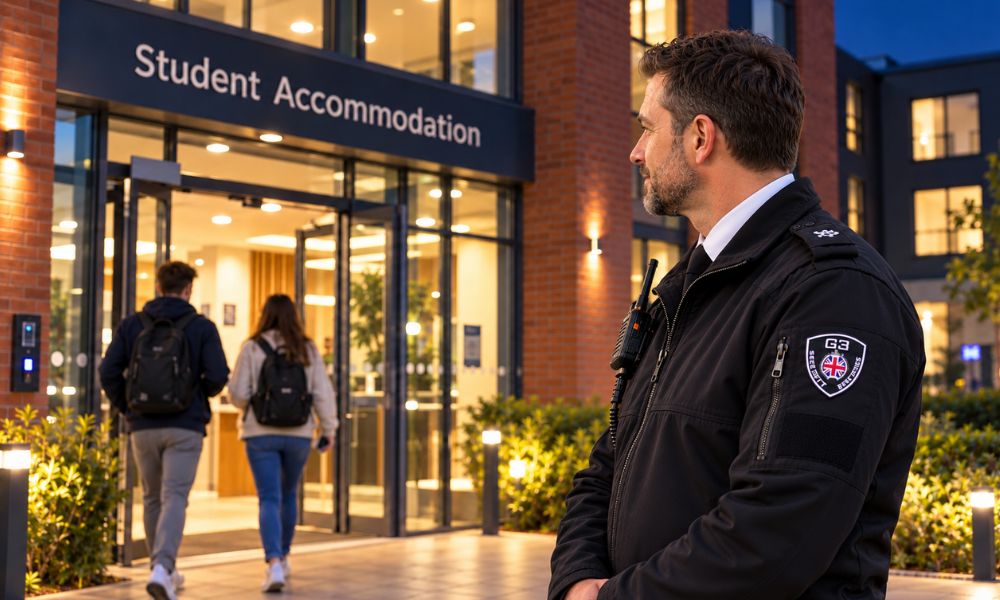
Student accommodation may need overnight security when unauthorised entry, repeated incidents or limited night-time support make it difficult to keep residents safe. The decision should depend on the building’s risks, layout and response arrangements.
Residents return from classes, work and social events after reception closes. Visitors may arrive late, students can lose their keys, and problems can occur in shared areas. Managers need to assess whether their existing team can handle these situations throughout the night.
Not every property needs a permanent overnight officer. Some buildings may have suitable access controls and reliable campus support. Others may need on-site security because incidents require frequent attention or entrances need continuous monitoring.
When Unauthorised Entry Becomes a Repeated Problem
Repeated unauthorised entry is a clear reason to review overnight security. A building may have electronic locks and access cards, yet still experience problems because doors are left open or visitors enter without permission.
One example is tailgating, where someone follows a resident through a secure entrance without using their own key or access card. If this happens regularly at night, managers should check how the entrance is being used and whether existing controls are working.
An overnight officer may help by monitoring arrivals, checking visitor access under the accommodation’s policy and responding to reports of unauthorised people inside the building. However, damaged locks, faulty door closers and unclear entry rules must also be addressed.
When Residents Cannot Get Reliable Help at Night
Overnight security may be useful when residents have no dependable support after reception closes. Students should know who to contact if they are locked out, discover an unsecured entrance or feel threatened.
Managers should check whether overnight calls are answered, who attends urgent incidents and what happens when the usual contact is unavailable. A telephone number provides little reassurance if there is no clear response plan behind it.
If residents regularly need assistance and the existing team cannot attend promptly, an on-site officer may provide more reliable support. Where requests are infrequent, a nearby response team may be sufficient.
When Students Frequently Lose Their Keys
Frequent problems getting into the building or rooms can increase the need for help at night. Residents may lose their access cards, leave keys in their rooms or have trouble with electronic locks. An overnight security officer can help if this is part of their duties. Before allowing entry, they should check the person’s identity and confirm that they are authorised to enter the building or room.
Managers should review how often these problems happen before hiring security specifically for this reason. Faulty locks or unclear instructions about access cards and replacement keys may be contributing to the issue.
When Theft, Damage or Threatening Behaviour Keeps Occurring
Repeated theft, vandalism, harassment or threats may show that overnight security needs improvement. Managers should check incident reports to see when and where problems happen and how staff responded.
Overnight security officers can attend incidents, assess what is happening and call for help when needed. They should record the details and report concerns to management. Extra guards may help, but repairs, better lighting and clear reporting procedures may also be necessary.
When One Reception Desk Cannot Cover the Whole Site
Large student accommodation complexes often have several buildings, entrances and outdoor areas. One officer at reception may find it difficult to monitor them all at night. Leaving the desk to patrol other areas can also leave the main entrance unattended.
Managers should check whether the current team can cover both tasks. If more support is needed, they may add a patrol officer, assign another officer to the entrance or arrange help from campus security.
When Late-Night Visitors are Difficult to Manage
Overnight security may be needed when staff struggle to manage visitors after reception closes. Problems may include people entering without permission, unclear guest registration rules or visitors staying longer than allowed.
Security staff should apply visitor rules fairly while respecting students’ daily lives. Residents returning late and approved guests should be able to enter through a clear, simple process.
An overnight officer can help check arrivals when staff are busy with other duties. Managers should first make sure residents understand the visitor rules. Entry should be based on permission and the accommodation’s procedures.
When Disturbances Require More Than a Routine Response
An occasional noise complaint does not automatically justify overnight guarding. However, repeated disturbances involving threats, physical aggression or property damage may require additional support.
Managers should consider how often these incidents occur and whether existing staff can respond safely. An overnight officer may help when timely attendance and calm communication are needed.
Officers should know when to speak with residents, contact management or call emergency services. Ongoing behaviour or wellbeing concerns should be passed to accommodation or student support staff for follow-up.
The aim is to provide an appropriate response to the level of concern, with clear responsibilities for everyone involved.
When Existing CCTV Does Not Provide an Effective Response
A building may have CCTV but no reliable help at night. Managers should know who watches the cameras, how problems are reported and who can attend when needed.
CCTV footage can help explain what happened, but cameras cannot provide immediate help. If no one can respond to unauthorised entry or a disturbance, extra overnight support may be needed.
The right support depends on how often problems occur and how quickly someone needs to attend. Frequent incidents may justify an on-site officer, while occasional problems may be handled by a reliable response team.
How Managers Can Decide Whether Overnight Security Is Needed
Managers should review overnight incidents, requests for help, visitor activity and resident feedback to understand where support is needed. They should also check entrance doors, staff availability and areas that are difficult to monitor. This helps them decide whether the building needs overnight guards, temporary cover, regular patrols or improvements to existing procedures.
At G3 Security, we can discuss your accommodation’s needs and help you consider suitable overnight security options. The arrangements should reflect the building’s layout, daily activity and identified risks. Residents should receive clear information about the support available and how to contact the security team at night.
Conclusion
Student accommodation needs overnight security when its existing arrangements cannot adequately manage night-time risks or provide reliable assistance. Repeated unauthorised entry, serious disturbances, frequent support requests and temporary access faults are reasons to review coverage. Managers should use incident records and a property assessment to decide what support is appropriate. The right solution may involve on-site officers, mobile patrols or campus security, working alongside secure entrances, timely repairs and clear procedures that residents understand.