
Introduction
Residential security has become an important part of modern property management, especially in gated communities, apartment complexes, and private residential estates. As living spaces become more structured and shared among larger groups of residents, the need for organised security support has increased.
A residential security guard plays a central role in maintaining order, observing activity, and responding to situations that may affect safety. Their work is not limited to standing at entry points; it involves constant awareness of the surroundings, communication with residents, and coordination with management teams.
What is a Residential Security Guard
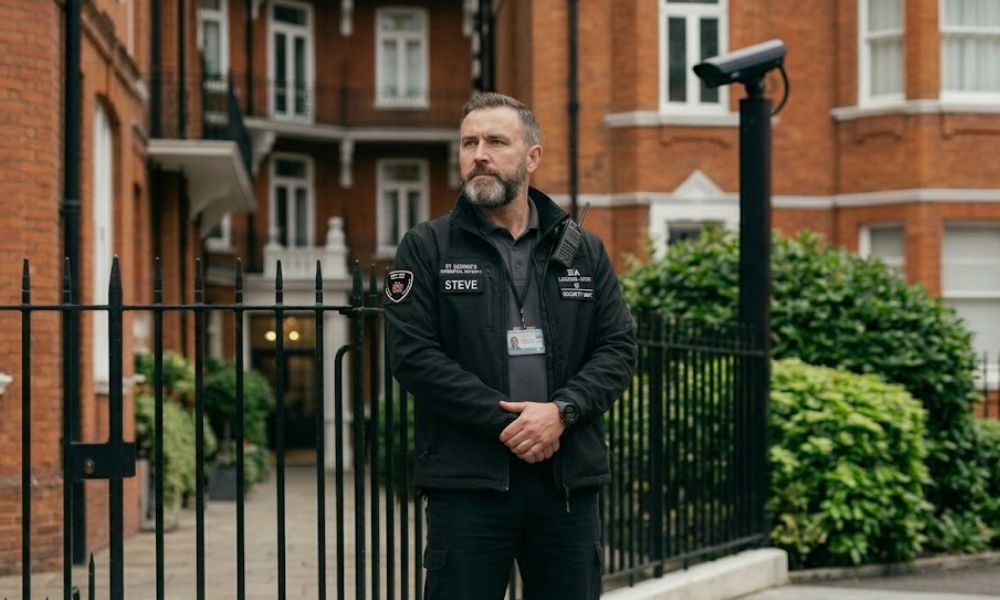
A residential security guard is a trained professional responsible for protecting people, property, and assets within residential settings. These settings may include apartment buildings, societies, housing estates, student accommodation, or private residential developments.
Their primary role is to monitor access, observe activity, and take action when situations arise that may compromise safety or security. They act as the first point of contact for visitors and play an important part in managing who enters and exits the premises.Unlike commercial security roles that often focus on retail or office environments, residential security is more community-based. It involves regular interaction with residents while maintaining professional boundaries and a calm presence.
Roles and Responsibilities
The responsibilities of a residential security guard can vary depending on the size, layout, and requirements of the property. However, the core duties remain focused on safety, monitoring, and communication.
Protection and Security
One of the most important responsibilities of a residential security guard is protecting residents, visitors, and property within the site. This includes monitoring entry points, checking identification where required, and observing movement around the premises. Guards also remain alert to suspicious activity and respond when unusual behaviour is noticed.
Their presence provides a sense of control within the environment. Residents often feel more comfortable knowing that someone is actively observing activity and available to respond when needed. Protection duties may also involve responding to disturbances, assisting residents during disputes, or contacting emergency services when situations require external support.
Deterrence and Prevention
Residential security guards also play a key role in preventing unwanted activity before it happens. A visible security presence can deter trespassing, vandalism, and unauthorised access.. Preventative security is often more effective than responding to incidents after they occur. Regular patrols, monitoring, and interaction with residents contribute to reducing opportunities for disruptive behaviour.
Guards also help identify vulnerabilities within the site, such as poorly lit areas, unsecured doors, or broken access points, and report these issues to management for action. By checking visibility and routine movement throughout the property, they contribute to a more controlled residential environment.
Surveillance and Patrols
Surveillance forms a core part of residential security operations. Guards often monitor CCTV systems to observe activity across entry points, communal areas, and surrounding perimeters. Alongside CCTV monitoring, physical patrols are carried out at regular intervals. These patrols may cover car parks, stairwells, corridors, gardens, and boundary lines depending on the property layout.
Patrolling allows guards to identify unusual behaviour, detect maintenance issues, and maintain familiarity with the environment. This familiarity makes it easier to notice changes that may indicate a potential issue. Surveillance and patrol work together to create a continuous level of awareness across the site.
Quick Response
When incidents occur, residential security guards are often the first individuals to respond. Their ability to react quickly plays an important role in controlling situations before they escalate further. Incidents may include disputes between residents, unauthorised entry attempts, medical emergencies, or fire alarms. In each case, guards assess the situation and take appropriate steps.
This may involve guiding residents to safety, contacting emergency services, or providing initial support until further assistance arrives. A calm and structured response is important, as residential environments often involve families, elderly residents, and vulnerable individuals.
Use of Technology
Modern residential security relies heavily on technology to support daily operations. Security guards use a range of systems and tools to monitor activity and communicate effectively. CCTV systems provide real-time visual monitoring of key areas. Access control systems regulate entry to buildings or specific zones, often using keycards, codes, or digital systems.
Communication devices such as radios or mobile systems allow security staff to stay in contact with each other and property management teams. Alarm systems provide alerts in the event of security breaches or emergencies. Technology supports faster communication and improves awareness across the entire site.
Privacy and Discretion
Residential security work takes place in environments where people live their everyday lives. Because of this, privacy and discretion are important aspects of the role. Security guards must carry out their duties without interfering with residents’ personal lives. They are expected to respect boundaries and handle sensitive situations carefully.
Information about residents, incidents, or security concerns must be handled professionally and shared only with authorised personnel. Maintaining discretion helps build trust between security staff and the residential community.
Detailed Security Records
Record keeping is a key part of residential security operations. Guards are responsible for documenting incidents, visitor movements, patrol activities, and any unusual observations. These records provide a clear account of daily activities and help property managers review security performance. They can also be used to investigate incidents or identify recurring issues.
Accurate reporting supports better decision-making and helps improve long-term security planning. Reports are usually written at the end of each shift and may include timestamps, descriptions, and actions taken.
Skills Required for Residential Security
Residential security guards require a combination of technical ability, awareness, and interpersonal skills to perform effectively.
Vigilance and Observational Skills
Strong observational skills are essential in residential security. Guards must remain alert at all times and be able to identify unusual behaviour or environmental changes. This includes noticing unfamiliar individuals, unusual movement patterns, or potential safety risks within the property.
Quick Thinking and Crisis Management
Situations in residential environments can change quickly, requiring fast decision-making. Security guards must be able to assess situations and respond appropriately under pressure. This may involve handling disputes, responding to emergencies, or making decisions when immediate action is needed.
Communication and Interpersonal Skills
Residential security guards interact with a wide range of people, including residents, visitors, contractors, and management teams. Clear communication helps prevent misunderstandings and supports smooth daily operations. Guards must also be approachable while maintaining professional boundaries.
Benefits of Residential Security
Residential security services offer a range of benefits that contribute to safer and more organised living environments.
- Stronger Sense of Safety: A visible security presence helps residents feel more comfortable within their homes and communal spaces.
- Controlled Access to Property: Entry management systems and security checks help regulate who enters and exits the premises.
- Support During Emergencies: Security guards provide immediate assistance during incidents such as medical emergencies, fire alarms, or disturbances.
- Reduction in Unwanted Activity: Regular monitoring and patrols reduce opportunities for trespassing, vandalism, and other disruptive behaviour.
- Improved Community Structure: A well-managed security presence supports order and contributes to a more organised residential environment.
How to Select the Best Security Service for Residential Property
Selecting the right security service for a residential property plays an important role in maintaining a safe and well-managed living environment. It involves looking at factors such as experience in residential settings, staff training, response capability, and the ability to handle day-to-day security responsibilities with care and professionalism. A professional security company should understand access control, patrol routines, and resident interaction. At G3 Security Services, we focus on delivering tailored residential security solutions that match the specific needs of each site, whether it is a gated community, apartment complex, or private estate. The right choice of security partner helps support consistent monitoring, controlled entry, and a safer environment for residents.
Conclusion
Residential security guards play an essential role in maintaining safe, organised, and well-managed living environments. Their responsibilities go beyond simple observation, involving active monitoring, communication, and response to incidents.
From controlling access points to carrying out patrols and supporting residents during emergencies, their work contributes to daily stability within residential communities. As residential developments continue to expand, structured security support remains an important part of property management and community safety.
 Get a Quote