If your site has vehicles moving, deliveries arriving, or the public passing nearby, the person directing that traffic isn’t a minor detail, they’re often standing between a normal workday and a serious accident. Picking a traffic marshall company shouldn’t come down to whoever answers the phone first or quotes the lowest number. It’s a decision that affects the safety of your crew, your visitors, and anyone driving past your site.
Below are the factors worth weighing before you sign a contract, and what each one actually tells you about a provider.
Credibility and Reputation
Anyone can put “traffic marshall services” on a website. What separates a genuine provider from someone who picked up a hi-vis vest last month is a track record you can actually verify.
Ask for references from past clients, not just a testimonials page. Look at how long the company has operated and whether they’ve handled sites similar to yours, a marshall who’s worked construction access points is not automatically ready for a large public event or a busy retail car park. Check whether their marshalls hold recognised qualifications and whether the company itself carries proper accreditation. A firm with nothing to point to beyond a polished homepage is a firm you haven’t actually vetted yet.
Experience
Experience in this line of work isn’t measured in years alone, it’s measured in the range of situations a company has actually managed. Directing traffic around a straightforward site entrance is one thing. Coordinating vehicle movement during a live construction phase, an emergency road closure, or a high-footfall event with pedestrians weaving through vehicle routes is another matter entirely.
Ask potential providers what kinds of sites they typically staff, how they train new marshalls before putting them on the ground, and how they keep that training current as rules and site conditions change. A company that treats training as a one-off box to tick, rather than an ongoing process, is more likely to send you someone underprepared for your specific layout.
Safety Record
This is the category that matters most, and it’s also the one companies are least likely to volunteer information about unless you ask directly.
Find out whether the provider has a documented history of incidents, near misses, or safety violations, and how they respond when something does go wrong. A company with zero incidents ever reported to you is either genuinely excellent or simply not being transparent, dig a little further. Confirm they carry adequate insurance and public liability cover, and ask what their day-to-day safety procedures look like, site assessments before work begins, clear escalation steps if conditions change, and proper protective equipment for every marshall on shift. Safety isn’t a marketing line; it should show up in the paperwork.
Customer Service and Communication
Traffic conditions on a live site rarely stay fixed for long. Deliveries run late, road closures shift, weather changes plans at the last minute, and when that happens, you need a company that answers the phone and adjusts quickly, not one that takes two days to respond to an email.
Pay attention to how a provider communicates before you’ve even signed anything. Are they clear about what’s included in the service? Do they assign a single point of contact who actually knows your site, or will you be explaining your project from scratch to a different person every time you call? A provider that’s flexible and easy to reach during the sales process is generally a decent preview of what working with them day-to-day will feel like.
Technology and Equipment
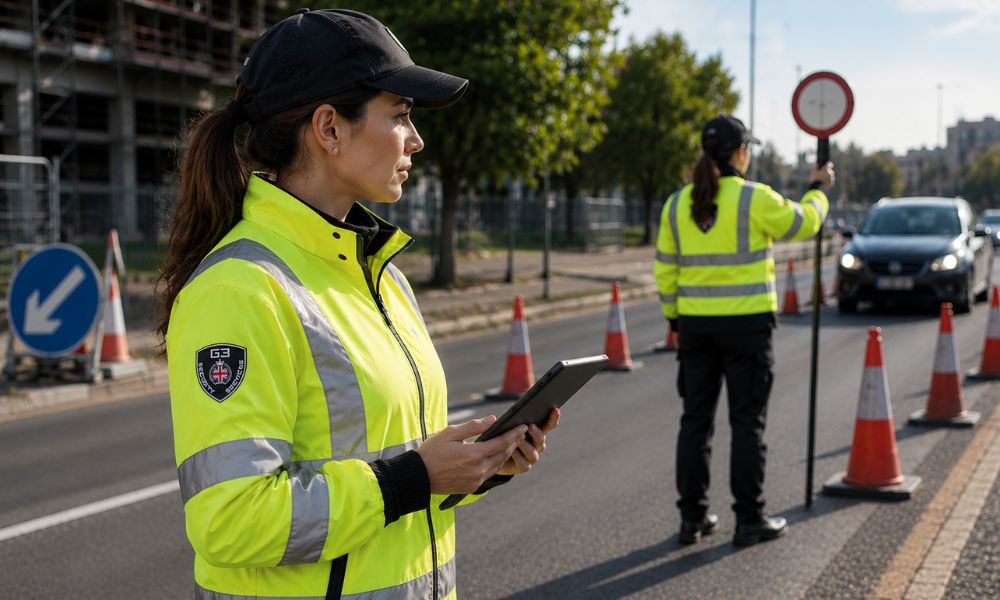
Good traffic marshalling isn’t just a person standing in the road with a stop/slow paddle. The right provider should show up with equipment that matches the scale and risk level of your site, proper signage, barriers, cones, high-visibility gear that meets current standards, and where relevant, tools like two-way radios or portable signals to keep coordination tight across a larger area.
Ask what equipment is included as standard and what would need to be arranged separately. A company still relying on worn-out signage or mismatched, outdated gear is telling you something about how much they’ve reinvested in the service over the years.
Cost-Effectiveness
Price matters, but the cheapest quote is rarely the smartest one when the job involves public safety. What you want is value: a fair, clearly itemized quote with no vague line items or costs that appear later that weren’t discussed upfront.
Compare quotes on what’s actually included, number of marshalls, hours of cover, equipment, supervision, and contingency planning, rather than just the bottom-line figure. A slightly higher quote that includes proper training, insurance, and reliable staffing is almost always the better deal once you account for what a single incident or a no-show marshall would actually cost you.
Looking for Professional Traffic Marshall Services?
Don’t leave traffic safety on your site to chance. At G3 Security, our trained and accredited traffic marshalls bring the experience, discipline, and equipment needed to keep vehicles, workers, and the public safe on any site, from busy construction projects to high-footfall public events.
Get in touch with G3 Security today for a straightforward, no-obligation quote, and find out why clients trust us to keep their sites moving safely.
Conclusion
Choosing a traffic marshall company is ultimately a risk decision dressed up as a procurement one. The right provider brings a verifiable track record, real experience across varied site conditions, a safety record you can check rather than just take on faith, responsive communication, properly maintained equipment, and pricing that’s honest about what you’re paying for.
Take the time to ask the questions above before committing. A short conversation now is a lot cheaper than sorting out the consequences of hiring the wrong provider once vehicles are already moving on site.