
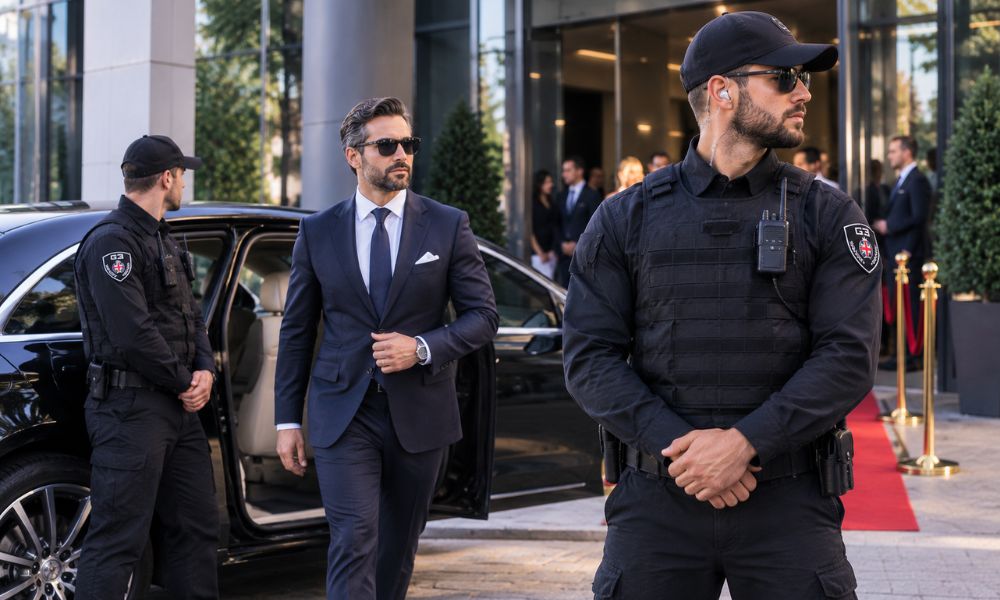
When a high-profile guest walks through the door, whether a business leader, celebrity, diplomat, or public figure, comfort and hospitality are only part of the equation. Real protection comes from planning, trained personnel, and the ability to respond before a situation develops. At G3 Security Services, we build guarding arrangements around the specific profile of each VIP, rather than applying a one-size-fits-all approach.
Here’s what that protection actually involves.
Why VIP Security Cannot Be an Afterthought
High-profile guests carry a level of exposure that ordinary visitors simply don’t. Their presence can be publicised in advance, their movements are often predictable, and their identity alone can make them a target, whether for unwanted attention, financial motives, or more serious threats. Treating security as something to arrange at the last minute leaves significant gaps that a determined individual could exploit.
A proper guarding arrangement starts well before the guest arrives, with an understanding of who they are, what risks are relevant to them specifically, and what the venue or itinerary might expose them to. This groundwork shapes everything that follows.
Reading the Room Before Trouble Starts
High-profile individuals draw attention wherever they go, and not all of it is friendly. A guest could be approached by an overenthusiastic admirer, an uninvited member of the press, or someone with more concerning intentions. The difference between a minor disruption and a serious incident often comes down to how quickly it’s spotted.
Our officers are trained to watch for behavioural cues that most people would miss, someone lingering too long near an entrance, a person moving against the flow of a crowd, unusual persistence in trying to get close to a guest. Catching these signs early means we can intervene calmly, before a situation has the chance to escalate.
Positioning Officers Where They Matter Most
Effective monitoring isn’t about having the most guards in a room, it’s about having them in the right places. We assess a venue’s layout in advance, identifying entry points, blind spots, and areas where a guest is likely to be most exposed, such as stage exits, car drop-off points, or narrow corridors. Officers are positioned accordingly, rather than spread evenly without purpose.
Getting There and Back Without Incident
The journey to and from an event is frequently the point where VIPs are most exposed. An open route, a predictable schedule, or an unsecured vehicle can all create opportunities for something to go wrong.
Before any journey, our team maps out the safest possible route, taking into account traffic patterns, known problem areas, and the wider security context. We adjust in real time if conditions change. Vehicles used are appropriately equipped, and our officers stay alert throughout the journey for anything from a mechanical fault to a more serious threat, ready to respond either way.
Avoiding Predictable Patterns
One of the simplest ways to reduce risk during transport is to avoid routine. A guest who takes the same route, at the same time, day after day, becomes far easier to track and target. Where a VIP’s schedule allows, we vary routes and timings, reducing the chance that their movements can be anticipated by anyone with harmful intent.
Keeping Matters Private
For many VIPs, exposure is as much a risk as physical harm. Leaked schedules, disclosed locations, or careless handling of personal details can lead to real consequences, reputational or otherwise.
We treat discretion as a core part of the job, not an afterthought. This means controlling who has access to guest information, managing entry lists carefully, and ensuring that private conversations or movements aren’t overheard or observed by anyone who shouldn’t be there. Every checkpoint we manage exists to keep unauthorised people out, quietly and without drama.
Screening Without Causing a Scene
Privacy also depends on how access control is carried out. A heavy-handed approach can draw exactly the kind of attention a VIP is trying to avoid. Our officers are trained to verify identities and manage entry professionally and unobtrusively, maintaining strict standards without turning the process into a spectacle.
Managing a Crowd Without Losing Control of It
Public appearances bring crowds, and crowds are unpredictable. What starts as enthusiasm can shift quickly if people feel restricted, pushed, or ignored. Without experienced handling, that shift can turn into something genuinely dangerous.
Our approach relies on positioning, not confrontation. We plan entry and exit points in advance, use barriers where needed, and keep officers positioned to spot rising tension before it spreads. The aim isn’t to keep guests isolated from the public, but to let that interaction happen safely, with control maintained in the background rather than imposed visibly.
Balancing Access With Safety
Many VIPs want genuine engagement with the public, whether that’s greeting fans, meeting supporters, or attending open events. Our role is to make that possible safely, rather than shutting it down entirely. This means setting clear boundaries in advance, such as designated meet-and-greet areas or controlled walking routes, so guests can interact on their own terms while remaining protected.
Acting Fast When Something Goes Wrong
No amount of planning removes risk entirely, which is why response speed matters as much as prevention. Whether it’s a medical issue, a security breach, or something else entirely, our officers are trained to act immediately and appropriately.
Where outside help is needed, we coordinate directly with police, ambulance services, or fire crews, making sure they have accurate information from the first point of contact. But much of this work happens before an incident occurs, through risk assessments that identify weak points in advance and reduce the chances of an emergency happening at all.
Preparing for the Scenarios Most Likely to Happen
Emergency readiness isn’t generic. We consider the specific event, venue, and guest profile to anticipate the situations most likely to arise, whether that’s a medical episode in a large crowd, a vehicle breakdown during transport, or an attempted breach at a controlled entry point. Officers are briefed accordingly, so their response is immediate rather than improvised.
Choosing the Right Guarding Partner
Not every security provider is equipped to handle the demands of VIP protection. It requires a combination of discretion, situational awareness, and the ability to remain calm under pressure, qualities that come from experience and proper training, not just staffing numbers.
At G3 Security, our officers are selected and trained specifically for the sensitivities involved in guarding high-profile individuals, from managing public exposure to handling confidential information appropriately.
The Bottom Line
Overlooking VIP security isn’t a risk worth taking, the potential costs, physical, reputational, or otherwise, are too high. With the right guarding arrangement in place, high-profile guests can move through public and private settings with genuine confidence rather than constant caution.
G3 Security builds that protection around the individual, not a template, giving VIP clients the ability to engage on their own terms while we manage the risk in the background.